Translate this page into:

Foot and Ankle in 2017: Some Questions Answered?

Vol 2 | Issue 1 |  Jan – June 2017 | Page 59-60 | Pradeep Moonot


Authors: Pradeep Moonot [1].

[1] Breach Candy Hospital, Mumbai, India

Address of Correspondence
Dr Pradeep Moonot
Orthopaedic Surgeon & Specialist in Knee, Foot and Ankle Surgery, Breach Candy Hospital, Mumbai
Sir H N Reliance Foundation Hospital, Wockhardt Hospital, Bombay Central, S L Raheja Fortis Hospital, Mahim, Hinduja Khar Hospital, Nanavati Multispecialty Hospital, Criticare Hospital, Juhu
Email: drmoonot@gmail.com


Abstract

There are many ways in which a condition can be treated, especially in the foot and ankle speciality. There are also many queries and controversies in this field on various topics like tendoachilles tear, isolated lateral malleolus fracture, flat foot surgery, Mortons neuroma, gastrocnemius tightness, etc. I hope to answer some of the queries and suggest an update in the present article.


Background

Treatment of Chronic rupture of Tendoachilles:
In India there are numerous patients which present late with tendoachilles (TA) rupture either because of neglect or due to misdiagnosis. These patients present with disability involving activities of daily living or a limp. Various surgical procedures have been reported for the reconstruction of a chronic Achilles tendon rupture; these involve resection of the interposed scar tissue and reconstruction using normal autologous tissue. Although these reconstructive surgical procedures have been shown to have good clinical results, they are time-consuming and difficult to perform compared with primary repair. In addition, procedures involving the use of a normal autologous tendon are associated with donor-site morbidity. Yasuda et al 1 studied the direct repair of chronic TA rupture using the scar tissue in 30 patients (30 feet). In 27 patients, the duration from injury to the time of the surgical procedure was >12 weeks, and the mean duration was 22 weeks.
Surgical technique: After the midline longitudinal incision, the scar and tendon tissue was inspected. The middle part of the scar tissue located between the tendon stumps was resected. After the resection, the approximation of the proximal and distal ends of the tendon was possible with the ankle in 200 to 300 of plantar flexion. If needed, the additional scar tissue was resected.
The results showed significant improvement in the AOFAS scores. At the time of the latest follow-up (minimum 24 months), none of the patients had experienced tendon reruptures or difficulties in walking or climbing stairs, and all except 2 patients could perform a single-limb heel rise. All athletes had returned to their pre-injury level of sports participation. Histologically, the interposed scar tissue consisted of dense collagen fibers.
In conclusion, shortening of the tissue between the 2 tendon ends that included healing scar and direct repair of healing tendon without allograft or autograft can be effective for treatment-delayed or neglected Achilles tendon rupture.

Surgery for Flat foot in adults. Does it help?
Adult acquired flatfoot deformity (AAFD) could result in a painful progressive plano-valgus deformity. The most common cause of AAFD is posterior tibial tendon dysfunction (PTTD), which involves pathology of the posterior tibial tendon (PTT) and the spring ligament. In the initial flexible stage (Type II AAFD) shoe modification, ortrhosis and physiotherapy is helpful. Surgery becomes an option after failed non-surgical treatment. There are less than 20 published studies that evaluate the outcome of this type of surgery, most are small retrospective investigations with only postoperative data presented and only few use a prospective design. Coster et al evaluated 21 patients with a median age of 60 (range 37–72) years who underwent different surgical reconstructions due to stage II AAFD before and 6 and 24 months after surgery by the multiple patient questionnaires.
The surgical procedures varied but included medial displacement calcaneal osteotomy, FDL tendon transfer, spring ligament reconstruction, lateral column lengthening and gastrocnemius recession.
Before surgery the patients completed multiple scores which included SF-36 and Euroqol. The participants were before surgery markedly impaired in function and HrQoL and had substantial pain. All scores improved after surgery, with statistically significant improvement found from preoperative to 6 months after surgery. Three patients had severe but flexible flat foot deformities which required fusion. These patients also did well.
This study shows that surgery of AFFD due to PTTD results in improved pain, function and HrQoL. The high subjective satisfaction rate and the low complication rate support the usefulness of surgery in this condition. The improvement can take up to 2 years after surgery.
Is Gastrocnemius recession the answer to foot pain?
Isolated gastrocnemius contracture (IGC) is considered an etiologic factor for various complex foot diseases and symptoms such as hallux valgus, acquired flatfoot, hammertoe deformity, and plantar fasciitis. Holtmann et al3 studied the effect of IGC release in 64 neurologically healthy patients. The prevalence of foot disorders were pes planus (41%), hallux valgus (38%), metatarsalgia (19%), hammertoe deformity (13%), and symptomatic Haglund exostosis (11%). At a follow up period of 31 months, the patients had significantly benefited from increased ankle dorsiflexion. This resulted in improvement of the symptoms of pain and increase in the daily life functionality and patient satisfaction. Special attention is needed to identify the sural nerve as it is at risk during surgery. Early physiotherapy and muscle training is required to regain the strength.
Use of PRP in Foot and Ankle:
In recent years, the musculoskeletal benefits of PRP have been the focus of considerable interest, most notably in sports medicine and orthopedics. Most of the published data on PRP have focused on its effectiveness to treat degenerative tendinopathy or early-stage knee chondropathy and arthritis.
Repetto et al4 retrospectively evaluated the mid- to long-term clinical results (mean follow-up of 17.7 months) for platelet-rich plasma injections in 20 patients (20 ankles) with ankle osteoarthritis. They found a strong positive effect for 4 platelet-rich plasma injections (injected once a week) on pain and function, with 80% of patients very satisfied and satisfied, and only 2 patients (10%) required surgery because of early treatment failure. These results suggest that the use of platelet-rich plasma injection is a valid and safe alternative to postpone the need for surgery.
Alviti et al5 studied the use of PRP matrix in acute rupture of the Achilles Tendon (ATR). They analysed the biomechanical characteristics, stiffness, and mechanical work of the ankle during walking in patients who had undergone surgery after ATR with and without PRF augmentation in 20 patients. A gait analysis evaluation was performed at 6 months after surgery. The percentage of the stance time of the operated leg, double-support time of the healthy leg, and net work of the ankle during the gait cycle showed statistically significant differences between the no-PRF and the healthy group (p < .005). This may be due to a reduction of the effectiveness of the muscle work related to a weakness of the elongation and elastic return of the Achilles tendon during walking. There were no differences between the PRF and healthy groups. Treatment with suture and PRF augmentation could result in significant functional improvements in term of efficiency of motion.


References

1. Yasuda T, Shima H, Mori K, Kizawa M, Neo M. Direct Repair of Chronic Achilles Tendon Ruptures Using Scar Tissue Located Between the Tendon Stumps. J Bone Joint Surg Am. 2016 Jul 20;98(14):1168-75
2. Cöster MC, Rosengren BE, Bremander A, Karlsson MK. Surgery for adult acquired flatfoot due to posterior tibial tendon dysfunction reduces pain, improves function and health related quality of life. Foot Ankle Surg. 2015 Dec;21(4):286-9
3. Holtmann JA, Südkamp NP, Schmal H, Mehlhorn AT. Gastrocnemius Recession Leads to Increased Ankle Motion and Improved Patient Satisfaction After 2 Years of Follow-Up. J Foot Ankle Surg. 2017 May – Jun;56(3):589-593
4. Repetto I, Biti B, Cerruti P, Trentini R, Felli L. Conservative Treatment of Ankle Osteoarthritis: Can Platelet-Rich Plasma Effectively Postpone Surgery? J Foot Ankle Surg. 2017 Mar – Apr;56(2):362-365.
5. Alviti F, Gurzì M, Santilli V, Paoloni M, Padua R, Bernetti A, Bernardi M, Mangone M. Achilles Tendon Open Surgical Treatment With Platelet-Rich Fibrin Matrix Augmentation: Biomechanical Evaluation. J Foot Ankle Surg. 2017 May – Jun;56(3):581-585.


How to Cite this article: Moonot P. Foot and Ankle in 2017: Some Questions Answered?. Journal of Clinical Orthopaedics Jan – June 2017; 2(1):59-60.

(Abstract    Full Text HTML)      (Download PDF)


Translate this page into:

Commentary on meaningful and interesting arthroscopy articles around the globe, 2016-2017

Vol 2 | Issue 1 |  Jan – June 2017 | Page 56-58 | Arumugam S, Prakash A


Authors: Arumugam S [1], Prakash A [1].

[1] Department of Arthroscopy & Sports Medicine, Sri Ramachandra University, Porur, Chennai, India – 600116

Address of Correspondence
Dr. Arumugam S
Centre for Sports Science, Head, Dept. of Arthroscopy & Sports Medicine, Sri Ramachandra University, Porur, Chennai, India – 600116
email: drarumugam@csstrucoach.in


ACL Repair here to stay?

With the re-introduction of arthroscopic ACL repair, the arthroscopy community is visualising the resurgence of this previously abandoned procedure. Andreas Imhoff and Wolf Petersen’s group [1] has published their results comparing ACL reconstruction with quadrupled semitendinosus graft and primary ACL repair using knotless suture anchors and micro fracture in a followup period of 28months with comparable results in terms of IKDC and Lysholm score. However this group had a 15% failure rate in their repair group as opposed to the Danish & Norwegian registries cumulative report of 4% failure rate in ACL reconstruction. Although the results are promising only time will tell if ACL repair is here to stay.

J.P.Van der List [2] studied biomechanics of primary ACL repair in 12 cadavers knees and observed for gap formation during cyclic loading and found approximately 1mm gap formation with failure load of 243N. They emphasise careful ROM exercises and early second look arthroscopy to assess gap formation and healing in primary ACL repair.

Anterolateral ligament does exist
ALL Expert Group [3] consisting of leading proponents of the anterolateral ligament provides a comprehensive consensus on anatomy of this ligament of knee, along with comprehensive examination & imaging, also proposing their own surgical technique of ALL reconstruction to improve the outcome of the ACL injured patients. Their broad overview of this subject enables one to see the bigger picture in the enigmatic instability patterns of the human knee.

Etienne et al [4] studied a small cohort of patients with ACL tear and examined their knees clinically and using USG and MRI. Their study revealed the identification of ALL in all cases using USG, MRI could not pickup ALL tear in all cases and patient with ALL tear more often had a positive pivot shift. According to them USG is a better imaging modality to detect this pathology owing to its higher spatial resolution and its ability to examine knees dynamically.

Primary knee ACL, in depth analysis
Graft bending angle was studied by Tashiro et al [5] assessing dynamic knee motion after primary ACL reconstruction using quadriceps graft, comparing femoral tunnel created using rigid & flexible reamers. The striking finding of this study was higher bending angles at femoral aperture and correlating larger bone tunnel widening was observed as early as 6 months following surgery in the flexible reamer group. Suggesting increase stress the tunnel & graft at the femoral aperture.

J.H Wang et al [6] observed a 4% physeal violation by creating tunnels during ACL reconstruction in adolescents, 3.95% in distal femur & 3.65% in proximal tibia. They also observed that physeal violations less than 4% were not associated with growth disturbances.

Biochemistry of joint injury

D.J.Kaplan et al [7] interestingly studied synovial fluid biomarkers in acute ACL injured knee and found significantly higher concentration of 6 specific biomarkers (MMP-3, IL-6, MIP-1β, TIMP-1, TIMP-2,FGF-2) in the injured knee in comparison to the normal uninjured knee. This inquisitive study urges the scientists to look into joint fluid analysis to accurately describe intra-articular pathologies and future directions to involve biomarkers as a prognostic injuries post surgery.

Stem cells, think inside the box
A.W.Anz et al [8] confirmed the presence of viable stem cells in post injury knee effusion and in waste by products of cruciate ligament surgery, they think that these cells are derived from the synovium and fatpad. Their study will help us optimise and make us think about ways to capture viable tissues for stem cells further.

Complex meniscal tear, the unusual suspect
F.A.Barber et al [9] has published his series of 179 patients, in whom he observed 27.4% biconcave medial tibial plateaus and his study concludes that this phenomenon significantly associates itself with a complex medial meniscus tear than those knees without biconcavity. Although MRI was effective in identifying this anatomical variant, the authors believe that arthroscopy is the diagnostic standard to identify these variants.

Alignment and ligament surgery
A comprehensive review done by Tischer et al [10] on the impact of osseous malalignment and realignment procedures in knee ligament surgery makes us consider slope reducing osteotomies in patients revised multiple times for failed ACL reconstruction. They also recommend correction of varus alignment in case of chronic PCL and or PLC instability to reduce failure rate. The article recommends considering correction of mechanical axis in cases of instability accompanied by early unicompartmental osteoarthritis.

An unusual threat

E.Bonnet [11] from France has published an important case report on joint infection due to Raoultella planticola, a first of its kind in human joint in a patient following synovectomy and corticosteroid injection for calcium pyrophosphate crystal arthritis. The author provides comprehensive insight into identification of this species by mass spectrometry and a favourable outcome on treatment with antibiotics. He also warns new cases of bone and joint infection should be expected in coming years especially in patients with joint prostheses.

Cartilage regeneration is possible

A first of its kind study by B.Sadlik et al [12] from Poland tries to regenerate knee cartilage using umblical cord, Whartons’s jelly derived mesenchymal stem cells (WJ-MSC) embedded in collagen scaffold using dry arthroscopy technique in 5 patients who had not improved with standard therapy and showed favourable outcomes on the basis of clinical and MRI examination. Long term results can make this a viable option for cartilage repair.

Is it time for PRPP?

Meta-analysis of RCT’s done by Wen-li Dai [13] on efficacy of PRPP in the treatment of knee OA suggests that PRP injection have more benefit and functional improvement in patients with symptomatic knee OA at 1 year post injection, in comparison with HA and saline injections. Timothy J Hunt [14] in his editorial commentary in Arthroscopy journal writes “The time has come for those of us who have not tried PRPP injections in our patients with symptomatic knee osteoarthritis to do so”.

Meniscal root repair is better for the knee
As we see an increase in the identification and treatment of medial meniscal root tears, the efficacy of this procedure to prevent progression root tears have not been widely published. Michael Alaia et al [15] studied the discrepancy between radiographic and clinical outcomes at two year followup following transtibial medial meniscal root repair using two locking cinch sutures. This retrospective study of 18 patients showed improved clinical outcomes, however they observed only partial healing in majority of cases with increased extrusion and progression of medial compartment arthrosis on followup MRI.

Answer to the important question
When can I drive after ACL reconstruction? I’m sure all of us would’ve encountered the same question in our practice but, do we really know when? Kevin J [16] has studied the observer reported outcome measures to return to normal, measuring the brake response time and observed patients after Right knee ACL reconstruction exhibit a normal brake response time 4-6 weeks post-operatively and after Left knee ACL reconstruction exhibits a normal brake response 2 weeks post-operatively. The meniscectomy, chondroplasty and diagnostic arthroscopy group exhibit normal brake response time at the end of first week. As interesting it may seem this needs further elaborative effort to arrive at a conclusion and definitely require further investigation considering the other parameters involved.

Rehabilitation – A step ahead
A pilot study on Blood flow restriction training after knee arthroscopy done by David J Tennent [17] suggests BFR is an effective intervention after knee arthroscopy and found significant increase in quadriceps strength and thigh girth when compared to conventional therapy opening new avenues in rehabilitation after ACL reconstruction.

These articles are not just fuel that powers our scientific reasoning but also inspires action in the years to come.


References

1. Burks, R., 2017. Regarding “Acute Proximal Anterior Cruciate Ligament Tears: Outcomes After Arthroscopic Suture Anchor Repair Versus Anatomic Single-Bundle Reconstruction”. Arthroscopy: The Journal of Arthroscopic & Related Surgery, 33(5), p.888.1. Burks, R., 2017. Regarding “Acute Proximal Anterior Cruciate Ligament Tears: Outcomes After Arthroscopic Suture Anchor Repair Versus Anatomic Single-Bundle Reconstruction”. Arthroscopy: The Journal of Arthroscopic & Related Surgery, 33(5), p.888.2. van der List, J.P. and DiFelice, G.S., 2017. Gap formation following primary repair of the anterior cruciate ligament: A biomechanical evaluation. The Knee, 24(2), pp.243-249.3. Sonnery-Cottet, B., Daggett, M., Fayard, J.M., Ferretti, A., Helito, C.P., Lind, M., Monaco, E., Pádua, V.B.C., Thaunat, M., Wilson, A. and Zaffagnini, S., 2017. Anterolateral Ligament Expert Group consensus paper on the management of internal rotation and instability of the anterior cruciate ligament-deficient knee. Journal of Orthopaedics and Traumatology, 18(2), p.91.4. Cavaignac, E., Faruch, M., Wytrykowski, K., Constant, O., Murgier, J., Berard, E. and Chiron, P., 2017. Ultrasonographic Evaluation of Anterolateral Ligament Injuries: Correlation With Magnetic Resonance Imaging and Pivot-Shift Testing. Arthroscopy: The Journal of Arthroscopic & Related Surgery.5. Tashiro, Y., Sundaram, V., Thorhauer, E., Gale, T., Anderst, W., Irrgang, J.J., Fu, F.H. and Tashman, S., 2017. In Vivo Analysis of Dynamic Graft Bending Angle in Anterior Cruciate Ligament–Reconstructed Knees During Downward Running and Level Walking: Comparison of Flexible and Rigid Drills for Transportal Technique. Arthroscopy: The Journal of Arthroscopic & Related Surgery.6. Wang, J.H., Son, K.M. and Lee, D.H., 2017. Magnetic Resonance Imaging Evaluation of Physeal Violation in Adolescents After Transphyseal Anterior Cruciate Ligament Reconstruction. Arthroscopy: The Journal of Arthroscopic & Related Surgery, 33(6), pp.1211-1218.7. Kaplan, D.J., Cuellar, V.G., Jazrawi, L.M. and Strauss, E.J., 2017. Biomarker Changes in Anterior Cruciate Ligament–Deficient Knees Compared With Healthy Controls. Arthroscopy: The Journal of Arthroscopic & Related Surgery, 33(5), pp.1053-1061.8. Anz, A.W., Branch, E.A., Rodriguez, J., Chillemi, F., Bruce, J.R., Murphy, M.B., Suzuki, R.K. and Andrews, J.R., 2017. Viable stem cells are in the injury effusion fluid and arthroscopic byproducts from knee cruciate ligament surgery: An in vivo analysis. Arthroscopy: The Journal of Arthroscopic & Related Surgery, 33(4), pp.790-797.9. Barber, F.A., Getelman, M.H. and Berry, K.L., 2017. Complex Medial Meniscus Tears Are Associated With a Biconcave Medial Tibial Plateau. Arthroscopy: The Journal of Arthroscopic & Related Surgery, 33(4), pp.783-789.10. Tischer, T., Paul, J., Pape, D., Hirschmann, M.T., Imhoff, A.B., Hinterwimmer, S. and Feucht, M.J., 2017. The Impact of Osseous Malalignment and Realignment Procedures in Knee Ligament Surgery: A Systematic Review of the Clinical Evidence. Orthopaedic Journal of Sports Medicine, 5(3), p.2325967117697287.11. Bonnet, E., Julia, F., Giordano, G. and Lourtet-Hascoet, J., 2017. Joint infection due to Raoultella planticola: first report. Infection, pp.1-2.12. Sadlik, B., Jaroslawski, G., Gladysz, D., Puszkarz, M., Markowska, M., Pawelec, K., Boruczkowski, D. and Oldak, T., 2017. Knee Cartilage Regeneration with Umbilical Cord Mesenchymal Stem Cells Embedded in Collagen Scaffold Using Dry Arthroscopy Technique.13. Dai, W.L., Zhou, A.G., Zhang, H. and Zhang, J., 2017. Efficacy of platelet-rich plasma in the treatment of knee osteoarthritis: a meta-analysis of randomized controlled trials. Arthroscopy: The Journal of Arthroscopic & Related Surgery, 33(3), pp.659-670.14. Hunt, T.J., 2017. Editorial Commentary: The Time Has Come to Try Intra-articular Platelet-Rich Plasma Injections for Your Patients With Symptomatic Knee Osteoarthritis.15. Alaia, M., Strauss, E., Jazrawi, L., Campbell, K. and Kaplan, D., 2017. Discrepancy Between Radiographic and Clinical Outcomes at Two Year Follow-Up Following Transtibial Medial Meniscal Root Repair. Arthroscopy: The Journal of Arthroscopic & Related Surgery, 33(6), p.e34.16. DiSilvestro, K.J., Santoro, A.J., Tjoumakaris, F.P., Levicoff, E.A. and Freedman, K.B., 2016. When can i drive after orthopaedic surgery? A systematic review. Clinical Orthopaedics and Related Research®, 474(12), pp.2557-2570.17. Tennent, D.J., Hylden, C.M., Johnson, A.E., Burns, T.C., Wilken, J.M. and Owens, J.G., 2017. Blood Flow Restriction Training After Knee Arthroscopy: A Randomized Controlled Pilot Study. Clinical Journal of Sport Medicine, 27(3), pp.245-252.


How to Cite this article: Arumugam S, Prakash A. Commentary on meaningful and interesting arthroscopy articles around the globe, 2016-2017. Journal of Clinical Orthopaedics Jan – June 2017; 2(1):56-58.

(Abstract    Full Text HTML)      (Download PDF)


Translate this page into:

What is New in Total Knee Replacement

Vol 2 | Issue 1 |  Jan – June 2017 | Page 10-13 | Ashok Rajgopal, Vivek Dahiya


Authors: Ashok Rajgopal [1], Vivek Dahiya [1].

[1] Fortis Bone & Joint Institute. Fortis Group of Hospitals, Delhi, NCR

Address of Correspondence
Dr. Ashok Rajgopal
.
Email: a_rajgopal@hotmail.com


Abstract

Introduction: Total knee replacement is a Gold standard for treatment of arthritis of knees. It has stood the test of time and has delivered excellent results. With time the number of knee replacement are increasing and the age of patients are decreasing. Technological advances have kept pace with the newer designs which have helped deliver better results to the patients.
Key Words: Total knee replacement, new updates, technology.


Background

The knee is the largest joint of the human body and it is involved in almost all the activities of daily living. It is prone to repetitive micro trauma leading to wear and tear of the cartilage which in turn leads to osteoarthritis of the knee joint. Osteoarthritis makes a knee stiff, painful to walk on and inhibits an individual from performing activities of daily living. Exercises, physiotherapy and over the counter pain killers do help initially but with time it becomes imperative to think about knee replacement. Total knee replacement is the gold standard for treatment of knee arthritis and has shown predictably excellent results over the past 20 years [1,2]. In recent times due to increased awareness more and more patients are opting for this surgery not only to maintain but also to improve their quality of life. The patients hope to participate in all the activities and be physically active. They don’t want to adhere to the age old nuances of “Let it be , you are getting old”. In the past two decades the average age of the patients undergoing knee replacement surgery has come down resulting in an increased demand on the knee joint [3]. The challenges for the Orthopaedics surgeon are manifold. Not only does he need to correct the deformity, and enable the patient to get back to a normal life but also think about life of the prosthesis. This increased demand has forced the surgeons to deliberate and research extensively in order to overcome the drawbacks of the older conventional knee systems and also meet the challenges faced by them in their daily surgical practice.
Advances in the past two decades have been able to give the surgeons the tools to satisfy their patients over the whole spectrum. In this article we shall try to enumerate the recent advances in total knee replacement and how they help the patients.
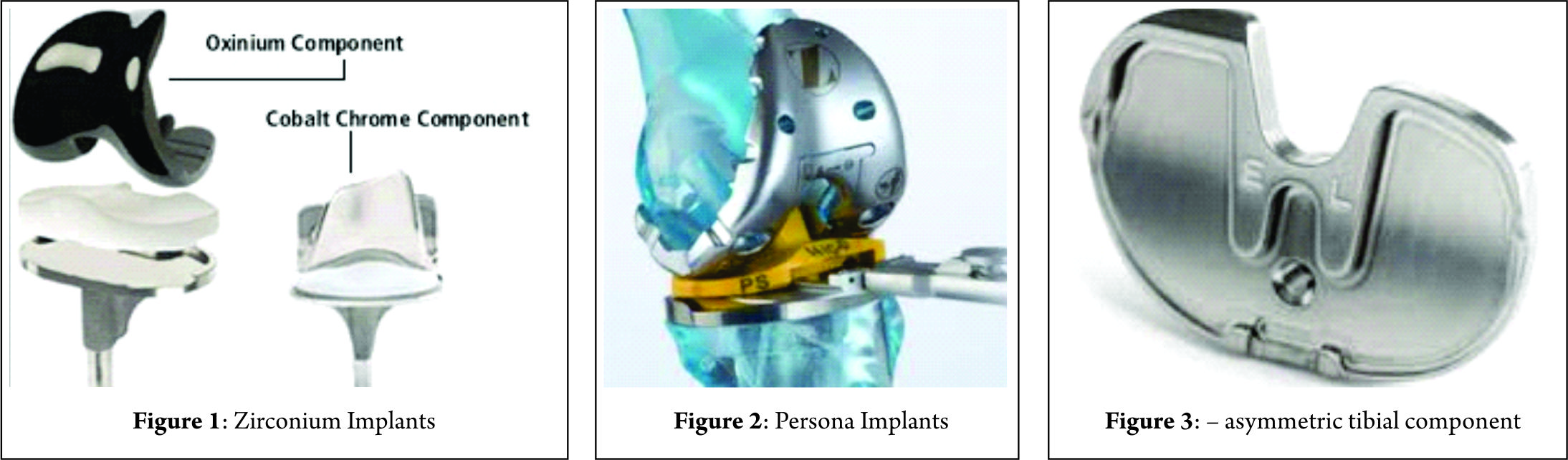
As we know in 1860, Verneuil proposed interposition arthroplasty, involving the insertion of soft tissue to reconstruct the joint surface. Since then, pig bladder, nylon, femoral sheath, anterior bursa of the knee, cellophane, and many other materials have been used, but results were disappointing. The use of metallic interposition arthroplasty began in the late 1930s. Today implants are made of a highly polished cobalt chrome alloy which is a very strong alloy well tolerated and accepted by the human body. Zirconium implants (Fig.1) offer another bearing surface akin to ceramics with a very low coefficient of friction. The long term results of these implants are awaited and we shall then know if it is worth the high price [4]. The polyethylene insert which is placed between the two metal components is highly cross linked which prevents its wear and tear. Sterilization methods have helped reduce the wear and tear rate of the insert. Gamma sterilization in the past led to early catastrophic wear and breakdown of the insert. Now a days EtO sterilization has solved the problem. Addition of vitamin E in the substance of the insert is said to delay its degradation [5,6].


Design of the knee implant has a bearing on the result of the surgery-both in the survivorship of the implant and in terms of patient satisfaction. The knee joint has three bones that articulate with each other. For the implant to be successful the components have to be well synchronised with each other and also perform their own functions independently. The femoral component (part of the lower thigh forming the knee) should be well fitting on the host bone, and should not over hang the bone otherwise it will rub with the soft tissues causing pain. It should also provide a good and friendly surface for the knee cap (patella) to glide on. Modern designs take care of this aspect. The Persona implant (Fig. 2) from Zimmer has femoral components in 2 mm increments and each size comes with a standard and a narrow option. The number of sizes available are in 2 mm increments in both planes,a design which helps in providing a better fit of the implant. No two individuals are alike so why should two knees be the same? To facilitate this there are several permutations and combinations available to the surgeon which provide for the ideal fit. The Persona implant is also the most patella friendly implant available. This allows for ease of gliding of the patella on the femoral component helping to achieve a better and more efficient thigh muscle function. This in turn leads to better knee joint range of motion and gait pattern.
The Tibial component (part of the leg bone which participates in the knee) is also an important part of the knee. Traditionally they were made symmetric whereas the normal human anatomy is asymmetric [7].(Fig.3) What this means that the shape of the tibial component should closely approximate the original anatomy of the bone. In the Persona Knee system the tibial component comes in 9 sizes with 1mm increments again allowing the surgeon much more flexibility in choosing the exact size of the implant for the patient. As with the femoral component overhang is going to rub against the soft tissues and cause pain [8]. The question as to resurface the patella or to leave it alone is eternal. The proponents of either are numerous but so far no consensus has been formed [9]. So has been the case for posterior cruciate ligament retention or substitution. All implants are available in cruciate retaining and posterior stabilized designs.

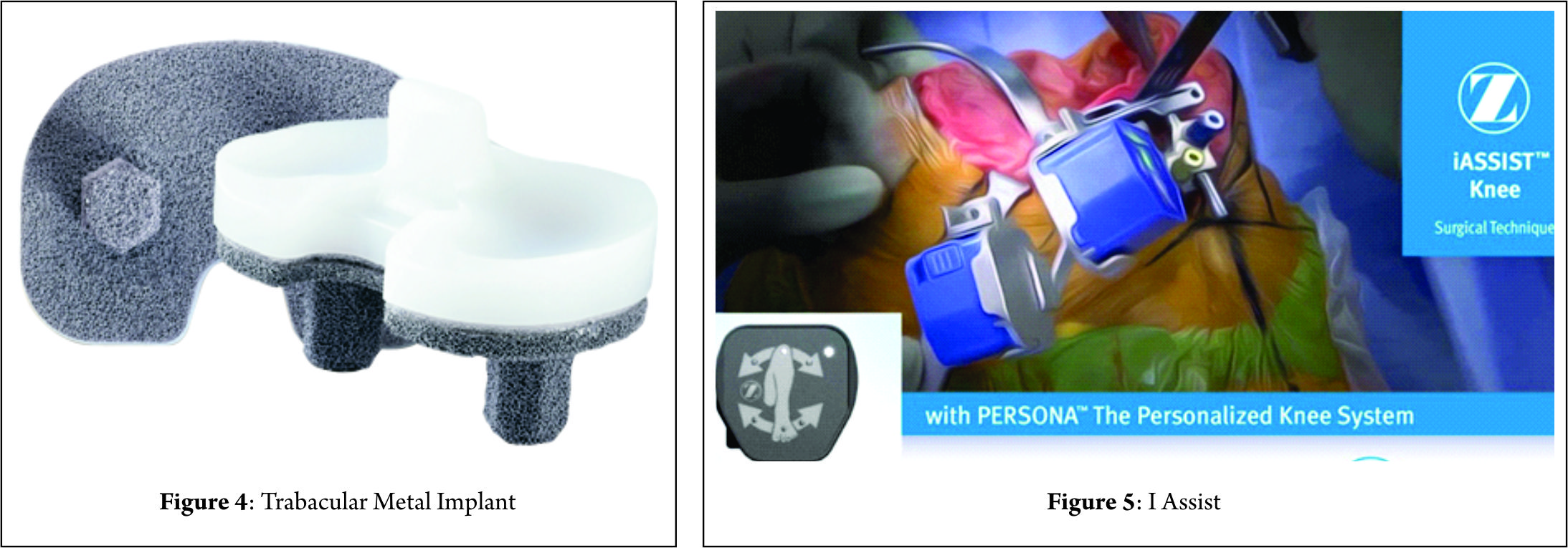
Newer metals like Trabecular metal have in fact revolutionized the area of knee replacement. These metals are extremely porous and have elasticity of modulus approximating that of natural bone. The porosity allows for growth of bone into the implant(Fig.4). This helps in better integration of the implant to the bone and thus increasing the life of the implant [10,11]. Also there is no need to use bone cement to fix these implants to bone. It has found use in revision surgery of the knee too. Revision surgery is needed when the original total knee replacement fails and a new surgery is needed to address all the myriad issues where trabecular metal cones are helpful to reconstruct the lost bone. They are used to build up the defect in bones and allow for the host bone to grow into them to achieve a more biological end result.
Computer assisted surgery has been in use for a long time. Earlier devices were large in size (Brain Lab) and cumbersome to useresulting in an increase in surgery time. Newer devices are gravitating towards hand held devices such as the iASSIST (Zimmer)(Fig 5) or eNdtrac (Stryker)(Fig 6). These are surgical guidance systems engineered to improve the accuracy and alignment of total knee replacement surgery. They are also less invasive and more surgeon friendly. Once the learning curve is over there is hardly any change in surgery time as compared to before12. Among these devices is the Navio (Fig. 7) system from Smith & Nephew. It allows for intraoperative navigation and then the use of a handheld robot to perform the cuts of the bone. At present available only for the unicompartmental knee. The software for the total knee replacement is to be released soon.
Customized knee implants wherein the implant is designed for the patient after pre-operative imaging is also being used in the USA. Conformist manufactures these implants. Individualized fit and bone conservation are their hallmarks. These unfortunately are not available in India yet [13].
Awareness is leading to younger patients opting for knee surgery. Every knee arthritis does not need a total knee replacement. In case only one compartment is involved then only that part can be replaced. This is called unicompartmental knee replacement. Unicompartmental knee replacement is getting to be more widely used than before and is well accepted. It is a smaller procedure, allows the patient to recover faster and gives a more natural feel of the knee. It also allows the patient to continue with a fairly aggressive life style.


Blood loss following surgery is expected, but the quantity of blood loss leads to several problems [14]. Constant endeavours to lessen the blood loss are underway. Use of tranexamic acid perioperatively has helped reduce the blood loss after total knee replacement. It is being used both intravenously and by injecting into the tissues around the surgical site15. Autologous blood transfusion is also a way to deal with the dangers of blood transfusion. It allows for the patient to receive their own blood which was given 3 to 6 weeks prior to surgery.
Use of technology is increasing in this field. Navigation and customized implants are at one end of the spectrum. The other end is occupied by Big Data. The immense amount of data and surgeon experience that is available all around is being understood now. It will be used to fabricate protocols to increase the surgeons and hospitals efficiency while dealing with total knee replacement patients. Big data combined with the joint registries will help the surgeons to make an informed choice on their choice of implants, surgical techniques, pain management protocols and postoperative rehabilitation.
Experience and hospital management systems have helped us evolve faster rehabilitation programs. They consist of patient education prior to surgery, ultrasound guided nerve blocks to reduce the intensity of post-operative pain, earlier and more aggressive rehabilitation and earlier discharge from the hospital. Patient education makes the patient more aware of the procedure and their expectations. They learn about the normal course of recovery and hence are more involved in the whole process. The commonest cause for delay of surgery is the fear of pain. Once the anesthesia wears off the patients will have some pain. Analgesics be it non opiodal or opiods have their limitations. Increased pain aggravates the co- morbidities and less rehabilitation. Ultrasound guided nerve blocks and placement of femoral nerve catheters does help a long way to reduce the pain [16,17]. So does the ”Ipac”, which involves instillation of an analgesic cocktail in the posterior capsule and the surgical field anteriorly. Early rehabilitation and mobilization helps reduce the incidence of DVT and PE, allows for earlier patient confidence in walking and leads to an early recovery. All these contribute to making the whole process more patient friendly and efficient for the hospitals to manage.
These advances have helped surgeons to satisfy their patients and have allowed the patients to achieve their goals and expectations to a large extent.


References

1. Twenty-Five-Years and Greater,  Results  After Non modular cemented Total Knee Arthroplasty. Ritter MA, Keating EM, Sueyoshi T, Davis KE, Barrington JW, Emerson RH.1. Twenty-Five-Years and Greater,  Results  After Non modular cemented Total Knee Arthroplasty. Ritter MA, Keating EM, Sueyoshi T, Davis KE, Barrington JW, Emerson RH.J Arthroplasty. 2016 Oct;31(10):2199-202. doi: 10.1016/j.arth.2016.01.043. Epub 2016 Feb 4.2. How do knee implants perform past the second decade? Nineteen- to 25-year followup of the Press-fit Condylar design TKA.Patil S, McCauley JC, Pulido P, Colwell CW Jr.ClinOrthopRelat Res. 2015 Jan;473(1):135-40.3. Total knee replacement in young, active patients: long-term follow-up and functional outcome: a concise follow-up of a previous report.Long WJ, Bryce CD, Hollenbeak CS, Benner RW, Scott WN.J Bone Joint Surg Am. 2014 Sep 17;96(18)4. Twelve-Year Outcomes of an Oxinium Total Knee Replacement Compared with the Same Cobalt-Chromium Design: An Analysis of 17,577 Prostheses from the Australian Orthopaedic Association National Joint Replacement Registry.Vertullo CJ, Lewis PL, Graves S, Kelly L, Lorimer M, Myers P.J Bone Joint Surg Am. 2017 Feb 15;99(4):275-283. 5. Contribution of Surface Polishing and Sterilization Method to Backside Wear in Total Knee Arthroplasty.Teeter MG, Lanting BA, Shrestha KR, Howard JL, Vasarhelyi EM.J Arthroplasty. 2015 Dec;30(12):2320-2.6. The influence of sterilization method on articular surface damage of retrieved cruciate-retaining tibial inserts. Greulich MT, Roy ME, Whiteside LA.J Arthroplasty. 2012 Jun;27(6):1085-93. 7. How Much Does the Anatomical Tibial Component Improve the Bony Coverage in Total Knee Arthroplasty ? Jin C, Song EK, Prakash J, Kim SK, Chan CK, Seon JK. J Arthroplasty .2017 Jun; 32(6):1829-18338. Gait Parameters and Functional Outcomes After Total Knee arthroplasty Using Persona Knee System With Cruciate Retaining and Ultracongruent Knee Inserts. Rajgopal A, Aggarwal K, Khurana A, Rao A, Vasdev A, Pandit H. J. Arthroplasty. 2017 Jan ;32(1):87-919. Is Selectively Not Resurfacing the Patella an Acceptable Practice in Primary Total Knee Arthroplasty?Maradit-Kremers H, Haque OJ, Kremers WK, Berry DJ, Lewallen DG, Trousdale RT, Sierra RJ.J Arthroplasty. 2017 Apr;32(4):1143-1147. 10. Trabecular metal tibial knee component still stable at 10 years.Henricson A, Nilsson KG. Acta Orthop. 2016 Oct ;87(5) : 504-1011. Mid-term results of total knee arthroplasty with a porous tantalum monoblock tibial component.Hayakawa K, Date H, Tsujimura S, Nojiri S, Yamada H, Nakagawa K. Knee. 2014 Jan;21(1):199-203. 12. Total knee arthroplasty with computer-assisted navigation more closely replicates normal kneebiomechanics than conventional surgery.McClelland JA, Webster KE, Ramteke AA, Feller JA.Knee. 2017 Jun;24(3):651-656. 13. Evolution of customization design for total knee arthroplasty.Slamin J, Parsley B. Curr Rev Musculoskelet Med. 2012 Dec;5(4):290-5. 14. Enhanced recovery protocol and hidden blood loss in patients undergoing total knee arthroplasty.Dhawan R, Rajgor H, Yarlagadda R, John J, Graham NM. Indian J Orthop. 2017 Mar-Apr;51(2):182-18615. Effect of Tranexamic Acid on Transfusion Rates Following Total Joint Arthroplasty: A Cost and Comparative Effectiveness Analysis.Evangelista PJ, Aversano MW, Koli E, Hutzler L, Inneh I, Bosco J, Iorio R.OrthopClin North Am. 2017 Apr;48(2):109-115.16. Does Addition of Adductor Canal Blockade to Multimodal Periarticular Analgesia Improve Discharge Status, Pain Levels, Opioid Use, and Length of Stay after Total Knee Arthroplasty? Gwam CU, Mistry JB, Richards IV, Patel D, Patel NG, Thomas M, Adamu H, Delanois RE. J Knee Surg. 2017 May 2. 17. Multimodal infiltration of local anaesthetic in total knee arthroplasty; is posterior capsular infiltration worth the risk? a prospective, double-blind, randomised controlled trial. Pinsornsak P, Nangnual S, Boontanapibul K.Bone Joint J. 2017 Apr;99-B(4):483-488. .


How to Cite this article: Rajgopal A, Dahiya V. What is New in Total Knee Replacement. Journal of Clinical Orthopaedics Jan – June 2017; 2(1): 10-13.

(Abstract    Full Text HTML)      (Download PDF)


Translate this page into:

A Critical Review of the Management of Partial Tears of Anterior Cruciate Ligament

Vol 2 | Issue 1 |  Jan – June 2017 | Page 27-30 | Raju Vaishya, Vipul Vijay, Abhishek Vaish, Amit Kumar Agarwal


Authors: Raju Vaishya [1], Vipul Vijay [1], Abhishek Vaish [1], Amit Kumar Agarwal [1].

[1] Department of Orthopaedics and Joint replacement Surgery Indraprastha Apollo Hospitals Sarita Vihar, New Delhi 110076, INDIA

Address of Correspondence

Dr. Raju Vaishya
Department of Orthopaedics and Joint Replacement Surgery Indraprastha Apollo Hospitals Sarita Vihar, New Delhi 110076, India.
Email: raju.vaishya@gmail.com


Abstract

Anterior cruciate ligament (ACL) injuries are common sports injuries. While the treatment of complete ACL tear is clearly delineated and are often treated with ACL reconstruction, the treatment of a partial injury to the ACL is still a matter of debate.
Partial tear of an ACL is a relatively rare injury. The reported incidence of partial ACL injuries ranges from 10-28% (1). There are studies which have tried to outline the natural history of partial ACL tears. It is reported that there is a 15% to 66% chance of this lesion to progress to a complete tear. The incidence of secondary cartilage injuries has been estimated to be between 15% to 86% (2,3). Even though there is consensus on the progression of the instability and the occurrence of secondary cartilage injuries, the management, including the timing and type of intervention, are still under debate.
In the present article, we have done a critical review of the literature regarding the management of partial ACL tears.


Background

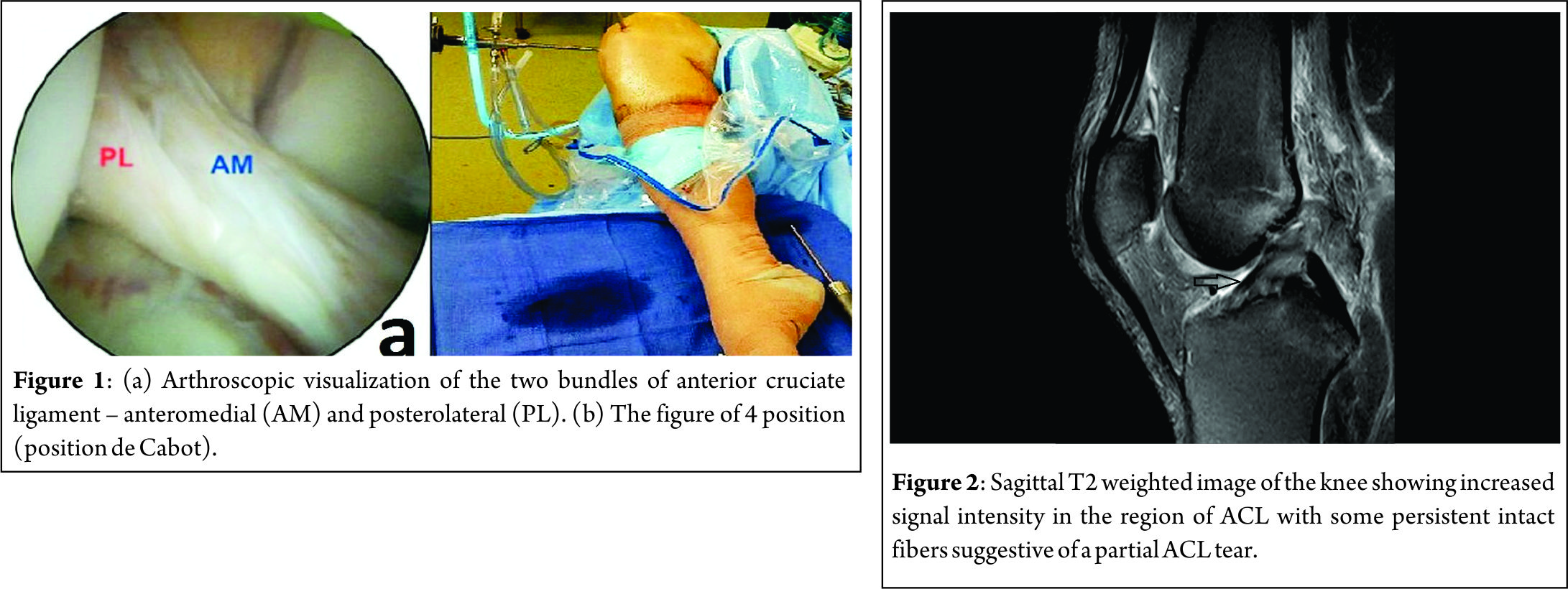
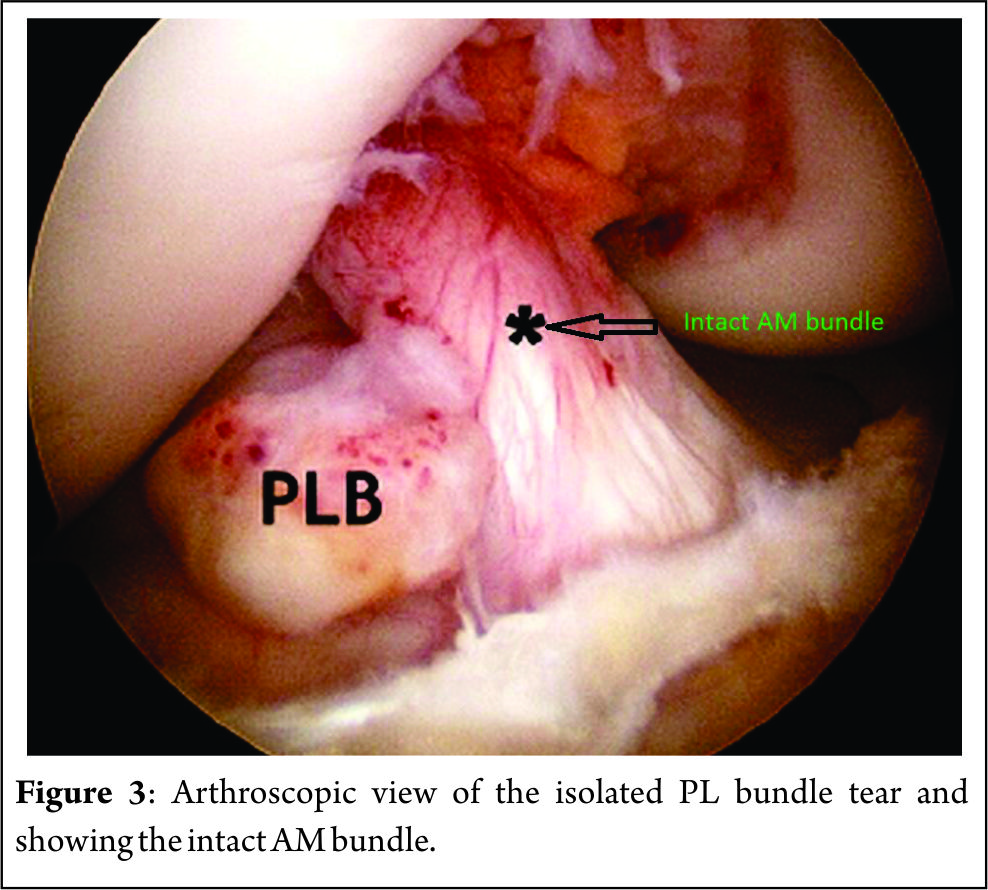
A precise definition of a partial ACL tear is lacking. Hong et al. described a partial ACL tear as one where less than 50% ligament is torn (4). On the other hand, Noyes et al. described the partial ACL injury by the ACL left after the tear (5). It was based on the finding that the loss of 50-75% diameter of the ACL would lead to the significant incidence of clinical failure. Some authors have also tried to assess the grading of the injury by arthroscopic findings (6).DeFranco and Bach have attempted to define the partial ACL tear by a combination of clinical, knee laxity and arthroscopic criteria (7). Barrack et al. defined a partial ACL as a lesion in which the three criteria were fulfilled.  These included a pivot shift test being negative, the Lachman test being 0 or 1+ and a significant portion of any of the two bundles being intact on arthroscopy and found to functionally active, as confirmed by arthroscopic anterior drawer test (8).Functional anatomy of ACLThe ACL has been found to be comprising of two bundles, namely the anteromedial (AM) and posterolateral (PL) bundle. The two bundles have been labeled by their insertion of the femur. The AM bundle is isometric whereas the PL bundle is anisometric and changes length as per the position of the knee. The anterior fibers of the AM bundle are taut during 30 to 130 degrees of flexion. Conversely, the posterior fibers of PL are completely taut in extension and beyond 90-degree flexion.This unique configuration is responsible for the differential effects on knee stability of the injury of the two bundles. The AM bundle contributes majorly to the anterior stability of the knee in normal activities of daily living. The PL bundle contributes more to the rotator stability and is responsible for stability during activities involving pivoting. The differential functions of the two bundles lead to different sets of presentation in patients with partial ACL injury depending on the bundle which is injured.The AM bundle is easily visualized in all knee positions, and it is this reason that some isolated PL bundles are often missed. To clearly assess the integrity of the both the AM and the PL bundles, the Cabot’s position (Figure of four position) was described (Figure 1).

In the Cabot’s position, the AM bundle can be visualized wrapping around the PL bundle and hence the integrity of both the bundles can be individually assessed (9).Advantages of retaining a native ACLThere are various potential benefits of retaining the intact portion of the ACL: 1. The retention of the native ACL helps in preserving the blood supply to the ligament and may lead to potentially better healing capacity (10).2. The presence of mechanoreceptors in the remnant can also help postoperative ACL function (11).3. There are chances of increased biomechanical strength.4. A study by Bak et al. reported significantly decreased immediate postoperative pain during rehabilitation in patients in whom the ACL remnant was preserved (12). They also concluded that the ACL remnant gives protection to the graft while it is still in its healing phase.5. Also, the preserved ACL remnant acts as a guide for the creation of the bony tunnels and helps in the anatomic reconstruction of the ligament.
Diagnosis The diagnosis and identification of a partial ACL tear is a challenge. The diagnosis is usually based on a combination of clinical, radiological and knee laximetric findings along with an arthroscopic correlation.A) ClinicalThe injury is common in young individuals, usually 20-30 years of age. The symptoms may vary with the type of bundle which is injured, varying from feeling of instability in the anteroposterior plane (isolated AM bundle injury) to a rotatory instability in pivoting activities (isolated PL bundle injuries). The clinical examination reveals a Lachman’s test which has a firm end point and has less than 5mm translation. The pivot shift test is usually negative.B) RadiologicMRI findings cannot be completely relied on for making a diagnosis of partial ACL tear (Figure 2).

However, it may provide subtle clues to the diagnosis when assessed along with arthroscopic and clinical findings. There are special axial or perpendicular cuts in the MRI which have been described for clearly assessing partial ACL injuries in MRI (13). Colombet et al. described three type of orientation of the partially torn ACL fibers on MRI (14). The “straight fibers” had an orientation which was parallel to the Blumensaat’s line, the “lying down” fibers had fallen and were lying down in the intercondylar notch, close to the PCL and the “disorganized” fibers, which had no structural pattern and had disappeared.C) ArthroscopicArthroscopy helps in the identification of the lesion under direct vision. There have been authors who have suggested the use of arthroscopy for the identification of partial ACL tears (15). However, with the improved understanding of the imaging and clinical findings, arthroscopy should only be used for confirmation of the diagnosis and the surgeon should be ready with the option of reconstruction at the time of arthroscopy. The important thing to underline during an arthroscopic examination of the knee is the essentiality of examination of the knee in the Cabot position (Figure 3), wherein both the ACL bundles can be identified separately.D) Objective laxity measurementThere are many studies which have studied the anteroposterior plane laxity for complete ACL injuries using KT 1000. Since partial ACL ruptures may sometimes lead to pure rotational instability; the diagnosis may be difficult to identify using the conventional laximeters. The usual translation in the AP plane for non-ACL injured knee is less than 3 millimeters (mm). A translation greater than 5 mm is suggestive of a chronic and complete ACL tear. Translation between 3-5 mm is suggestive of a partial ACL tear. There have been studies using special laximeters like GNRB® which can diagnose isolated PL bundle damage (16).


Treatment – The treatment of partial ACL tears needs to be individualized as per the requirements of the patient. A certain subset of patients may be treated with conservative means. These subgroup of patients include those who are diagnosed by radiologic findings and lack any clinical examination findings. Also, the patients in low demand jobs, involved in activities not involving torsional strain on the knee and sedentary lifestyles may be candidates for conservative treatment (17). Patients who have mechanical signs and symptoms of instability and are involved in high demand physical activities which are likely to put a torsional strain on the knee are candidates for surgical intervention (18). A) Conservative treatmentConservative treatment consists of immobilization immediately after the acute phase of injury till the pain subsides. Further treatment usually is followed along the course of rehabilitation of ACL reconstruction. The exercises focus on muscle strengthening along with proprioceptive training and adaptive training. The most important aspect of the conservative treatment of ACL injuries is a regular and systematic follow-up assessment of instability since there have been reports of conversion of up to 25% partial ACL tears to complete tears (19).B) Surgical treatmentThe surgical treatment entails the use standard arthroscopic techniques and creation of the standard anteromedial and anterolateral portals. The graft selection depends on the choice of the surgeon. Some authors have suggested creating a high anterolateral portal so that there is minimum obstruction of the Hoffa’s fat pad (9). After the assessment of the associated lesions along with the partial tear, they are managed as per the standard protocols. The assessment of the partial ACL tear is done arthroscopically and also through stability tests in both the semi-flexed and the Cabot’s figure. There are certain steps which are specific for the creation of the AM and PL bundles.Anteromedial bundleThe entry point for the creation of the tibial tunnel for the AM bundle begins approximately 1.5 cm medially to the tibial tuberosity and is angulated at an angle of 60 degrees (20). The femoral tunnel is along the fibers of the femoral remnant. Care is taken to avoid excessive debridement of the remnant bundle to provide a scaffold for faster healing.
Posterolateral bundleThe entry point of the PL bundle lies more medially and is usually situated 3.5 cm medially to the anterior tuberosity. The intra-articular exit point is located 5 mm medial to lateral tibial intercondylar eminence. Similar to AM bundle, excessive debridement of the remnant should be avoided.Future trendsApart from the role of the single bundle reconstruction, there has been a renewed interest in the use of biologics in the healing of partial ACL tears. The more recently used techniques include the use of growth factors, Platelet rich plasma, stem cells and bio-scaffolds (21). Their use in the presence of partial ACL tears has given good short to medium term results, but further studies to assess their role in long-term is needed.ConclusionsA partial tear of ACL is rare, but a distinct clinical entity, which is hard to diagnose and manage. The clinician and radiologist require awareness about this entity, and a high index of suspicion is necessary to be able to make an early diagnosis of partial ACL tears. Direct examination of the knee by arthroscopy is the most accurate and invaluable modality in the diagnosis and management of these lesions. In low-demand individuals, conservative treatment is effective, whereas symptomatic high-demand and athletic individuals are the candidates for surgical intervention. A single bundle ACL reconstruction is the treatment of choice in these symptomatic patients. Regenerative treatment seems to be a likely option, but lack long-term follow-up to advocate their efficacy, at present..


References

1. Zantop T, Brucker PU, Vidal A, Zelle BA, Fu FH. Intra-articular rupture pattern of the ACL. Clin Orthop Relat Res 2007;454:48–53.
2. Andersson C, Odensten M, Good L, Gillquist J. Surgical or nonsurgical treatment of acute rupture of the anterior cruciate ligament. A randomized study with long-term follow-up. J Bone Joint Surg Am 1989;71:965—74.
3. Casteleyn PP. Management of anterior cruciate ligament lesions: surgical fashion, personal whim or scientific evidence? Study of medium- and long-term results. Acta Orthop Belg 1999;65:327—39.
4. Hong SH, Choi JY, Lee GK, Choi JA, Chung HW, Kang HS. Grading of anterior cruciate ligament injury. Diagnostic efficacy of oblique coronal magnetic resonance imaging of the knee. J Comput Assist Tomogr. 2003 Sep-Oct;27(5):814-9.
5. Noyes F.R., Mooar L.A., Moorman C.T., 3rd, McGinniss G.H. Partial tears of the anterior cruciate ligament. Progression to complete ligament deficiency. J Bone Jt Surg Br. 1989;71(5):825–833.
6. Lintner D.M., Kamaric E., Moseley J.B., Noble P.C. Partial tears of the anterior cruciate ligament. Are they clinically detectable? Am J Sports Med 1995 ; 23 : 111-118.
7. DeFranco M.J., Bach B.R., Jr. A comprehensive review of partial anterior cruciate ligament tears. J Bone Jt Surg Am. 2009;91(1):198–208.
8. Barrack RL, Buckley SL, Bruckner JD, Kneisl JS, Alexander AH. Partial versus complete acute anterior cruciate ligament tears. The results of nonoperative treatment. J Bone Joint Surg Br 1990;72:622-4.
9. Sonnery-Cottet B, Chambat P. Arthroscopic identification of the anterior cruciate ligament posterolateral bundle: the figure of four positions. Arthroscopy 2007;23:1128.e1–3.
10. Dodds JA, Arnoczky SP. Anatomy of the anterior cruciate ligament: a blueprint for repair and reconstruction. Arthroscopy 1994;10:132—9.
11. Schultz RA, Miller DC, Kerr CS, Micheli L. Mechanoreceptors in human cruciate ligaments. A histological study. J Bone Joint Surg Am 1984;66:1072—6.
12. Bak K, Scavenius M, Hansen S, Norring K, Jensen KH, Jorgensen U. Isolated partial rupture of the anterior cruciate ligament. Long-term follow-up of 56 cases. Knee Surg Sports Traumatol Arthrosc 1997;5:66—71.
13. Roychowdhury S, Fitzgerald SW, Sonin AH, Peduto AJ, Miller FH, Hoff FL. Using MR imaging to diagnose partial tears of the anterior cruciate ligament: value of axial images. AJR. American journal of roentgenology. 1997 Jun;168 (6):1487-91.
14. Colombet P, Dejour D, Panisset JC, Siebold R. Current concept of partial anterior cruciate ligament ruptures. Revue de Chirurgie Orthopédique et Traumatologique. 2010 Dec 31;96(8):S329-38.
15. Sonnery-Cottet B, Chambat P. Arthroscopic identification of the anterior cruciate ligament posterolateral bundle: the figure-of-four position. Arthroscopy. 2007;23(10), 1128. e1-3.
16. Robert H, Nouveau S, Gageot S, Gagniere B. A new knee arthrometer, the GNRB: experience in ACL complete and partial tears. Orthop Traumatol Surg Res 2009;95:171—6.
17. Lorenz S, Imhoff AB. Reconstruction of partial anterior cruciate ligament tears. Oper Orthop Traumatol. 2014;26(1):56–62.
18. Tjoumakaris FP, Donegan DJ, Sekiya JK. Partial tears of the anterior cruciate ligament: diagnosis and treatment. Am J Orthop (Belle Mead NJ). 2011;40(2):92–7.
19. Pujol N, Colombet P, Cucurulo T, Graveleau N, Hulet C, Panisset JC, et al. Natural history of partial anterior cruciate ligament tears: a systematic literature review. Orthop Traumatol Surg Res. 2012;98(8 Suppl):S160–4.
20. Siebold R, Fu FH. Assessment and augmentation of symptomatic anteromedial or posterolateral bundle tears of the anterior cruciate ligament. Arthroscopy. 2008;24(11):1289–98.
21. Dallo I, Chahla J, Mitchell JJ, Pascual-Garrido C, Feagin JA, LaPrade RF. Biologic Approaches for the Treatment of Partial Tears of the Anterior Cruciate Ligament: A Current Concepts Review. Orthopaedic Journal of Sports Medicine. 2017 Jan 25;5(1):2325967116681724.


How to Cite this article: Vaishya R, Vijay V, Vaish A, Agarwal AK. A Critical Review of the Management of Partial Tears of Anterior Cruciate Ligament. Journal of Clinical Orthopaedics Jan – June 2017; 2(1):27-30.

(Abstract    Full Text HTML)      (Download PDF)


Translate this page into:

Terrible Triad – Is no More Terrible!

Vol 2 | Issue 1 |  Jan – June 2017 | Page 14-26 | G S Kulkarni, Vidisha Kulkarni, Ruta Kulkarni, Sunil Kulkarni, Milind Kulkarni


Authors: G S Kulkarni [1], Vidisha Kulkarni [1], Ruta Kulkarni [1], Sunil Kulkarni [1], Milind Kulkarni [1].

[1] Swasthiyog Prathisthan, Miraj, Maharashtra India.

Address of Correspondence
Dr. G S Kulkarni
Swasthiyog Prathisthan, Miraj, Maharashtra, India.
Email: gskorth@gmail.com


Abstract

Terrible triad (TT) is traditionally an injury that is been well know but poorly understood. Most of the poor results are due to lack of understanding of the pathoanatomy and formulate a plan for individual cases. Bony articulations as well as the ligamento-tendious structures are injured along with added complexity of the elbow joint, the terrible triad is not a simple injury to comprehend. The current review focusses on the basics of pathoanatomy and relevant decision making protocols along with details of various treatment modalities. we also share our personal experience of 20 cases of terrible triad and also our preferred method of treatment
Keywords: terrible triad, radial head, medial collateral ligament, external fixator, functional outcomes.


Background

Terrible triad (TT), a complex elbow dislocation, is a combination of a radial head fracture, dislocation and a coronoid process fracture. Historically, TT has had consistently poor results; for this reason, it is called the terrible triad injury. The eponym is coined by Hotchkiss[1]. The rate of subluxation or dislocation after operative treatment of these injuries has ranged from 8% to 45%[2].
In a simple fracture without dislocation elbow, medial collateral ligament (MCL), lateral collateral ligament (LCL), capsule, muscular elements are torn and there is dislocation of ulno-humeral and radio-carpal joint. When both joints are reduced closely, all ligaments and capsule heal well; but not so with TT which needs surgical repair of all torn tissues. TT injuries are seen more commonly in adults and are rare in children’s.
During the last 2 decades better understanding of relevant anatomy and biomechanics of stability, restoration of injured primary and secondary stabilizers of elbow, improved surgical technique have given excellent results; and operative treatment of this injury has evolved to include restoration of radiocapitellar contact (via fixation or replacement of the radial head), reattachment of the origin of the lateral collateral ligament (LCL) to the lateral epicondyle, with fixation of the coronoid fracture, and medial collateral ligament (MCL) repair when indicated[2].
These techniques have decreased the occurrence of subluxation or dislocation after operative treatment of a terrible triad injury[3-5].
TT is now no more terrible; however, despite best attempts of reconstruction by even experienced specialists final outcome may not be so satisfactory. Tanna[6] has published a series of 9 cases. He presented cases in which the radial head could not be repaired due to comminution, head was resected and elbow was immobilized for 6 weeks with satisfactory results. We also did resection of radial head in 7 cases with repair of LCL, coronoid, MCL and of both flexor and extensor muscles, with repair of all other primary and secondary stabilizers(except radial head) and elbow was stabilized by orthofix hinged external fixator for 6 weeks, with comparable results. Perhaps head resection is indicated in developing countries, where head could not be repaired or replaced due to various specific conditions in developing countries, described below. Planned post-operative care is needed to reduce complications. The goal of treatment for terrible triad injuries is restoring the bony anatomy and reconstructing the ligamentous restraints of the elbow to provide enough stability for early elbow range of motion and prevent elbow stiffness. Early management has a favorable prognostic factor for outcome. Delayed presentation> 2 weeks has poor outcomes. Understanding the patho-mechanics of this complex elbow dislocation may improve diagnosis and treatment of these injuries.
The purpose of this paper is to review current management of TT, especially, our experience and the results of resection of radial head in TT

Relevant Anatomy
An understanding of the anatomy of the structures of elbow is paramount to the successful treatment of TT. The coronoid process provides an important anterior and varus buttress to the elbow joint. Ulno-humeral joint is the key element of elbow stability. The coronoid is thought to be the most significant determinant of stability of the elbow joint[7].
Although the coronoid fracture was once described as an avulsion fracture, it is now considered most often to be the result of shear forces caused by posterior translation against the humeral trochlea. Tip of coronoid does not have any muscular attachment.

The anterior bundle of MCL, a primary stabilizer of elbow stability originates from the antero-inferior aspect of the medial epicondyle, and is inserted in to the sublime tubercle at the base of the coronoid process [8]. Lateral ulnar collateral ligament (LUCL) is inserted in the supinator crest, distal to sigmoid notch and it originated at lateral epicondyle, which is the isometric point[9]. The radial head is a slightly elliptical structure. With the forearm in neutral rotation, the lateral portion of the articular margin of the radial head is devoid of hyaline cartilage. This is the safe zone for plating from radial head to shaft, when the forearm is in mid pronation position.
The flexor and extensor muscle and the joint capsules are secondary stabilizers of the elbow. The muscular system provides dynamic stability against valgus and varus forces.

Fracture classification
Fracture classification is important from management of TT point of view. Mason[10] classified radial head fractures into three categories: type I, non-displaced fracture; type II, displaced partial articular fracture with or without comminution; and type III, comminuted radial head fracture involving the whole head.
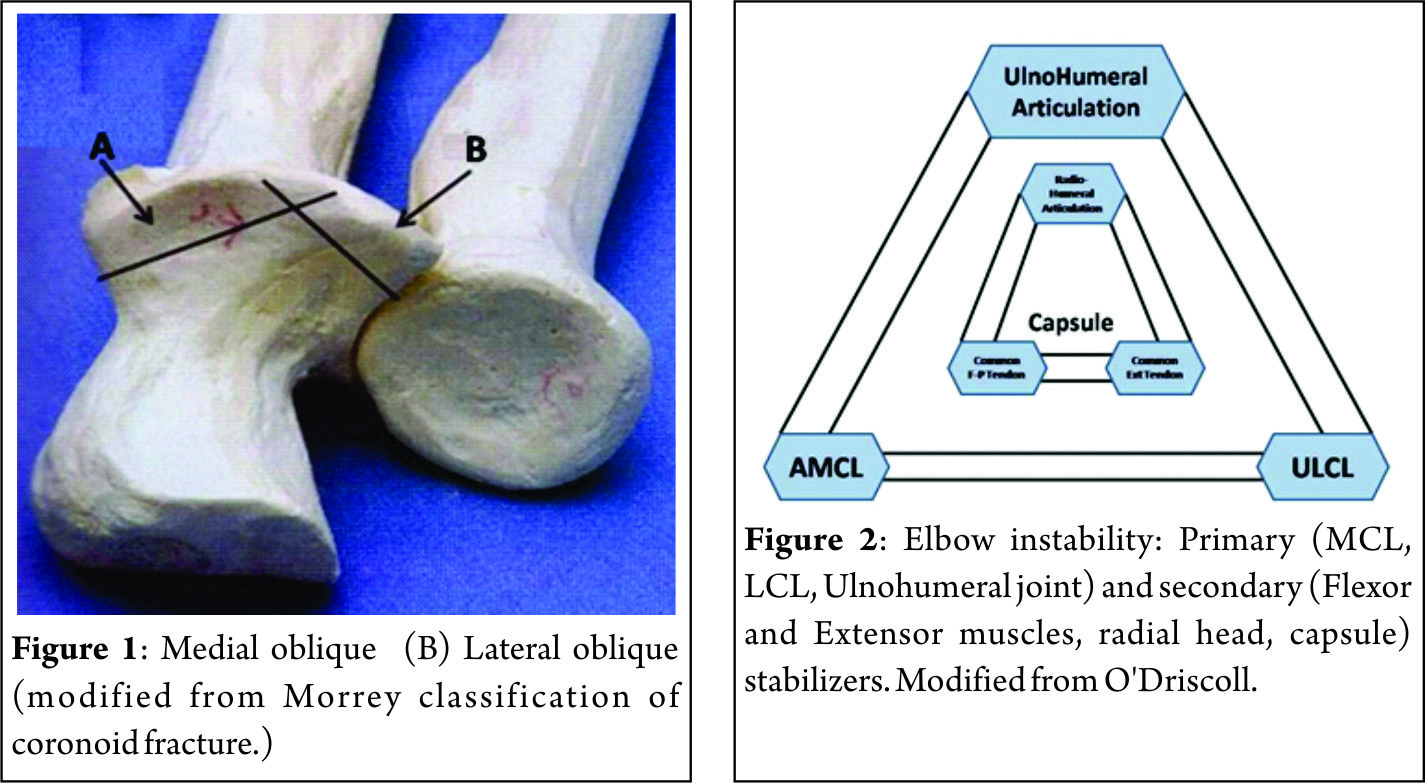
Regan and Morrey[11] classified coronoid fracture (Fig.1) into following 3 types –
Type I – Fracture involved an ‘Avulsion’ of the tip of the coronoid process.
Type II – Fracture involved a single or comminuted fracture representing <50% of the coronoid process.
Type III – Fracture involved a single or comminuted fracture of >50% of the coronoid process. Currently, the simple modification of the original classification includes medial and lateral oblique fractures. However, it has been recently shown that for practical matters, the original classification system is probably adequate as a basis of our clinical decisions[12].
O’Driscoll’s classification is more applicable to management as it emphasizes the importance of the anteromedial facet injury, which causes instability.
His classification is as shown in table 1: (Modified from Tarassoli) [13]

Fractures of the anteromedial facet are divided into three subtypes. Anteromedial subtype 1 fractures do not involve the coronoid tip and extend from just medial to the tip to just anterior to the sublime tubercle. Subtype 2 fractures are subtype 1 with involvement of the coronoid tip. Subtype 3 fractures involve the anteromedial rim of the coronoid and the sublime tubercle.
Doornberg and Ring Demon[14]- stated that fractures of the antero-medial facet of the coronoid could result in increased instability, even without a significant overall loss of height. They recommend fixation of these fractures through an alternative medial approach, even when the fracture is very small[14].

Biomechanics
Understanding of biomechanics of elbow instability is of paramount importance to treat TT. The elbow’s stability depends on static and dynamic stabilizers. Static stability is maintained by osseous and capsule -ligamentous restraints, whereas muscles crossing the elbow provide dynamic stability.
Beyond 30° of flexion, the coronoid process provides substantial resistance to posterior subluxation or dislocation[15].

Elbow stability is due to primary and secondary stabilizers due to symbiosis of bony and ligamentous anatomy. (See Fig.2.)
Primary stabilizers are
(1) The ulno-humeral articulation
(2) MCL (the anterior bundle),
(3) LCL complex (the ulnar lateral collateral ligament).

The secondary stabilizers are
(1) The radio-humeral articulations,
(2) Common flexor tendons, Common extensor tendons,
(3) The capsule.

Small fractures of the tip involving 10% of the coronoid process have been shown to have little effect on elbow stability in cadaveric biomechanical studies and may be neglected.
When residual instability was present after LCL repair and radial head repair or replacement, repair of the MCL was more effective than fixation of small coronoid fractures in restoring elbow stability[16]. Posterior displacement of the ulno-humeral joint is not affected until 50% of the total coronoid height is removed when the ligaments are intact[17], but smaller fractures can result in instability if there is a deficiency of the MCL[18]. Coronoid fragments more than 10% of coronoid process require surgical fixation.

Functions of radial head are – (1) Radial head is an important, anterior and valgus to buttress, (2) It also tightens the lateral, collateral ligament and provides varus stability indirectly. (3) In the absence MCL radial head, if it is intact, replaced or repaired, provide stability to the elbow. (4)The radial head also provides axial support to the forearm and acts as an anterior buttress resisting posterior dislocation or subluxation.(5) Resection of radial head may result in ulna minus and disturb distal radio-ulnar joint When fragments are very small, less than 25% may be discarded and head need not be repaired. In the absence of radial head, over a time, MCL stretches out and LCL collapses, contracts and dynamic valgus deformity of elbow results.

Morrey et al[7] did cadaveric studies regarding the relationship of MCL and radial head. In the presence of an intact MCL, radial head resection did not cause any significant valgus instability. However, the removal of the MCL caused valgus instability even with an intact radial head. Removal of both resulted predictably in gross subluxation and severe valgus instability. They concluded that the radial head is an important secondary stabilizer of the elbow, as it contributes significantly to valgus stability in elbows with a deficient MCL. Corollary of this i.e. with absent radial head and restoration of MCL, LCL, coronoid, flexor – extensor muscular attachment and application of hinged external fixator, the elbow may be stable enough[6]; however this has not been studied biomechanically.

Fractures of antero-medial facet instability is due to the attachment anterior bundle MCL at sublime tubercle. The mechanisms of TT injuries can be divided into low-energy falls from standing height and high-energy accidents usually due to vehicular accidents. Most of the low-energy mechanisms are usually in elderly person with osteoporosis. The mechanism of failure is according to the “Horii” circle, where the sequential failure of soft-tissue constraints starts from the lateral side and moves anteriorly and posteriorly to the medial side.

Material and Methods
Twenty patients sustaining elbow dislocation with associated radial head and coronoid process fracture, over a period of 7 years between 2009-2016 were enrolled in the study and their clinical results were assessed. The series included 13 males and 7 females of mean age of 35 years (range, 15-58 years) at the time of trauma.
14 patients had sustained the initial trauma during a road traffic accident and 6 had a fall from height. 18 dislocations were closed injuries with no neurovascular deficits and 2 were open. The initial assessment included high quality antero-posterior(A/P) and lateral radiographs of the elbow. Diagnosis of TT can be easily made by noting elbow dislocation, fractures of coronoid and fracture of radial head by good radiographs. Prompt closed reduction of TT should be attempted. This will reduce pressure on the soft tissues and decrease the chance of subsequent secondary neurovascular compromise or compartment syndrome.
CT scan was performed routinely in all the cases to rule out any occult coronoid process fragment. CT helps to understand morphology, size, shape and displacement of all fragments and to plan surgical technique.
In all cases, it was a postero-lateral dislocation of the elbow joint associated with fractures of the radial head and coronoid process. We had 2 cases of TT associated with trans olecranon fracture dislocation. Both were approached through a long posterior approach. Our series included 6 type I fractures, 4 type II fractures, 10 type III fractures. When there is complete posterior dislocation, all the ligaments, anterior capsule and medial and lateral muscular attachments are torn.

Operative Technique
Dislocations were reduced by closed method in 8 patients and 12 were reduced by open technique under general anaesthesia and image intensifier. Final reconstructive surgery is done as early as possible.
Either a posterior global incision or a lateral incision was used. For a lateral approach supine and for posterior approach lateral decubitus position was used. In 14 cases lateral surgical approach was carried out through the Kocher[19] interval, between extensor carpiulnaris and anconeus muscle. In addition, a medial approach in 8 cases, which provides better access to the coronoid process and the medial collateral ligament. Posterior approach was performed in 6 cases.
TT with trans-olecranon fracture needed a long posterior approach. When posterior approach was used, a thick flap was raised to prevent skin necrosis. Proximal fragment of olecranon along with triceps was lifted up proximally, similar to olecranon osteotomy approach. The coronoid fragment can be approached through fracture site for passing ‘lasso’ sutures or lag screw/s. Radial head was repaired or replaced or resected as indicated. MCL and LCL also were repaired through the posterior approach.
Exploration revealed persistent damage to the lateral collateral ligament in all cases. In 8 cases, decision to reconstruct MCL was taken because at the end of surgery extension test showed some subluxation or doubtful stability.
In 5 cases of non-re- constructible type III radial head, excision was performed and no prosthesis was used, hinged ex fix was applied.
In 2 cases, the radial head was excised by outside surgeon. He missed the diagnosis of TT and thought the case to be just a case of isolated radial head fracture. At 2 weeks, both patients had instability and were referred to us. In these 2 cases with absent radial head, after reconstruction of all ligaments including MCL and coronoid, orthofix type hinged external fixator (Pitkar Orthotools Pvt. Ltd. Pune) was applied.
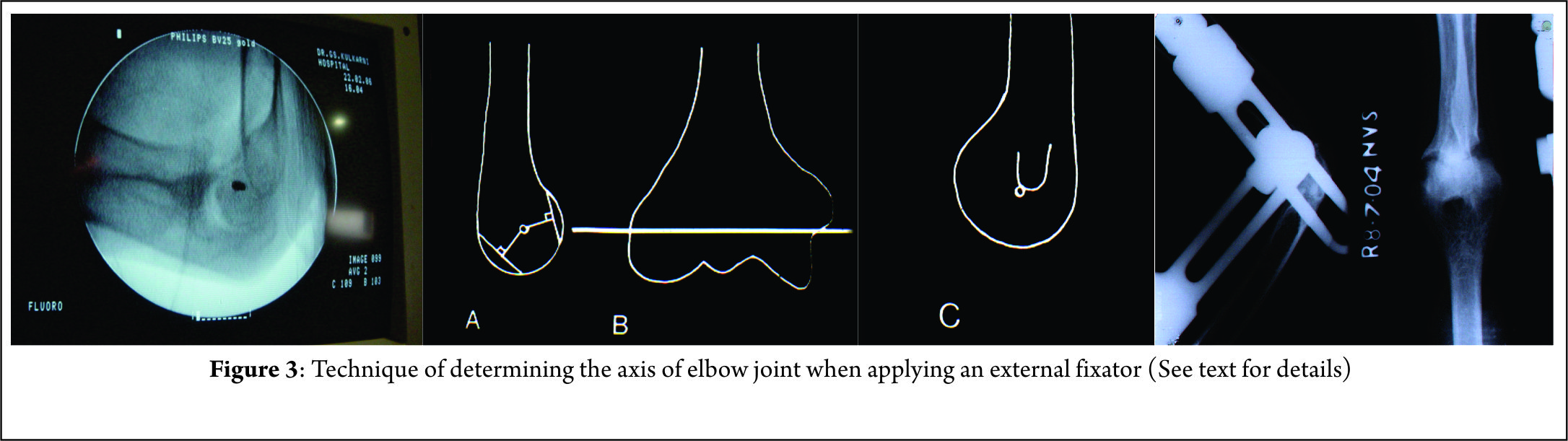
When one applies hinged external fixator, it is very important to see that the axis of external fixator is collinear with axis of the elbow joint. Axis of elbow joint passes through centre of lateral epicondyle laterally and through a point just anterior distal to medial epicondyle. We have developed a technique of matching axis of hinge and elbow. In a dead lateral view of elbow on image intensifier, the centre of the circle of capitulum represents the point of axis elbow on the lateral side. Axis point on the medial side is just distal and anterior to the medial epicondyle. Two K-wires are passed- one through the centre of lateral condyle and one through the point on the medial side described above (See fig.3.) The wires were cut 1 cm away from bone. When applying external fixator, the centre of external fixator is in line with both K-wires. After applying external fixator k-wire were removed from both sides.

Repair of radial head with 2.4mm Herbert screw (Synthes) was performed in 7 cases of type II fractures. Resection of radial head was done in 7 cases and in all these cases hinged external fixator was applied. Replacement was done in 6 cases.
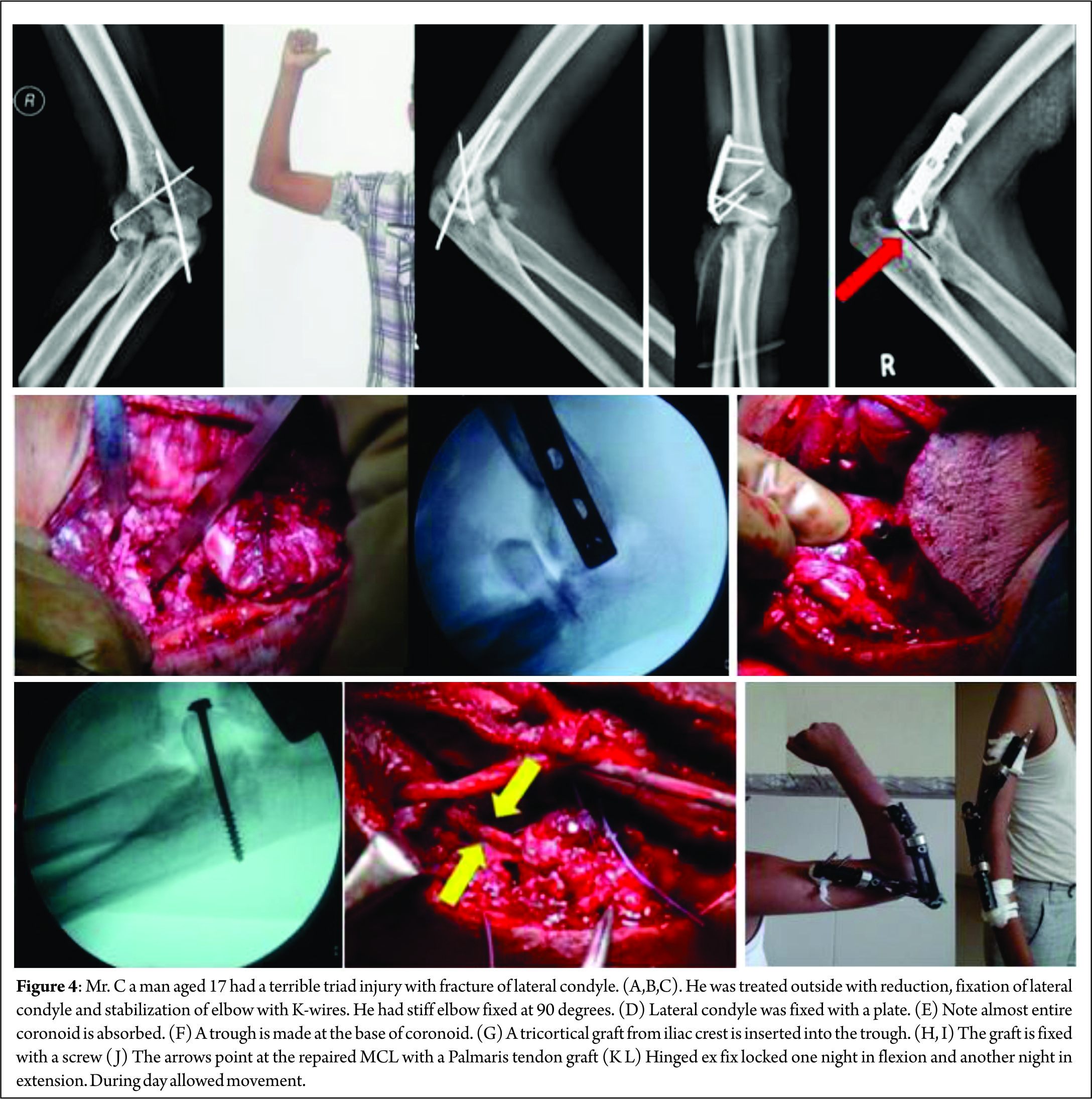
Five type I coronoid fractures were neglected. Eight type II coronoid fractures were treated with suturing the capsule with no.1 non-absorbable sutures. In one delayed case coronoid fragments were completely absorbed and was reconstructed with a piece from iliac crest (Fig.4.). All lateral and medial collateral ligaments were repaired with no.1 non-absorbable sutures.
At the end of the surgery, flexion – extension was tested from 30° to 110° of flexion. If there was instability during extension, MCL was repaired. In cases when MCL, LCL and coronoid were repaired and still there was some instability, orthofix type external fixation was applied. Indications for external fixator were radial head excision or instability at the end of surgery. Structures were generally addressed in a deep to superficial manner (coronoid first, then radial head, finally LUCL).
The coronoid was addressed with a suture ‘lasso’, suture anchor, or lag screw technique, depending on the size and comminution of the fracture fragment. Stability of the elbow was tested with the hanging arm test.

Post Operative Management
Elbow maintained at 90° in a posterior plaster splint. Elbow was mobilized passively from 45° to 100° flexion, 3 times in a day. Sutures were removed at 2 weeks. Patient was taught to do flexion-extension exercises passively from 45° – 100°. At 3 weeks active exercise were allowed and to slowly increased the range of motion.
When hinged external fixator was applied, during day the elbow mobility was allowed with hinge kept loose, and during one night hinge was tightened to maintain flexion at 90° and the next night it was tightened to maintain extension up to 135° (i.e. 45° short of full extension). This protocol has given excellent results.
When external fixator was not applied, continuous passive motion was started on post operative day 2 as per patients’ tolerance. Active pronation-supination movements were allowed with the elbow placed in 90° of flexion. Up to 6 weeks extension was limited to 30°-60° according to the elbow stability and to prevent the risk of dislocation. External fixator was removed at 6 weeks. At 3 months, muscular rehabilitation programme is initiated to strengthen the periarticular stabilizing muscles.

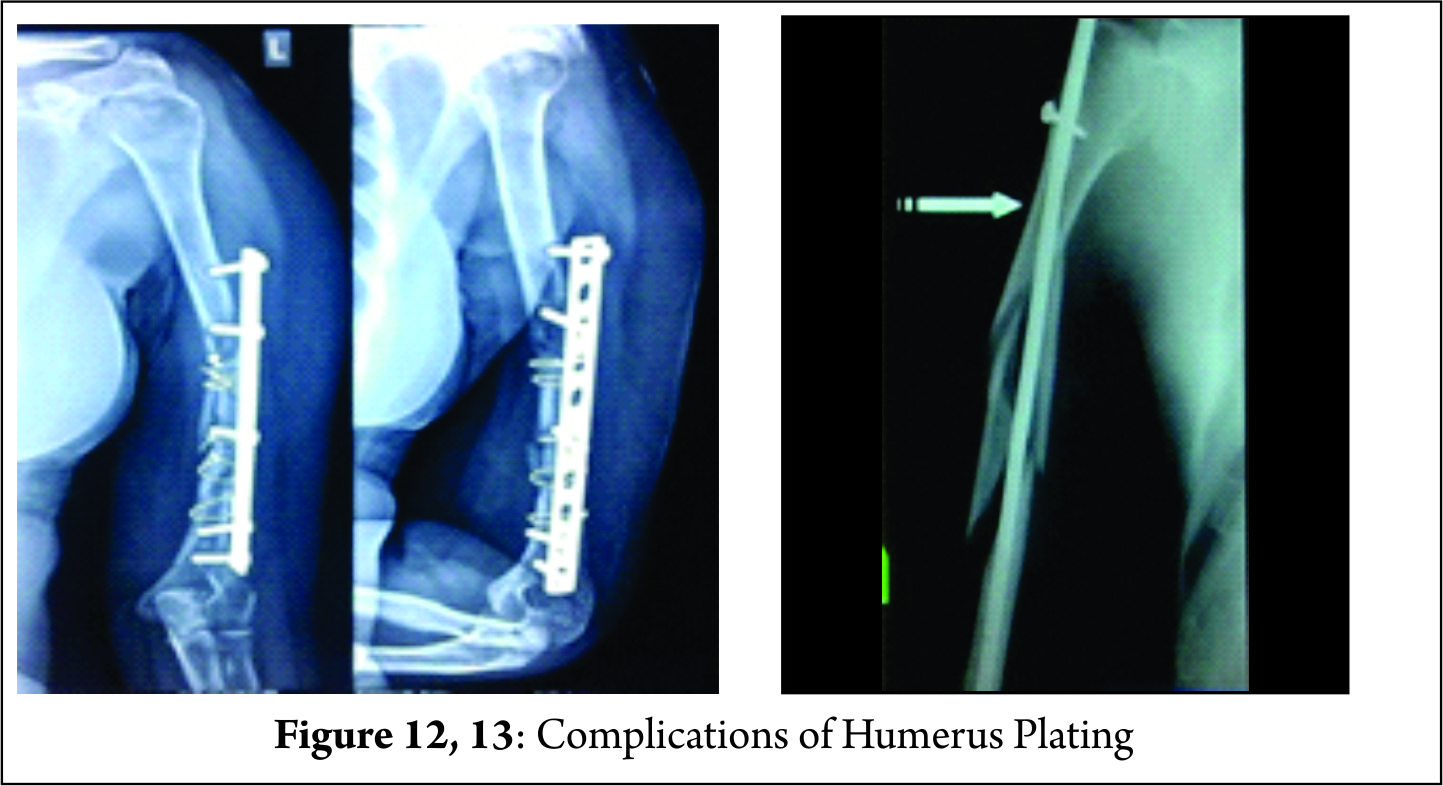
Devid Ring et al[20] to avoid varus stress of the elbow (shoulder abduction), used temporary external fixation (static or hinged) or temporary cross pinning of the elbow joint. When fixation is secure, stretching exercises can be started as soon as the patient is comfortable. Active self-assisted stretching exercises are key to regaining elbow and forearm motion. Static or dynamic splints may be used. Problems with internal fixation are stiffness, instability, or ulnar neuropathy. Infection is uncommon[20].

Evaluation
17 patients were reviewed at a mean follow up of 33 months (range, 18 to 60 months) and were clinically and radiologically evaluated. 2 patients were lost to follow up. One patient was followed up only up to 6 months. He had no pain and had functional range of motion from 30° flexion to 120°. Patients were clinically assessed according to the Mayo Elbow Performance score, on the basis of pain, mobility, stability and functional evaluation. Radiographic assessment of the elbow, based on A/P and lateral views was performed at last follow up.

Results
The mean Mayo Elbow Performance Score, at evaluation 18 patients was 86 (range, 75 to 100). The outcomes were classified as excellent in five elbows and good in 7, fair 5 and poor 1.
However, of great significance, delayed reconstruction the satisfactory outcomes decreased to 50%[21].
Ten patients had no pain while five reported to have mild pain on lifting heavy weights. 3 had negligible pain. None of the patients suffered from severe pain. Mean flexion at last follow up was 110°, ranging from 90° to 140°. Mean extension loss was 14, ranging from 0° to 80°. Mean pronation was 70° (range, 30° to 80°) while mean supination was 60° (range, 30° to 80°). Elbows were stable in flexion extension and varus-valgus in all the cases. One patient (See Fig.5.) returned 3 years after with pain on the lateral side of elbow. X ray showed reduced joint space at radio-capital joint. The radial head was excised. 2 years later after excision of head of radius, patient had no pain at elbow nor at distal radio ulnar joint.

Complications
Early complication was in a 22 year old male patient who had a persistent instability in the sagittal and frontal plane, after suturing type III coronoid fracture with ethibond and no surgical intervention for type I radial head fracture and lateral collateral ligament was repaired. At one month, this persistent instability required surgical revision performed through a medial approach and revealing cut through of ethibond sutures used for coronoid process fracture, which required screw fixation and repair of MCL. An orthofix ex fix was applied at the end of the operation to stabilize the whole reconstruction. He did well but had some amount of stiffness. 11 patients also had reduced range of movements between 30° to 120°. Other complications like heterotopic ossification, ulnar neuropathy, errant hardware, or malunion were not noticed in any of the patients.
A late complication occurred in a 50 year old female patient with type III radial head fracture and type I coronoid process fracture operated through posterior approach and excision of radial head was performed. The patient developed posterior interosseous nerve palsy for which flexor carpiradialis tendon transfer was performed at 12 months after electrodiagnostic testing showed no signs of progression of regeneration. Wrist movements were restored (Fig.6).
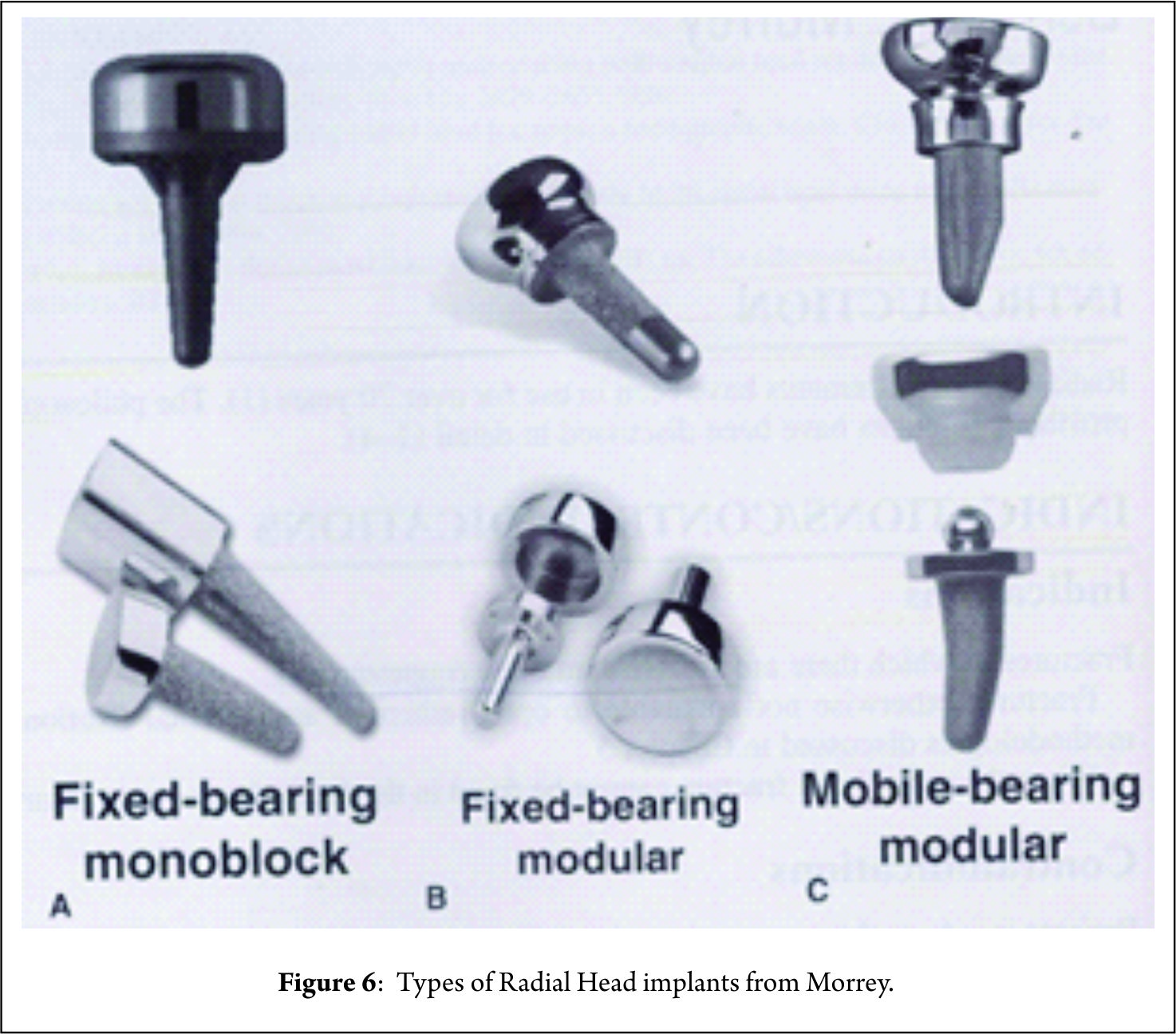
Discussion
A systematic approach to management of TT injury of elbow that surgically addresses each individual component of pathoanatomy has resulted in improved results. The 3 components -coronoid, LCL and radial head are repaired. Adequate coronoid fixation in terrible triad injuries is of paramount importance. Radial head is either reconstructed with ORIF or replaced. Radial head resection has not been advocated in literature; however, Tanna’s [6] and our experience has shown that in Indian scenario, head can be resected in some situations (described below) with good results
Terrible triad injuries of the elbow have been described by Hotchkiss[1] in 1996 as a clinical entity. This condition accounted for 4% of adult radial head fractures and 31% of elbow dislocations in a study by van Riet and Morrey[22]. Complete dislocations of the elbow joint with radial head fracture should be considered as TT injury unless proven otherwise. This entity was named as ‘Terrible Triad’ by Hotchkiss because of the serious complications like recurrence of instability, stiffness, pain and chronic osteoarthritis. However, during the last 2 decades understanding the biomechanics of injury, complex pathoanatomy improved surgical technique, and primary and secondary factors, which stabilize the elbow, results, have improved considerably. Associated lesions represent a significant diagnostic and therapeutic issue.
CT scan assessment should be performed in every case. C.T gives excellent information regarding size, shape and displacement of each fragment and guide the surgeon to plan the surgery with most adapted therapeutic management.
Several retrospective series have been reported, with each reflecting differing injury patterns, operative strategies, and outcomes.
Most of these injuries are managed surgically. The principle of surgical management is based on two main objectives: Restoration of bony stabilizing structures (radial head and coronoid process) and lateral collateral ligament repair.

The commonly used surgical protocol for TT of the elbow injuries is well established as follows:
(1) (a) Coronoid plays a vital role as an anterior buttress therefore reduce and fix the coronoid fracture first, if it is more than 10% of coronoid height. Coronoid tip fracture with height < 2 mm may be neglected. (b) Coronoid fracture, type 2 O’Driscollis fixed with a screw or coronoid plate through medial approach.
(2) Radial Head; (a) repair if 3 or less pieces b) if comminuted replace or resect. If radial head is excised MCL, LCL and coronoid must be repaired with hinged external fixator applied. Head resection is controversial
(3) LCL complex and the common extensor origin are always repaired.
(4) MCL is not routinely repaired. Repaired when elbow is unstable as detected by tests at the end of surgery.
(5)If residual instability of the elbow joint persists, apply a hinged external fixator is applied.
Although this treatment protocol has been proved effective, instability, contracture, re-operation, and progression to arthrosis still may be significant problems. Proper counseling must be done.

Approach
Commonly used approach is by a long posterior incision. Advantages claimed are that it allows access to both the medial and lateral aspects of the elbow, and it precludes the need for a second medial skin incision; also it is cosmetic, less seen; Morrey[6] assumed that any coronoid fracture must cause some injury to one or both of the collateral ligaments. Hence, exposure usually involves a posterior incision from which surgeon can inspect each ligament complex as necessary. Ligament will typically heal if the ulnohumeral joint is reduced and stable[12].

However, posterior approach is associated with complications of skin edge necrosis, seroma, hematoma and a possible infection. Lateral approach has the advantage of a small incision and repair of coronoid, radial head and LCL can be safely managed; usually medial incision is not required, occasionally indicated to reconstruct MCL or medial wall fracture of coronoid. Stabilizing coronoid fracture is easier from medial side. Zhang et al[23] used an extended lateral approach in combination with a separate medial approach in every patient. An anteromedial skin incision was made and an ”over- the-top” approach was used to expose most of the coronoid fracture[23].
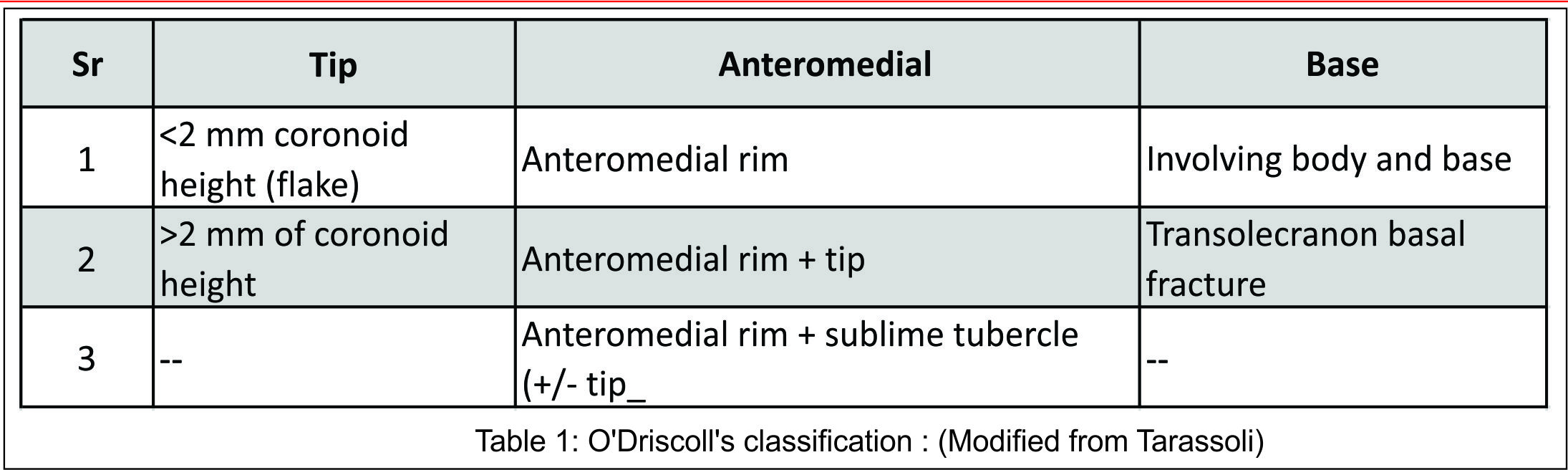

Resection of the head: Most of the authors suggest to repair or replace the radial head in the management of TT. The function of the radial head is to prevent valgus instability in the absence of MCL by abutting against capitulum. If radial head is excised and if there is MCL deficiency, gross valgus instability occurs. In isolated fractures of the radial head with comminution if excised, instability does not occur. Another important function of radial head is to tighten the LCL. In the absence of radial head LCL becomes loose. Morrey[18] has shown when the radial head is present and the collateral ligaments are intact up to 50% of the coronoid may be absent and the elbow will remain stable. Hence the value of either fixing the radial head fracture, if possible, or replacing the head with a prosthesis is clear in the presence of these specific associated injuries[12].
When the radial head is resected and even if the MCL, LCL, and coronoid both extensor or flexor muscles are repaired valgus instability may occur, if elbow is not fully immobilized because the repaired MCL, LCL are not strong enough to resist the valgus forces. In due to course of time MCL is stretched out and LCL is lax, valgus instability occurs. However, this can be prevented by a hinged external fixator, which protects the repair of the MCL, LCL and coronoid, till complete healing of all the reconstructions (MCL, LCL, and coronoid). They heal well at 6 weeks, when the external fixator can be removed.
If external fixator is not available, elbow should be immobilized by bridge plating as is done for distal end of radius or cross pinning is done. When all the repaired structures heal, elbow is stable even in the absence of radial head, a situation similar to resection of head for isolated radial head fracture. Thus, in management of TT the radial head can be excised provided all stabilizers are repaired and a hinged external fixator is applied properly as described above. Hinged elbow braces have a limited application as they rarely fit exactly, do not match the axis of elbow, and are prone to instability13. Cast immobilization is often insufficient.
In the Indian scenario,
1. Patients come late after injury, often >2 weeks
2. Proper sized radial head implants are not available
3. Patient cannot afford imported implants
4. Surgeon may not have the training of implant surgery
Prosthetic surgery has a high learning curve.
5. Poor infra structure
This situation made us to try resection and repair other structures with application of a hinged external fixator; it has given satisfactory results. Results of replacement are far from satisfactory, even in the hands of experienced surgeon and using modern modular prosthesis. Replacement needs refinement. Redial head repair is also associated with complications of stiffness of elbow and technically not so easy. Our results of excision of radial head with bony and ligamentous reconstruction are comparable. In our series, 7 radial heads were resected, with repair of all other primary and secondary stabilizers. Of the 7 cases, 6 had good stability and one resulting in intra-operative instability requiring additional stabilization with humeroulnar cross-pinning. In all other 6 cases, hinged external fixator (Ortho.fix) was applied. Two patients came with radial head already excised, by the previous surgeon who missed the diagnosis of TT and thought it just simple fracture of radial head (Fig.7).
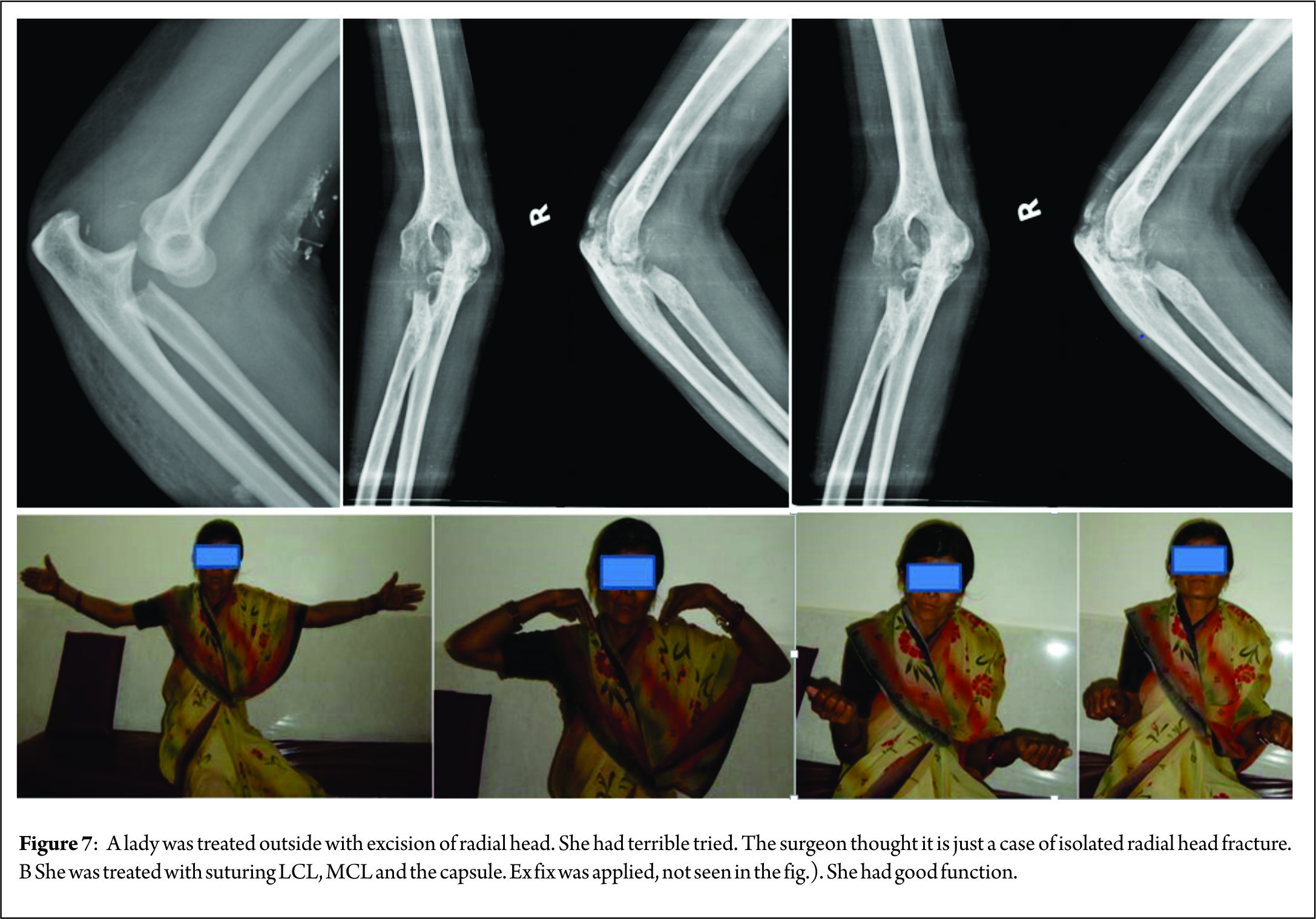

In most of the literature, radial head excision is not advocated; However Tanna’s [6] and our small experience has shown that in Indian scenario, we suggest radial head excision with reconstruction of all 3 primary and 2 other secondary stabilizers with application of hinged external fixator, when it is not possible to repair or replace, though the literature does not support and the number of cases treated with excision is too small. Further study of resection of head in TT is strongly recommended.

Radial head repair
Radio-capitellar contact along with LCL repair is crucial to restore stability the management of Tt2.
2 or 3 large pieces of head of radius can be reduced and fixed with mini fragment countersunk lag screw/s 2.7 or 3 mm headless or Herbert screws are used. If associated with radial neck fracture, plate may be applied in the “Safe Zone” – lateral surface of head as seen when the forearm is neutral (mid prone) position.

Radial head replacement
Radial head replacement is technically a difficult procedure in the treatment of TT injuries. Height, shape and size of the radial head should correspond to the height of the excised fragments; in cases of radial neck comminuted fractures under sizing of the removed head fragments is common, which can result in elbow valgus instability if accompanied by MCL injury. On the other hand, over sizing of the head fragments may cause overstuffing of the humero-radial joint, with the potential risk of stiffness and capitular erosion. Over stuffing of radial prosthesis necessitates reoperation. Properly sizing the radial head prosthesis can be challenging; and is performed with the elbow in extension, but the radiocapitellar joint is tighter in flexion than extension, which can lead to overstuffing. Also, biomechanical study has shown that no type of radial head prosthesis can restore elbow valgus stability to the same degree as was provided by the native radial head[24]. Arthrosis was more common in the arthroplasty group than in the ORIF group[25].

Tyler S Watters et al[25] reported that radial head arthroplasty has been shown to be a reliable technique for reconstruction of the radial head. The radial head prostheses interestingly were more stable and had a greater ROM when compared to ORIF. There was a learning curve for radial head replacement for proper head size selection, may result in overstuffed radiocapitellar joints. Excision of the radial head was strictly avoided without replacement[25].

The complications associated with prosthetic radial head replacement are similar to those for any prosthetic intervention; infection, loosening and osteoarthritis. The radial head implant impacts on the capitellar side of the joint resulting in erosion of the articular surface. The reasons for revision of prosthetic radial head replacement have recently been reviewed by van Riet et al[22]. The most common causes for subsequent intervention include loosening, instability and problems with articulation all of which are considered mechanical-type failures. The most common technical problem associated with these complications is failure to secure solid fixation of the stem. “Overstuffing” of the joint is one of the most common technical errors and leads to capitellar erosion and pain. It is also now recognized that the use of a radial head implant in the setting of a reconstructive surgery, or when there is associated injuries, is also associated with an increased incidence of complications[12].

Coronoid: The coronoid is clearly the most important articular stabilizer and key element in the humero-ulnar joint stability. 50% of the height of the coronoid process is necessary to ensure humero-ulnar sagittal stability. In TT injuries of the elbow, most coronoid fractures are type I fractures as confirmed by the series of Doornberg et al[14]. The anterior capsular attachment to the coronoid fragment or fragments should not be released because protecting the attachment enhances stability. Type II and III fractures require stable osteosynthesis, which might be performed through a lateral approach after radial head excision, or via a medial approach. In our series 6 type I fractures were ignored, 11 type II fractures were sutured to the capsule and 6 type III were fixed with screws or a plate through medial approach.

Isolated tip fracture: A tip fractures are sutured if fragment size amenable to repair (larger than 10% of coronoid height) via a lateral approach. If MCL was to be repaired, a medial approach was used. If the fragment is large (>10% coronoid height) it is fixed with a screw.
Anteromedial facet fracture: Fracture of the anteromedial facet of the coronoid process typically results from a varus posteromedial rotation injury force and is usually accompanied by an avulsion injury of the LCL [20].
Small anteromedial facet fractures are best repaired with a suture that engages the capsular attachment through a medial exposure. Open reduction and internal fixation (ORIF) of antero-medial facet is reliably stabilized with a screw or buttress plate that pushes the fracture fragment against the intact coronoid and deficient MCL is repaired. Medial approach is taken by separate medial skin incision. Pre-contoured buttress plate may be applied for comminuted fracture.

If the coronoid is severely comminuted and the fragments are loose or absorbed in the soft tissue, the coronoid is reconstructed by a tri-cortical graft from iliac crest. This usually occurs in patients with delayed presentation. (Fig.3.)
Basal coronoid Fracture:
Sub type I : Basal coronoid fracture is treated by ORIF by screw or a pre-contoured plate.

Controversy of coronoid tip fracture – Repair or not to repair?
Coronoid tip fractures are often associated with TT injuries, and rarely occur in isolation[26]. In many centres it is fixed [14], others have challenged this with biomechanical evidence suggesting that small (<10% of coronoid height) fractures contribute very little to stability, and any valgus instability should be addressed by repair of the MCL instead [14,26,27]. We have fixed tips only when it is > 10 %.

Terrible Triad with transolecranon fracture
Terrible triad transolecranon is a severe injury. The anterior translation of the forearm is the hallmark of this instability pattern and hence this injury is often referred to as a trans-olecranon fracture dislocation [28,29]. This is a Sub type II basal coronoid fracture of O’Driscoll classification. A large basilar fracture of the coronoid are nearly always associated with olecranon fracture–dislocations. Usually have a fracture of the radial head as well. Both the fractures are approached though the traumatic window of the olecranon by a long incision. A thick flap is raised to prevent skin necrosis. Care must be taken during handling of the ulnar nerve and while fixing coronoid for screw penetration into the ulnohumeral or proximal radioulnar joints. Olecranon fracture is fixed with a long plate [20] .

ULCL: The most important step in achieving stability is repair of lateral collateral ligament which is the primary stabilizer. Successful isometric repair is by placing the sutures at the centre of rotation of the elbow, which is located at the center of the capitular curvature on the lateral epicondyle and at supinator crest, to prevent the occurrence of any varus or postero-lateral instability.

MCL:
Systematic approach of medial collateral ligament remains controversial. Injuries to the MCL, which have been reported in 50–60% [13] of TT injuries, are not universally repaired. Forthmann [30] argues that MCL injuries tend to heal by scarring in simple elbow dislocations, and the repair of articular (and LCL complex) injuries in TT will effectively transform this injury into that of a simple dislocation, thereby rendering MCL repair unnecessary.
After repair of the coronoid process, radial head and lateral collateral ligament, the elbow should be fluoroscopically examined for stability, while it is flexed and extended with the forearm insupination, neutral position and pronation.
In 2004, Pugh et al [27] reviewed 36 TT injuries out of which isolated lateral approach was used in 26 cases. Radio-capitellar contact along with LCL repair is crucial to restore stability [2].

Their surgical protocol included fixation or replacement of the radial head, fixation of the coronoid fracture if possible, repair of associated capsular and lateral ligamentous injuries. After reconstruction of the lateral ligament complex, stability of elbow was evaluated in flexion-extension. In the absence of instability, the medial approach was not performed. In case of instability, a medial approach was chosen for reconstruction of the ligament complex and an external fixator was placed in some patients. The authors advocate that a medial approach should be performed only in case of persistent sagittal instability after reconstruction of bony structure and lateral collateral ligament. They recommend that isolated valgus instability in the coronal plane does not require medial collateral ligament repair as far as the elbow remains stable in flexion-extension.
Mathew et al [31] advocated that if the elbow remains congruous from approximately 30 degrees to full flexion in one or more positions of forearm rotation, repair of medial collateral ligament is not necessary. In our series, thirteen out of fifteen elbows treated through a medial approach reported damage to the medial collateral ligament. When radial head is excised MCL repair is mandatory

External Fixator
If instability persists despite repair of radial head and repair of the coronoid process, medial collateral ligament, or lateral collateral ligament, a static or hinged external fixator should be applied to maintain a concentric reduction of the elbow. Zeiders et al [32] have recommended the use of the external fixator in case of insufficient stability to allow complete mobilization after reconstruction of bony and ligamentous structures. These standard hinged external fixators are centered on the elbow centre of rotation. The external fixator allows early mobilizations within a protected range of motion to reduce the risk of secondary stiffness. In our series, we have invariably used hinged external fixators and reported that it prevents recurrent instability and protects reconstructed ligaments and soft tissue. External fixator is also indicated when radial head is excised. As shown in fig 4, fixators are also useful in neglected cases of terrible triad where the elbow is stiff [33].

Literature review
Zhang [2] from MGH Boston published an excellent paper on TT in July JOT 2016. One hundred of the 107 patients (93%) treated with open fixation of terrible triad injuries had no radiographic subluxation, so called drop sign. Five patients (5%) had persistent radiographic subluxation, 3 treated with a second surgery (3%). They concluded that Radiographic subluxation is very uncommon (2%) with current operative management of terrible triad injuries of the elbow within 2 weeks. They identified 2 risk factors or post-operative instability – (1) Delay of >2 weeks after injury, (2) Obesity. They suggested Patients treated more than 2 weeks after injury might benefit from ancillary fixation to limit subluxation (ie, cross pinning, hinged external fixation, or bridge plating).Modern techniques have decreased the incidence of post patient instability and other complications. Patients with higher BMI may be at risk for postoperative subluxation.
Yang et al[34] in 2013 reviewed 11 patients with TT of the elbow treated with hinged external fixator combined with mini-plate followed up to 12-20 months(mean, 15 months). According to Mayo elbow function evaluation standard, the results were excellent in five cases and good in four cases, and fair in two cases, with an excellent and good rate of 81.8%[4]. In 1 study, 11 patients with a terrible triad pattern, five of the elbows re-dislocated after operative treatment (including all 4 that had a radial head resection). The suture lasso technique was more reliable than the other techniques. The repair progresses from deep to superficial (coronoid, radial head, LCL) on the lateral side. The authors therefore favor fixation of the coronoid with a suture lasso except in the unusual case where the coronoid fracture is relatively undisplaced or stable[20].
In 2010 Chemama et al[35] published the results of 14 patients who were examined on an average of 63 months after injury. Several medial-sided ligament repairs were performed and motion results were similar to those of the current study, with an average flexion-extension arc of 18° to 127°. Mayo elbow performance score was 87 classified as excellent in 4 cases and good in 10.
There are limitations of this study. First, the number of patients was relatively small. Second, the study is not a randomized study. Third, though we have suggested radial head resection, the number of cases is too small and there are no biomechanical studies. On the other hand, the results showed that the technique provided good results with minimal morbidity. Considering review of literature and our own satisfactory experience, the TT of elbow is now no more terrible.

Conclusion
“Terrible triad” elbow fracture dislocation remains an unusual and challenging injury to treat. CT scan should be performed in all the cases to identify fracture patterns, comminution, and displacement. Surgical management is based on restoring the bony anatomy (radial head and coronoid process) and reconstructing (lateral collateral ligament) of the elbow to provide enough stability. A medial ligament reconstruction is indicated in cases of persistent instability. Although posterior approach has low risk of skin necrosis and is popular, we prefer lateral approach and when needed medial approach. Radial head excision is indicated in severely comminuted head in the situation prevailing in developing countries, mentioned above. Careful fluoroscopic examination of the elbow to assess any residual instability at the end of surgery and to determine the best position for immobilization as well as the safe arc of motion; Use of hinged external fixator is indicated when residual instability is detected at the end of surgery and in cases when radial head is resected; since it maintains reduction of the elbow and offers early mobilization. Optimal rehabilitation protocol is useful in allowing early motion while maintaining stability. With this modern treatment, the results of TT are satisfactory and TT is no more a terrible triad.


References

1. Hotchkiss RN. Fractures and dislocations of the elbow. In: Court-Brown C, Heckman JD, Koval KJ, Wirth MA, Tornetta P, Bucholz RW, eds. Rock-wood and Green’s Fractures in Adults. Philadelphia, PA: Lippincott-Raven; 1996.
2. Dafang Zhang, Matthew Tarabochia, Stein Janssen, David Ring, Neal Chen. Risk of Subluxation or Dislocation After Operative Treatment of Terrible Triad Injuries. J Orthop Trauma 2016;30(12):660–663.
3. McKee MD, Pugh DM, Wild LM, et al. Standard surgical protocol to treat elbow dislocations with radial head and coronoid fractures. Surgical technique. J Bone Joint Surg. Am. 2005;87:22–32.
4. Gupta A, Barei D, Khwaja A, et al. Single-staged treatment using a standardized protocol results in functional motion in the majority of patients with a terrible triad elbow injury. Clin Orthop Relat Res. 2014;472:2075–2083.
5. Chen NC, Ring D. Terrible triad injuries of the elbow. J Hand Surg. Am. 2015;40:2297–2303.
6. DilipTanna. Elbow dislocation with irreparable fracture radial head. I.J.O. May 13;47(3);283-7.
7. Morrey BF, An KN. Stability of the elbow: osseous constraints. Journal of shoulder and elbow surgery / American Shoulder and Elbow Surgeons [et al]. 2005;14(1 Suppl S):174S-8S.
8. Cohen MS: Fractures of the coronoid process. Hand Clin 2004;20:443-453.
9. Fornalski S, Gupta R, Lee TQ: Anatomy and biomechanics of the elbow joint. Tech Hand Up Extrem Surg. 2003;7:168-178.
10. Mason ML: Some observations on fractures of the head of the radius with a review of one hundred cases. Br J Surg. 1954;42:123-132.
11. Regan W, Morrey B. Classification and treatment of coronoid process fractures. Orthopedics 1992;15(7):845–8.
12. Bernard F. Morrey. Fractures of the Coronoid. Chapter 7 in Masters techniques in Orthopaedic Surgery; The Elbow, 3rd Edition (2015); Wolters Kluwer Pg.105 – 116.
13. Payam Tarassoli, Philop McCann, Rouin Amirfeyz. Complex instability of the elbow. Injury Int. J. Care Injured 48 (2017) 568-577.
14. Doornberg JN, Ring DC. Fracture of the anteromedial facet of the coronoid process. J Bone Joint Surg. Am 2006;88(10):2216–24.
15. Mezera K, Hotchkiss RN: Fractures and dislocations of the elbow, in Rockwood CA Jr, Green DP, Bucholz RW, Heckman JD (eds): Rockwood and Green’s Fractures in Adults, ed 5. Philadelphia, PA: Lippincott-Raven, 2001, pp 921- 952.
16. Beingessner DM, Stacpoole RA, Dunning CE, Johnson JA, King GJ: The effect of suture fixation of type I coronoid fractures on the kinematics and stability of the elbow with and without medial collateral ligament repair. J Shoulder Elbow Surg. 2007;16:213- 17.
17. Closkey RF, Goode JR, Kirschenbaum D, et al. The role of the coronoid process in elbow stability. A biomechanical analysis of axial loading. J Bone Joint Surg. Am. 2000; 82 A: 1749–1753. 187–195.
18. Morrey BF, Tanaka S, An KN. Valgus stability of the elbow: a definition of primary and secondary constraints. Clin Orthop Relat Res. 1991;265.
19. Kocher T. Operations at the elbow. In: Kocher T, ed. Textbook of Operative Surgery. London: Adam and Charles Black; 1911:313–318.
20. David Ring, Taylor Horst. Coronoid fracture. J Orthop Trauma 2015;29:437–440.
21. Bernard F. Morrey. Radial Head Prosthesis. Chapter 6 in Masters techniques in Orthopaedic Surgery; The Elbow, 3rd Edition (2015); Wolters Kluwer Pg.95-104.
22. Van Riet RP, Morrey BF. Documentation of associated injuries occurring with radial head fracture. Clinical orthopaedics and related research. 2008;466(1):130-4.
23. Chi Zhang, Biao Zhong, Cong-Feng Luo. Treatment strategy of terrible triad of the elbow: Experience in Shanghai 6th People’s Hospital. Injury Int. J. 45(2014) 942 – 948.
24. Leigh WB, Ball CM. Radial head reconstruction versus replacement in the treatment of terrible triad injuries of the elbow. Journal of shoulder and elbow surgery / American Shoulder and Elbow Surgeons [et al]. 2012;21(10):1336-41.
25. Tyler Steven Watters, Grant E. Garrigues, David Ring, and David S. Ruch. Fixation Versus Replacement of Radial Head in Terrible Triad: Is There a Difference in Elbow Stability and Prognosis? Clin Orthop Relat Res. 2014;472:2128–2135.
26. Ring D. Fractures of the coronoid process of the ulna. J Hand Surg. Am 2006;31(10):1679–89.
27. Pugh DM, Wild LM, Schemitsch EH, King GJ, McKee MD. Standard surgical protocol to treat elbow dislocations with radial head and coronoid fractures. The Journal of bone and joint surgery American volume. 2004;86-A(6):1122-30.
28. Ring D, Jupiter JB, Sanders RW, Mast J, Simpson NS. Transolecranon fracture dislocation
of the elbow. J Orthop Trauma 1997;11(8):545–50.
29. Mouhsine E, Akiki A, Castagna A, Cikes A, Wettstein M, Borens O, et al. Transolecranon anterior fracture dislocation. J Shoulder Elbow Surg. 2007; 16(3):352–7.
30. Forthman C, Henket M, Ring DC. Elbow dislocation with intra-articular fracture: the results of operative treatment without repair of the medial collateral ligament. J Hand Surg. Am 2007;32(8):1200–9.
31. Mathew PK, Athwal GS, King GJ. Terrible triad injury of the elbow: current concepts. The Journal of the American Academy of Orthopaedic Surgeons. 2009;17(3):137-51.
32. Zeiders GJ, Patel MK. Management of unstable elbows following complex fracture-dislocations–the “terrible triad” injury. The Journal of bone and joint surgery American volume. 2008;90 Suppl 4:75-84.
33. Kulkarni GS, Kulkarni VS, Shyam AK, Kulkarni RM, Kulkarni MG, Nayak P. Management of severe extra-articular contracture of the elbow by open arthrolysis and a monolateral hinged external fixator. J Bone Joint Surg Br. 2010 Jan;92(1):92-7.
34. Yang Y, Wang F. Hinged external fixator with mini-plate to treat terrible triad of elbow. Chinese journal of reparative and reconstructive surgery. 2013;27(2):151-4.
35. Chemama B, Bonnevialle N, Peter O, Mansat P, Bonnevialle P. Terrible triad injury of the elbow: how to improve outcomes? Orthopaedics & Traumatology, surgery & research (OTSR): 2010;96(2):147-54.


How to Cite this article: .Kulkarni GS, Kulkarni V, Kulkarni R, Kulkarni S, Kulkarni M. Terrible Triad – Terrible Triad is no more terrible! Journal of Clinical Orthopaedics Jan – June 2017; 2(1):14-26.

(Abstract    Full Text HTML)      (Download PDF)


Translate this page into:

Review of Important Recent Articles in Pediatric Orthopaedics

Vol 2 | Issue 1 |  Jan – June 2017 | Page 52-55 | Rujuta Mehta, Kailash Sarathy


Authors: Rujuta Mehta [1], Kailash Sarathy [1].

[1] Department of Pediatric Orthopaedics, B J Wadia Hospital For Children, Parel, Mumbai India

Address of Correspondence
Dr Rujuta Mehta
HOD, Dept. of Paediatric Orthopaedics, B J Wadia Hospital,
Nanavati Hospital, Jaslok Hospital & Shushrusha Hospital.
Email: rujutabos@gmail.com


Background

Paediatric orthopaedics as a super speciality has evolved in the last 3 decades to become a vast ocean of changing concepts and rethinking of treatment strategies and hence, is abundant in evidence based literature. In the last year over a 100 good articles and research papers have been published on various subjects. In this commentary, we have sifted out a few of the most relevant ones to the day to day clinical practice and some which are relevant to both the general orthopaedic surgeon and paediatric orthopaedic surgeon. The following is a compilation according to categories which we think will interest the reader. The summary has been enlisted here along with a short comment on the utility of the article. The reader is advised to go into the full text of any selected article if any particular article meets their requirements: as providing full text of each article is beyond the purview of this review , making it over lengthy.
Aim:To analyse the important articles published in the field of Pediatric Orthopaedics in the recent past which would have a significant impact in the understanding and management of various common Pediatric Orthopaedic disorders.

I) TRAUMA

1. “Pediatric Supracondylar Fractures: Variation in Fracture Patterns and the Biomechanical Effects of Pin Configuration.” by Jaeblon et al.(J Pediatr Orthop 2016;36:787–792) [1] REMARKS –This is one of the very few studies providing an insight on the biomechanical stability of pin configurations in various patterns of supracondylar fractures, showing the all lateral pin construct to provide favourable outcomes in most of the fracture patterns with fewer complications.
2. “Treatment of flexion-type supracondylar fractures in children: the ‘push–pull’ method for closed reduction and percutaneous K-wire fixation.”  by Chukwunyerenwa and his colleagues.(Journal of Pediatric Orthopaedics B 2016, 25:412–416)[2]Remarks- This is a research paper describing a new, simplified technique in treating flexion-type supracondylar humerus fractures (by push-pull technique) in pediatric population with optimal clinical and radiological outcomes. This technique would help the general orthopaedic surgeon to treat this difficult injury with ease.
3. “Conservative Management of Minimally Displaced (<2mm) Fractures of the Lateral Humeral Condyle in Pediatric Patients: A Systematic Review”.  A review article by Knapik et al. (J Pediatr Orthop 2017;37:e83–e87) [3]Remarks – This is paper provides a review of various published research papers regarding the management of minimally displaced lateral humeral condyle fractures, which is still a pandoras box to the orthopaedic surgeons. A conservative management can be attempted for minimally displaced fractures (<2mm) provided a close radiographic follow up is carried out.
4. “Closed Reduction and Percutaneous Pinning Versus Open Reduction and Internal Fixation for Type II Lateral Condyle Humerus Fractures in Children Displaced >2mm”. by Pennock et al. (J Pediatr Orthop 2016;36:780–786)[4]Remarks– This research paper describes about the surgical management in displaced lateral humeral condyle fractures (> 2mm) but with minimal joint incongruity, reported similar results with closed reduction and percutaneous pinning as well as open reduction with internal fixation. Closed reduction can be preferred due to its less invasiveness and operative time, only if joint congruity is confirmed. It outlines objective criteria for the different lines of management however the clinician must not forget the significant learning curve in the judgement of the displacement.
5. “Does operative fixation affect outcomes of displaced medial epicondyle fractures?”. By Stephanovich et al. (J Child Orthop (2016) 10:413–419) [5]RemarksAlthough this study provides a small cohort, reports higher union rates, less complications and early return activity especially sports, with operative management for displaced medial humeral condyle fractures. It deserves merit for attempting to study a large cohort for a rare injury, most clinicians are still unclear on its diagnosis and management and hence we recommend it as a must read.
6. “Compartment syndrome in infants and toddlers”. Research paper published by Broom et al. (J Child Orthop (2016) 10:453–460) [6]Remarks– This paper provides an insight on the incidence of compartment syndrome in children less than 3 yrs of age, as diagnosis is often delayed. It has been reported that, even with a delay in diagnosis (48-72 hrs after injury) the outcomes are favourable after fasciotomy especially in toddlers.

II) OSTEO-ARTICULAR INFECTIONS

1. “Kocher Criteria Revisited in the Era of MRI: How Often Does the Kocher Criteria Identify Underlying Osteomyelitis?” , A research paper published by Nguyen and his colleagues.(J Pediatr Orthop 2017;37:e114–e119) [7]Remarks–This is one of the recent landmark papers in musculoskeletal infections showing the importance of the additional investigation of MRI in children with the diagnosis of septic arthritis according to the Kocher’s criteria, as there is a high chance of concomitant osteomyelitis.
2. “Laboratory predictors for risk of revision surgery in pediatric septic arthritis.”Research workby Telleria et al.(J Child Orthop (2016) 10:247–254) [8]Remarks –This research paper throws light on the predictors of revision surgery following index surgery for septic arthritis in children, and predicts a positive blood culture and a high CRP at initial presentation to be statistically significant risk factors.
3. “Tubercular dactylitis in children”. By Balaji and his colleagues. (Journal of Pediatric Orthopaedics B 2017, 26:261–265) [9]Remarks– This research paper provide light on the delay in diagnosing TB dactylitis as there are various mimickers, and prompt multi-drug therapy as the treatment of choice.
4. “Hand and wrist tuberculosis in paediatric patients – our experience in 44 patients”, By Prakash et al. (Journal of Pediatric Orthopaedics B 2017, 26:250–260) [10]Remarks – This research provides a large cohort of patients with tuberculosis of upper limb especially, wrist and hand. A prompt early diagnosis and management in the form of ATT is essential to get favourable outcomes and prevent morbidities in the form of residual stiffness and pain due to the development of arthritis.

III) HIP DISORDERS

1. “Avascular necrosis following closed reduction for treatment of developmental dysplasia of the hip: a systematic review”, by Bradley and his colleagues.(J Child Orthop (2016) 10:627–632) [11]Remarks – This is a review article on the incidence of AVN following closed reduction for DDH, with a significantly large follow up, showing a significant amount of AVN (10%).
2. “Long-term outcome following medial open reduction in developmental dysplasia of the hip: a retrospective cohort study”,a study by Gardner and his colleagues.(J Child Orthop (2016) 10:179–184) [12]Remarks– This study provides an evidence based review of medial open reduction in the treatment of dysplasia of hip, showing a significant amount of AVN and unsatisfactory outcome on long term follow up of these cases although initial short term results are satisfactory. This would probably explain why this operative approach is not so popular over the conventional Somerville anterior approach(bikini) which is accepted worldwide besides being a cosmetic approach
3. “MRI versus computed tomography as an imaging modality for post reduction assessment of irreducible hips in developmental dysplasia of the hip: an inter-observer and intra-observer reliability study”. A study conducted Barkatali and his colleagues.(Journal of Pediatric Orthopaedics B 2016, 25:489–492) [13]Remarks – This is one of the very few papers showing a definite comparison between the use of MRI and CT scan for the assessment of irreducible hips post reduction and provides a clear recommendation of using MRI over CT scan.
4.“The alpha angle as a predictor of contralateral slipped capital femoral epiphysis”,by Boyle and his colleagues.(J Child Orthop (2016) 10:201–207) [14]Remarks– This is one of the recent studies throwing a highlight on development of SCFE in the contralateral hip which could be prevented by measuring the alpha angle and assessing the risk during the index surgery with a statistically significant correlation. It is an excellent article which provides very useful guidelines to judge the angle of slip accurately.
5. “Delay in the Diagnosis of Stable Slipped Capital Femoral Epiphysis”. A study conducted by Iwinski and his colleagues.(J Pediatr Orthop 2017;37:e19–e22) [15]REMARKS –This is one of the recent articles that provides a brief information the factors contributing to the delay in the diagnosis of stable SCFE. A significant delay has been reported when the patient is seen by a non-orthopedic provider and when the patient presents with knee pain instead of hip.

IV) CLUBFOOT

1. “Ponseti method compared to previous treatment of clubfoot in Norway. A multicenter study of 205 children followed for 8–11 years”. A study conducted by Saetersdal K and his colleagues.(J Child Orthop (2016) 10:445–452) [16]Remarks– This article throws a significant light on the Ponseti method with a good amount of follow up, showing the significance and merits of using Ponseti method in comparison to other casting methods. It also highlights the paradigm shift that has occurred with respect to approachto  club foot  treatment.
2. “Treatment of complex idiopathic clubfoot using the modified Ponseti method: up to 11 years follow-up”. A study conducted by Matar H E and his colleagues.(Journal of Pediatric Orthopaedics B 2017, 26:137–142) [17]REMARKS – This is one of the few long term studies on the use of modified Ponseti method for the management complex idiopathic clubfoot showing effective and reliable results, but with a small sample size as compared to the Indian sub- continent.
3. “Tarsal Bone Dysplasia in Clubfoot as Measured by Ultrasonography: Can it be Used as a Prognostic Indicator in Congenital Idiopathic Clubfoot? A Prospective Observational Study”. A study by Chandrakanth U and his colleagues.(J Pediatr Orthop 2016;36:725–729) [18]Remarks– Excellent article. This is one of the new areas of research in the management of clubfoot, using the amount of tarsal bone dysplasia as a marker for prognostication in children with clubfoot. Although a short term study, has paved the way for this new area of research and analysis in the management of clubfoot.

V) FLAT FOOT

“What’s New in Pediatric Flatfoot?”. This was a POSNA review article reported by Bauer K, Mosca V S and Zionts L E. (J Pediatr Orthop 2016;36:865–869) [19]Remarks–This paper deserves a lot of merit for being an eye opener especially regards with non uniformity of clear definitions and management protocols .Here the authors have described about the proponents of managing various causes of pediatric flatfoot like flexible flat foot, Tarsal Coalition and CVT, and the latest concept regards to the management of the above conditions.

VI) CEREBRAL PALSY

1. “Stepwise surgical approach to equino-cavovarus in patients with cerebral palsy”. This article was published by Won H S and his colleagues. (Journal of Paediatric Orthopaedics B 2016, 25:112–118) [20]Remarks –This article provides a brief and clear outline about the step wise management of common foot deformities encountered in Cerebral Palsy.
2. “A balanced approach for stable hips in children with cerebral palsy: a combination of moderate VDRO and pelvic osteotomy”, published by Reidy K et al.(J Child Orthop (2016) 10:281–288) [21]Remarks – Providing a moderate but adequate amount of varus along with acetabular procedure, gives a favourable outcome especially in CP children with GMFCS IV and V.

VII) OBSTETRIC BRACHIAL PLEXUS PALSY

1. “Correction of elbow flexion contracture by means of olecranon resection and anterior arthrolysis in obstetrical brachial plexus palsy sequelae”. A study conducted by Senes and his colleagues.(Journal of Pediatric Orthopaedics B 2017, 26:14–20) [22]Remarks- This is a pilot study which provides information on a new technique of olecranon tip resection with elbow arthrolysis in young patients with OBPP sequelae with reliable outcomes. However this is not a widely practised procedure we would advise the novice reader to interpret and adopt with caution as it is meeting with scepticism even in expert hands.
2. “Evaluation of functional outcomes and preliminary results in a case series of 15 children treated with arthroscopic release for internal rotation contracture of the shoulder joint after Erb’s palsy”. A study conducted by Elzohairy and his colleagues. (J Child Orthop (2016) 10:665–672) [23]Remarks–This article describes a new minimally invasive technique for the management of internal rotation contracture in the children with OBPP at a younger age with favourable mid-term results.


References

1. Jaeblon T, Anthony S, Ogden A, Andary JJ. Pediatric Supracondylar Fractures: Variation in Fracture Patterns and the Biomechanical Effects of Pin Configuration. J Pediatr Orthop. 2016 Dec;36(8):787-792.
2. Chukwunyerenwa C, Orlik B, El-Hawary R, Logan K, Howard JJ. Treatment of flexion-type supracondylar fractures in children: the ‘push-pull’ method for closed reduction and percutaneous K-wire fixation. J Pediatr Orthop B. 2016 Sep;25(5):412-6.
3. Knapik DM, Gilmore A, Liu RW. Conservative Management of Minimally Displaced (≤2 mm) Fractures of the Lateral Humeral Condyle in Pediatric Patients: A Systematic Review. J Pediatr Orthop. 2017 Mar;37(2):e83-e87.
4. Pennock AT, Salgueiro L, Upasani VV, Bastrom TP, Newton PO, Yaszay B. Closed Reduction and Percutaneous Pinning Versus Open Reduction and Internal Fixation for Type II Lateral Condyle Humerus Fractures in Children Displaced >2 mm. J Pediatr Orthop. 2016 Dec;36(8):780-786.
5. Stepanovich M, Bastrom TP, Munch J 3rd, Roocroft JH, Edmonds EW, Pennock AT. Does operative fixation affect outcomes of displaced medial epicondyle fractures? J Child Orthop. 2016 Oct;10(5):413-9.
6. Broom A, Schur MD, Arkader A, Flynn J, Gornitzky A, Choi PD. Compartment syndrome in infants and toddlers. J Child Orthop. 2016 Oct;10(5):453-60.
7. Nguyen A, Kan JH, Bisset G, Rosenfeld S. Kocher Criteria Revisited in the Era of MRI: How Often Does the Kocher Criteria Identify Underlying Osteomyelitis? J Pediatr Orthop. 2017 Mar;37(2):e114-e119.
8. Telleria JJ, Cotter RA, Bompadre V, Steinman SE. Laboratory predictors for risk of revision surgery in pediatric septic arthritis. J Child Orthop. 2016 Jun;10(3):247-54.
9. Saibaba B, Raj Gopinathan N, Santhanam SS, Meena UK. Tubercular dactylitis in children. J Pediatr Orthop B. 2017 May;26(3):261-265.
10. Prakash J, Mehtani A. Hand and wrist tuberculosis in paediatric patients – our experience in 44 patients. J Pediatr Orthop B. 2017 May;26(3):250-260.
11. Bradley CS, Perry DC, Wedge JH, Murnaghan ML, Kelley SP. Avascular necrosis following closed reduction for treatment of developmental dysplasia of the hip: a systematic review. J Child Orthop. 2016 Dec;10(6):627-632
12. Gardner RO, Bradley CS, Sharma OP, Feng L, Shin ME, Kelley SP, Wedge JH. Long-term outcome following medial open reduction in developmental dysplasia of the hip: a retrospective cohort study. J Child Orthop. 2016 Jun;10(3):179-84.
13. Barkatali BM, Imalingat H, Childs J, Baumann A, Paton R. MRI versus computed tomography as an imaging modality for postreduction assessment of irreducible hips in developmental dysplasia of the hip: an interobserver and intraobserver reliability study. J Pediatr Orthop B. 2016 Nov;25(6):489-92.
14. Boyle MJ, Lirola JF, Hogue GD, Yen YM, Millis MB, Kim YJ. The alpha angle as a predictor of contralateral slipped capital femoral epiphysis. J Child Orthop. 2016 Jun;10(3):201-7.
15. Hosseinzadeh P, Iwinski HJ, Salava J, Oeffinger D. Delay in the Diagnosis of Stable Slipped Capital Femoral Epiphysis. J Pediatr Orthop. 2017 Jan;37(1):e19-e22.
16. Sætersdal C, Fevang JM, Bjørlykke JA, Engesæter LB. Ponseti method compared to previous treatment of clubfoot in Norway. A multicenter study of 205 children followed for 8-11 years. J Child Orthop. 2016 Oct;10(5):445-52.
17. Matar HE, Beirne P, Bruce CE, Garg NK. Treatment of complex idiopathic clubfoot using the modified Ponseti method: up to 11 years follow-up. J Pediatr Orthop B. 2017 Mar;26(2):137-142.
18. Chandrakanth U, Sudesh P, Gopinathan N, Prakash M, Goni VG. Tarsal Bone Dysplasia in Clubfoot as Measured by Ultrasonography: Can It be Used as a Prognostic Indicator in Congenital Idiopathic Clubfoot? A Prospective Observational Study. J Pediatr Orthop. 2016 Oct-Nov;36(7):725-9
19. Bauer K, Mosca VS, Zionts LE. What’s New in Pediatric Flatfoot? J Pediatr Orthop. 2016 Dec;36(8):865-869.
20. Won SH, Kwon SS, Chung CY, Lee KM, Lee IH, Jung KJ, Moon SY, Chung MK, Park MS. Stepwise surgical approach to equinocavovarus in patients with cerebral palsy. J Pediatr Orthop B. 2016 Mar;25(2):112-8.
21. Reidy K, Heidt C, Dierauer S, Huber H. A balanced approach for stable hips in children with cerebral palsy: a combination of moderate VDRO and pelvic osteotomy. J Child Orthop. 2016 Aug;10(4):281-8.
22. Senes FM, Catena N, Dapelo E, Senes J. Correction of elbow flexion contracture by means of olecranon resection and anterior arthrolysis in obstetrical brachial plexus palsy sequelae. J Pediatr Orthop B. 2017 Jan;26(1):14-20.
23. Elzohairy MM, Salama AM. Evaluation of functional outcomes and preliminary results in a case series of 15 children treated with arthroscopic release for internal rotation contracture of the shoulder joint after Erb’s palsy. J Child Orthop. 2016 Dec;10(6):665-672.


How to Cite this article: .Mehta R, Sarathy K. Review of Important Recent Articles in Paediatric Orthopaedics Journal of Clinical Orthopaedics .Jan – June 2017; 2(1):52-55.

(Abstract    Full Text HTML)      (Download PDF)


Translate this page into:

Potpourri – Recent and relevant literature in Shoulder Arthroplasty, Arthroscopy and Trauma

Vol 2 | Issue 1 |  Jan – June 2017 | Page 49-51 | Vivek Pandey, Sandesh Madi, Naveen Mathai


Authors: Vivek Pandey [1], Sandesh Madi [1], Naveen Mathai [1].

[1] Kasturba Medical College, Manipal University, Karnataka, India- 576104

Address of Correspondence
Dr. Vivek pandey
Kasturba Medical College, Manipal University,
Karnataka, India- 576104
Email: vivekortho@gmail.com


1. Slow or accelerated Rehabilitation after cuff repair, A matter of time or is it?
There exists lot of ambiguity in rehabilitation protocols among shoulder surgeons following arthroscopic rotator cuff repairs. It is an overwhelming task to balance between initiating early range of motion without disturbing the integrity of the cuff repair. Following arthroscopic single-tendon rotator cuff repair, Mazzocca et al [1] revealed that no differences in quality of life scores or rotator cuff healing were identified after comparing two groups of patients undergoing either immediate (within three days) or delayed (after twenty eight days) postoperative rehabilitation protocols. Other factors such as age of the patient, cuff and bone quality, tear geometry, repair techniques and implants play vital role in determining the rehabilitation regime and probably needs to be tailored accordingly. Moreover, recent meta-analysis by Chang et al [2] comparing early versus delayed mobilisation protocols revealed hardly any differences in rotator cuff healing, final shoulder range of motion or patient outcomes.

2. Massive cuff tears: approaches for a costly affair
Presently, there are three possible strategies for the management of massive cuff tears with pseudopalsy without Osteoarthritis: 1) Arthroscopic Rotator Cuff Repair (ARCR) with option to arthroscopically revise once. 2) ARCR with immediate conversion to Reverse Total Shoulder Arthroplasty (RTSA) on potential failure, or 3) Primary RTSA. In an economic and decision based analysis (Markov decision model), Dornan et al have concluded that Primary ARCR with conversion to RTSA on potential failure was found to be the most cost-effective strategy in such cases [3]. An important observation was this result independent of age of the patient. Primary ARCR with revision ARCR on potential failure was a less cost-effective strategy. RTSA is not the panacea for massive cuff tear management and should be offered only as a last resort after exhausting available repair options.

3. Predictors of Re-tears after cuff reapir
There are diverse factors that determine the healing of repaired rotator cuff tears. Reported rates of re-tear after rotator cuff repair widely varies from 11% to 94% [4,5] . In a prognostic case series, Kim et al [6] attempted to identify pre-operative factors that can predict the rate of re-tears following rotator cuff repairs. The observations made are noted in table 1 and included mostly the charaterictic of the tear and duration of symptoms. Surprisingly comorbidities like old age, diabetes, smoking and fatty degeneration of tendons did not significantly predict re-tears.

4. Does the repair of cuff stays for long?
A Long term outcome after rotator cuff repair, 2-10 year long study. After the repair of the rotator cuff, it has always been intriguing that what happens to the repair in long term? Does the repair remains intact long enough and does the clinical results do not deteriorate over time? Heuberer et al [7] published their short and long term data recently involving arthroscopic repair of full thickness supraspinatus tear with/without partial infraspinatus tear. They followed 30 patients at 2- and 10 year with clinical scores ((Constant Murley and UCLA) and MRI for structural healing. MRI at two year follow up revealed 42% of patients with a full-thickness re-rupture, while 25% had a partial re-rupture, and 33% of tendons remained intact. The 10-year MRI follow-up (129 ± 11 months) showed 50% with a total re-rupture, while the other half of the tendons were partially re-ruptured (25%) or intact (25%). The UCLA and constant score remained high at 2- and 10 year follow up as compared to preop status. The constant total score and strength subscore remained high in patients with intact tendon versus those with retear. Majority patients (83.3%) rated their satisfaction as excellent. However the complete retear rates are almst 50% with single row. It would be interesting to analyse the repair of similar tears with double row and look at the outcome.

5. What is the critical Glenoid bone loss after which soft tissue bankart repair does not restore glenohumeral biomechanics and movement?
It was Itoi et al who brought the concept of critical bone loss of 21% in glenoid beyond which a soft tissue Bankart repair may not suffice to provide stability [8]. This brought the concept of bone augmentation using Latarjet procedure, Iliac crest graft or distal tibia allograft. However, recently Shin et al [9] challenged this concept of reconsidering this 21% bone loss as critical limit. In their study on eight cadaveric shoulder, they created 10%, 15%, 20% and 25% anteroposterior glenoid bone loss. After the soft tissue Bankart repair, the shoulder were subjected to range of motion, translation and humeral head position at 600 abduction with 40N rotator cuff muscle loading. They concluded that critical bone loss after which the biomechanics of the shoulder cannot be restored is 15%, and not 20-25% which has been the current recommendation for bone augmentation.

6. RSA versus conservative treatment in 3- or 4-part fracture of proximal humerus in elderly. Which is better?
Since the advent of RSA and its expanding indication, there has been a debate about the use of RSA in the treatment of proximal humeral fracture especially elderly patients. ORIF and hemiarthroplasty (HA) remained two essential form of treatment in these patients. However, ORIF carried a higher complications like implant failure due to osteoporosis and comminution whereas HA caused problem due to tuberosity nonunion. Hence, RSA became increasingly a popular option for the treatment of such challenging fracture. However, Roberson et al [10] did a two year retrospective review of patients older patients (>70 year) who underwent RSA for 3- or 4-part fracture of proximal humerus versus conservative treatment. They reported minimal benefits of RSA over conservative treatment at two years. The RSA group was no better than conservative group whether it was achievement of range of movement or patient reported outcomes.

7. Can local application of Vancomycin powder reduce the infection rate after total shoulder replacement?
Despite all the aseptic measures, the Methicillin resistant and Propionibacterium infection after the total shoulder replacement is a nightmare for the surgeon. The cost to treat postoperative infection till revision can range up 47260$ in USA. Any measure which can reduce the infection rate and cost to treat such problem will be a great idea. Based upon prevalent rates of infection in shoulder arthroplasty, Daniel Hatch et al [11] did an analysis of cost effective of local use of Vancomycin powder (2-18$/1000 mg) usage over the local wound to prevent such infection, and concluded that local application of Vancomycin powder is going to be highly cost effective in preventing such infection.


References

1. Mazzocca AD, Arciero RA, Shea KP, Apostolakos JM, Solovyova O, Gomlinski G et al. The effect of early range of motion on quality of life, clinical outcome, and repair integrity after arthroscopic rotator cuff repair. Arthroscopy. 2017 Jun; 33(6):1138-1148.
2. Chang K, Hung C, Han D, Chen W, Wang T, Chien K. Early versus delayed passive range of motion exercise for arthroscopic rotator cuff repair: A meta-analysis of randomized controlled trials. Am J Sports Med 2014; 43: 1262-1273.
3. Dornan GJ, Katthagen JC, Tahal DS, Petri M, Greenspoon JA, Denard PJ et al. Cost-Effectiveness of Arthroscopic Rotator Cuff Repair Versus Reverse Total Shoulder Arthroplasty for the Treatment of Massive Rotator Cuff Tears in Patients With Pseudoparalysis and Nonarthritic Shoulders. Arthroscopy. 2017 Apr 30; 33(4):716-25.
4.Le BT, Wu XL, Lam PH, Murrell GA. Factors predicting rotator cuff retears: An analysis of 1000 consecutive rotator cuff repairs. Am J Sports Med 2014; 42: 1134-1142.
5.Wang VM, Wang FC, McNickle AG, et al. Medial versus lateral supraspinatus tendon properties: Implications for double-row rotator cuff repair. Am J Sports Med 2010; 38: 2456-2463.
6. Kim IB, Kim MW. Risk factors for retear after arthroscopic repair of full-thickness rotator cuff tears using the suture bridge technique: Classification system. Arthroscopy. 2016. Nov 30;32(11):2191-200.
7. Heuberer PR, Smolen D, Pauzenberger L, Plachel F, Salem S, Laky B, Kriegleder B, Anderl W. Longitudinal Longterm Magnetic Resonance Imaging and Clinical Follow-up After Single-RowArthroscopic Rotator Cuff Repair: Clinical Superiority of Structural Tendon Integrity. Am J Sports Med. 2017 May;45(6):1283-1288
8. Itoi E, Lee SB, Berglund LJ, Berge LL, An KN. The effect of a glenoid defect on anteroinferior stability of the shoulder after Bankart repair: a cadaveric study. J Bone Joint Surg Am. 2000 Jan;82(1):35-46
9. Shin SJ, Koh YW, Bui C, Jeong WK, Akeda M, Cho NS, McGarry MH, Lee TQ. What Is the Critical Value of Glenoid Bone Loss at Which Soft Tissue Bankart Repair Does Not Restore Glenohumeral Translation, Restricts Range of Motion, and Leads to Abnormal HumeralHead Position? Am J Sports Med. 2016 Nov;44(11):2784-2791.
10. Troy A. Roberson, Charles M. Granade, Quinn Hunt, James T. Griscom, Kyle J. Adams, Amit M. Momaya, Adam Kwapisz, Michael J. Kissenberth, Stefan J. Tolan, Richard J. Hawkins, John M. Tokish. Nonoperative management versus reverse shoulder arthroplasty for treatment of 3- and 4-part proximal humeral fractures in older adults. Journal of Shoulder and Elbow Surgery, 2017-06-01, Volume 26, Issue 6, Pages 1017-1022,
11. The cost-effectiveness of vancomycin for preventing infections following shoulder arthroplasty: a break even analysis. M. Daniel Hatch, Stephen D. Daniels, Kimberly M. Glerum, Laurence D. Higgins. Journal of Shoulder and Elbow Surgery, 2017-05-01, Volume 26, Issue 5, Pages e144-e145


How to Cite this article: Pandey V, Madi S, Mathai N. Potpourri – Recent and relevant literature in Shoulder Arthroplasty, Arthroscopy and Trauma . Journal of Clinical Orthopaedics Jan – June 2017; 2(1):49-51.

(Abstract    Full Text HTML)      (Download PDF)


Translate this page into:

Floating Hip

Vol 2 | Issue 1 |  Jan – June 2017 | Page 43-48 | Ramesh K Sen, Lokesh Jha


Authors: Ramesh K Sen [1], Lokesh Jha [1].

[1] Dept of Orthopaedics, Fortis Hospital Mohali, Punjab

Address of Correspondence
Dr. Ramesh K Sen
Director Orthopaedics, Fortis Hospital Mohali, Punjab
Email: senramesh@gmail.com, Senramesh@rediffmail.com


Abstract

Fractures of the pelvis or acetabulum concomitantly occurring with a femur fracture irrespective of their location constitute the term floating hip. These represent a wide spectrum of injury patterns which require surgical intervention. These fractures are a result of high velocity trauma secondary to road traffic accidents or fall from height. Various combinations and fracture patterns are described in the wide spectrum of floating hips. Management of these cases proceed in line with the principles of damage control orthopaedics. Fixation of unstable pelvic fractures is equivocally done with external fixators when indicated. Further guidelines with respect to the sequence of fixation of these fractures are lacking. We recommend fixation of unstable pelvic fractures with external fixator and adequate resuscitation in accordance with principles of damage control orthopaedics. Following this, preference is given to dislocation of the hip or fractures of neck of femur which endanger viability of the head of femur. The fixation of femur comes next in priority and the rest including fractures of acetabulum, sacrum, SI joint can be fixed at a later date.


Background

The eponym floating has been added to a myriad of various injury patterns, congenital anomalies, surgical process and surgical complications. (1) Floating joint is one where there is skeletal discontinuity or disruption proximal and distal to that joint. Disruption of the skeletal continuity above and below an articulation with associated neurovascular and or soft tissue damage which affects the functional outcome and influences management decisions can be considered a floating joint (2). Floating hip is defined as a fracture of the pelvis or acetabulum with a concomitant femur fracture (3, 4). All types of pelvis, acetabulum and femur fractures can occur in various permutations and combinations with each other. This kind of injury has been shown to be more common in young adults who sustain road traffic accidents and fall from height. Mechanisms in road traffic accidents range from Dashboard injury or a side blow injury to a pedestrian or a motorcyclist (3, 8 – 12). This uncommon combination of injuries has been documented to occur once in every 10,000 fractures (6,7). These are not isolated injuries but are known to be a part of a spectrum in poly trauma patients with concurrent injuries which may involve the lung, abdominal viscera, the central nervous system and other bones (9). Mortality in cases of combined shaft femur fractures with pelvis, thorax, head or Abdominal injuries range from 50% to 77% implicating the grave nature of floating hips when there is proximal involvement of a unstable pelvic fracture.(13)

Classification, Mechanism And Fracture Patterns

Floating hips have been classified as per Liebergall into groups A and B (5). Group A included femoral fractures with an ipsilateral unstable vertical shear or open book pelvic fracture [Fig 1]. In Group B fractures of the acetabulum were concomitantly present with a femur fracture. Technically only the latter would classify as a floating hip [Fig. 2].
Mueller classified floating hips into 3 types (4). Type A, a combination of acetabular and femoral fractures, type B combination of pelvic and femoral fractures, while type C was a combination of fractures of acetabulum pelvis and femur.


While the above 2 classification were based on the location of the fractures, later in 2002, in another article Liebergall proposed two types of injury and correlated it with its mechanism of action (3). The first is a posterior type injury: a posterior type acetabular fracture with ipsilateral diaphyseal femoral fracture. This was said to be a consequence of Dashboard injury where there was a direct blow to the knee. The force was transmitted from the femur to the posterior elements of acetabulum as the hip was in a flexed position. This caused a posterior wall or a transverse with posterior wall fracture of the acetabulum. For this combination to occur the acetabular fracture must have preceded the femur fracture following which there was still persistent force to cause bending forces in the diaphysis and cause a short oblique or a transverse fracture. These fracture patterns can also be associated with ligamentous derangement of the knee (tear in PCL) and or patella fracture with or without knee effusion (3).
The second type was the central type wherein there was a central type acetabular fracture and an ipsilateral proximal femoral fracture. The central fracture dislocation is an old eponym to describe the inward protrusion of femoral head into the pelvis which occurs unceasingly due to a bi-columnar fracture or displaced anterior and transverse fractures without posterior involvement. This pattern of injury was found in patients who have a history of fall and among pedestrians struck by a moving four-wheeler. Here the impact of injury was the lateral aspect of the greater trochanter and the transfer of force was to the hip joint which was transmitted centrally across the hip into the pelvis. The remaining force dissipated to the surrounding structures causing a fracture in the proximal femur if it hadn’t occurred at the time of impact. There were no associated knee injuries in these patients.
This suggested mechanism of injury and its subsequent consequences have been disputed by a retrospective study on 57 patients by Burd et al (9). Though data on mechanism of injury were not available in their study, there were no significant correlation between the type of femur fracture and associated acetabular fractures as described by Liebergall (9).


Femur fractures are mostly trochanteric or diaphyseal [Fig.2,3] rarely involving the neck of femur while distal femur fractures were not reported in the series of Liebergall (3, 5). He opined that the distal femur absorbs most of the energy because of its proximity to the point of impact and the residual force that is applied to the acetabulum is insufficient to induce a fracture. Despite the mechanism being a Dashboard injury with axial loading forces there is low prevalence of distal femur fractures. Suzuki et al reported four distal femur fractures in a total of 34 cases, while Burd et al in their retrospective study of 57 patients found 18 cases of distal femur fracture (9, 12). Most of the fractures of the femur are closed fractures while open femur fractures were found to occur in 22% of the cases in the study by Wu et al (15).

The patterns of acetabular fractures in cases of floating hips mostly are of the posterior wall or transverse fractures or their combination (9). Other elemental and associated fractures are possible and are found to be present sporadically. The natures of these fractures are a result of force transmission along the long axis of the shaft of or along the axis of the femoral neck. The various fracture patterns are possible due to the varying position of the involved limb in terms of rotation and or abduction and adduction of the affected hip. Fractures of the pelvis have not shown a particular trend to be universally applicable to floating hips. If the stable fractures Tile A are to be excluded then most of the fractures are found to be rotationally unstable as compared to both vertically and rotationally unstable (9,15). The commonly found injuries of the pelvis are the lateral compression injuries as described by Suzuki et al and the Tile B type of pelvis fracture as described by Wu et al constituting 65 % and 75%of the total injuries respectively ( 12, 15). Liebergall et al in their study had encountered 17 cases of which 9 were vertical shear while 3 were vertical shear combined with open book type injury (5).

Management

As with any case, poly trauma management proceeds in line with ATLS protocol. Patients should be assessed for other associated injuries which may require lifesaving surgeries involving other systems. Embolization should be considered in patients with major pelvic fractures who are haemodynamically unstable, have evidence of pseudo aneurysm or cases where blood pressure does not respond to massive transfusion (16). The time to first definitive surgery irrespective of fixation of femur or acetabulum was found to be 87 hours and 132 hours as shown by Burd et al and Muller et al respectively (9,4). Thus, showing the necessity of adequate resuscitation and adherence to principles of damage control orthopaedics. Early fixation of fracture plays a crucial role in decreasing the chances of neurovascular and pulmonary complications.
The controversy arises when we consider the order of fractures to be fixed. There have been mainly two views put forth, Liebergall (5) classically said that the femur fracture fixation should take precedence over acetabular fracture which was also followed by Suzuki et al (12) and suggested by Kregor and Templeman (17), while Muller (4) operated femur first in only 38 per cent of his cases. Immediate stabilization of the pelvic injury in the emergency room as a resuscitation tool was to be followed by fixation of the femur. In cases with a concomitant acetabular fracture Muller et al stated that floating hips do not represent special treatment and can be treated as per existing guidelines for the aforementioned fractures (4).
Liebergall stated in his article the hypothetical need for two operating surgical teams taking into consideration the polytrauma presentation of these injuries. He advocated early stabilisation of the femur fracture as per prevailing guidelines and a three to five-day delay for the fixation of acetabular fractures (18). Femur fracture was fixed first followed by fixation of unstable vertical shear injuries. SI joint disruptions were approached via 2 curvilinear incisions. Reduction of the fracture was followed by posterior stabilisation with Harrington sacral compression rods. Sacral ala fractures were reduced and stabilised with interfragmentary compression screws. None of the cases quoted in the study required anterior fixation of pelvic injuries (3). Acetabulum fractures which involved the dome and posterior wall or column were all approached with the same Kocher-Langenbeck approach. There was need for anterior Ilio-femoral approach and a trochanteric osteotomy when fracture lines extended up to the iliac wing or the anterior column. In cases where intramedullary nailing was to be done trochanteric osteotomy was done first followed by nailing and then the acetabulum was reduced and fixed. The surgery concluded with fixation of the trochanteric osteotomy. Earlier fixation of the femur also facilitates easier positioning, preparing and draping of the patient (9). In fractures of the femur involving the diaphysis or the distal third, fixation with plates and distal femur nails are preferred. This is desirable as we can avoid incisions proximally and preserve the anatomy of the area around the acetabulum. Proximal femur fractures can be approached laterally in the supine position on a fracture table and be fixed with a sliding hip screw and blade plates. The fixation of the acetabulum can proceed after transfer to a radiolucent table. If antegrade intramedullary nailing is required, it should be done preferably in the lateral position to incorporate its incision with the Kocher-Langenbeck incision. Either the piriformis or the greater trochanter can be used as the entry point. But the problem occurs while trying to visualise the femoral heads lateral projection to check the direction of the proximal locking blade or screw. The advantage here is that there is no need to change positions for fixation of acetabular fractures.
Beginning in the supine position facilitates monitoring of patient vitals and treatment of other abdominal, thoracic and associated injuries in other limbs. Suzuki et al and Wu et al in his paper on this topic fixed unstable pelvic fractures in the emergency room with external fixation (12, 15). Suzuki et al in their paper performed internal fixation of pelvis after femur fixation in 6 patients while in 3 patients pelvis was fixed before femur in the same anaesthesia. In a case with minimally displaced acetabulum fracture they broke their protocol to fix the femur first in fear of displacement of the acetabulum fracture (12).
Kregor and Templeman in their paper suggested three different strategies for fixation of floating hips: Fixation of the acetabulum followed by antegrade nailing, or fixation of acetabulum followed by plating of femur, and finally distal femur nailing of femur followed by acetabular fixation. He opined early preference for the acetabular fracture in views of preventing further damage to the hip joint (17).
Cases where a concomitant dislocation is present along with the floating hip, authors primarily focussed on the reduction of the dislocated hip [Fig.4] (19, 20). Tiedeken et al in his case opened the hip by the Kocher-Langenbeck approach and the joint was reduced and posterior wall acetabulum plated with reconstruction plates. The patient was then placed in supine position to fix the femur fracture by the retrograde method (19). Duygulu et al in their paper approached the hip by the posterolateral approach and fixed the transverse and posterior wall fractures by reconstruction plates. In this case there was an associated neck of femur fracture along with shaft, a reconstruction nail with a piriformis entry was used. Closed reduction was done of the shaft and the nail driven through. This was followed by the reduction of the femoral head. An external fixation for pubic diastasis was applied (20).
In case reports of a concomitant floating hip and knee injury the authors have chosen to fix the tibia first followed by the femur and then finally check the stability of the acetabulum and proceed. Both the long bones were fixed via the same incision (21). Hideto et al in their case report of an ipsilateral femoral neck, shaft and acetabular fractures, the femur shaft was fixed in the same sitting as the neck fracture. The shaft femur fracture was fixed by retrograde nailing and then patient was transferred to a traction table where the neck of femur fracture was fixed with multiple cannulated screws. The acetabulum fracture was operated on seven days after the femur surgery. The transverse acetabulum fracture was approached by the modified Stoppa technique and fixed with reconstruction plate. This was followed by posterior wall fixation by the Kocher-Langenbeck approach (22).

Complications

In a metaanalysis by Giannoudis et al acetabular fractures were found to have complication rates as described below. Traumatic and Iatrogenic nerve injuries were found to be present in 16.4% and 8 % respectively. Other complications documented were DVT/PE, local infection, heterotopic ossification, and AVN which were found to be present in 4.3%, 4.4%, 5.7% and 5.6%respectively. The most commonly found complication was osteoarthritis of the hip occurring in 19.8% of the cases (23).
The rates of complications reported by authors in patients of floating hips vary widely. However there seems to be an increase incidence of complications seen in cases of floating hips when compared to those of isolated acetabular fractures. Leibergall in his study of 17 hips encountered two cases of delayed wound healing. There were three cases of pin tract infection which healed by removal of the fixator. 4 patients had severe pulmonary and or cardiac complication with one requiring a tracheostomy. Serious long term morbidity was present in 10 of the seventeen cases, two of which were iatrogenic sciatic nerve paresis. Other complications included no anatomic acetabular dome, heterotopic association, painful heel, peroneal and femoral paresis and subtalar osteoarthritis. One patient had a reflex sympathetic dystrophy of the foot while one case needed an above knee amputation. 5 patients had shortening up to 2.5 cm of the involved extremity. The shortening was due to comminution in the femoral fracture site in four of these cases, while the remaining one was attributed to the malunion of pelvis (5).
The complications documented by Suzuki et al in their paper of floating hip were 5 cases of neurological injuries and one case each of fat embolism, non-union, and displacement of pubis, heterotopic ossification, aseptic necrosis and one deep wound infection. Fat embolism was present on the first day following the injury. Deep infection occurred in the case which had presented with the pelvic ring fracture and a Morel – Lavallee lesion. Of the five Neurological injuries, 3 were present at presentation and two cases operated by the ilioinguinal approach developed lateral cutaneous nerve palsy post operatively. Class III bookers heterotopic ossification occurred in one patient which was incidentally operated via a single incision for both femoral shaft fixation and acetabular surgery. (5)
Burd et al in their study had documented complications of deep vein thrombosis in seven patients (12%), non-union of the femur in two patients (3%) and avascular necrosis of the femoral head in one patient (2%). Post traumatic osteoarthritis of the involved hip joint was seen in nine patients (16%). Heterotopic ossification (34%) was classified by the Brooker classification where 4 cases were clinically not significant while the remaining 7 cases had lesions of Brooker grade 3 or above. Nineteen of the fifty seven (33%) cases had evidence of Sciatic nerve injury. Seven of these patients had sensory involvement, five had motor involvement while the remaining seven had involvement of both. It was noted that at an average of seven and half months post operatively eight cases had recovered completely four of which were of the sensory type and two each were the motor and combined types respectively. Two other cases showed partial recovery at eleven and half months post operatively while the remaining nine cases showed no improvement till a little above seventeen months of follow up. Trendelenburg gait was found to be present in eight patients (14%) in the post-operative period (9).
Mueller in his study had a 35 % occurrence of sciatic nerve injury. The recovery rate established for his sciatic nerve injuries were 25%. There was one case of vascular injury reported (4).
In an article by Zamora et al of 11 floating hips acetabular fractures were most commonly associated with diaphyseal fractures. 3 of the cases were supracondylar level fractures and were associated with popliteal artery injury. Despite prompt vascular repair the limbs were not salvable and had to undergo an above knee amputations. In their series, this was the most dreaded complication (24).

Conclusion

Floating hips are a wide spectrum of injury patterns which require surgical intervention. Fractures involving the pelvis take preference over any other orthopaedic injury which may be managed according to existing protocols. Cases involving unstable pelvic fractures have been fixed by external fixation equivocally and the resuscitation of the patient takes precedence before definitive fixation. Controversy arises as to how we proceed in view of order of fixation in a case of floating hip. Proponents of earlier fixation of femur suggest factors such as ease of fixation of acetabulum as traction application is easier, easier preparing draping and positioning for acetabular fixation and reduction in risk of fat embolism. In other cases, where retrospective data has been used the order of fixation has been left upon the discretion of the trauma surgeon (12). However, earlier fixation of the acetabulum has been propagated in cases of unstable dislocated hips and irreducible dislocated hips. Antegrade nailing in these cases could compromise later acetabular surgery by distorting and de vascularizing the soft tissue and musculature. Antegrade nailing is also thought to carry risk of avascular necrosis and weakness of the hip abductors as described by Kregor et al (17). Proponents of femur fixation first also had to abandon their protocol in fear of gross displacement of the acetabular fractures in undisplaced cases (12).
The surgical order in management of floating hips has been up for debate. No definitive guidelines are available for the order of fixation of these fractures. This is our attempt to give a structured approach for the management if floating hips.
Unstable Fractures of pelvis are mostly of the lateral compression type of Young Burgess Classification or type B type of the Tiles classification which can be fixed by the use of external fixation preferably in the emergency room. Our focus now shifts to the hip joint, to ascertain it is reduced or not. In cases of irreducible dislocated hips open reduction is recommended before fixation of femur. In cases of central type of floating hip the femur can be fixed first either by means of distal femur nail or distal femur locking plate. This will facilitate traction and aid in fixation of acetabulum and other pelvic fractures later on. For fractures of the proximal femur antegrade nailing or dynamic hip screw as ascertained by the fracture type are preferred. The incision of antegrade nailing can be incorporated into the Kocher- Langenbach approach if such an approach is desired. Neck of femur fractures are to be given priority of fixation before fixing fractures of the femur or at the same sitting. The acetabular and other fractures of the pelvis like sacrum fractures, SI joint disruptions can be fixed at a later stage.


References

1. Agarwal A, Chadha M. Floating injuries: a review of the literature and proposal for a universal classification. Acta Orthop Belg. 2004; 70: 509–14.1. Agarwal A, Chadha M. Floating injuries: a review of the literature and proposal for a universal classification. Acta Orthop Belg. 2004; 70: 509–14.2. Simpson NS, Jupiter JB. Complex fracture patterns of the upper extremity. Clin Orthop Relat Res. 1995; 318: 43–53.3. Liebergall M, Mosheiff R, Safran O, Peyser A, Segal D. The floating hip injury: patterns of injury. Injury. 2002; 33: 717–22.4. Muller EJ, Siebenrock K, Ekkernkamp A, Ganz R, Muhr G. Ipsilateral fractures of the pelvis and the femur–floating hip? A retrospective analysis of 42 cases. Arch Orthop Trauma Surg. 1999; 119: 179–82.5. Liebergall M, Lowe J, Whitelaw GP, Wetzler MJ, Segal D. The floating hip. Ipsilateral pelvic and femoral fractures. J Bone Joint Surg Br. 1992; 74: 93–100.6. Wiltberger BR, Mitchell CL, Hedrick DW. Fracture of the femoral shaft complicated by hip dislocation—a method of treatment. J Bone Joint Surg Am 1948; 30A: 225–28. 7. Chi-Chuan W, Chun-Hsuing S, Lih-Huei C. Femoral shaft fractures complicated by fracture-dislocations of the ipsilateral hip. J Trauma 1993; 34: 70–5.8. Helal B, Skevis X. Unrecognized dislocation of the hip in fractures of the femoral shaft. J Bone Joint Surg Br 1967; 49B: 296–300.9. Burd T, Hughes M, Anglen J. The floating hip: complications and outcomes. J Trauma 2008; 64: 442–8. 10. Zamora-Navas P, Guerado E. Vascular complications in floating hip. Hip Int. 2010; 20: S11–8. 11. Iotov A, Tzachev N, Enchev D, Baltov A. Operative treatment of the floating hip. J Bone Joint Surg Br 2006; 88-B(Supp I): 160. 12. Suzuki T, Shindo M, Soma K. The floating hip injury: which should we fix first? Eur J Orthop Surg Traumatol 2006; 16: 214–813. Willett K, Al‑Khateeb H, Kotnis R, Bouamra O, Lecky F. Risk of mortality: The relationship with associated injuries and fracture treatment methods in patients with unilateral or bilateral femoral shaft fracture. J Trauma 2010; 69: 405‑1014. GiordanoI V, Amaral NP, Rios H,Franklin CE, Pallottino A. Management of ipsilateral fractures of the femur and pelvis (floating hip): a prospective study on 16 cases Rev bras ortop. 2007; 42: 9 15. Wu CL, Tseng IC, Huang JW, Yu YH, Su CY, Wu CC. Unstable pelvic fractures associated with Femoral shaft fractures: a retrospective analysis. Biomed J. 2013; 36(2): 77-83.16. Panetta T, Sclafani SJ, Goldstein AS, Phillips TF, Shaftan GW. Percutaneous transcatheter embolization for massive bleeding from pelvic fractures. J Trauma 1985; 25: 1021- 917. Kregor PJ, Templeman D Associated injuries complicating the management of acetabular fractures. Orthop Clin North Am 2002; 33: 73–9518. Tile M. Fractures of pelvis and acetabulum.2nd ed. Williams, Baltimore 1995 [ chapter 19]19. Tiedeken NC, Saldanha V, Handal J, Raphael J. The irreducible floating hip: a unique presentation of a rare injury.  J Surg Case Rep. 2013 Oct; 2013(10):20. Duygulu F, Calis M, Argun M, Guney A.Unusual Combination of Femoral Head Dislocation Associated Acetabular Fracture With Ipsilateral Neck and Shaft Fractures: A Case Rreport. J Trauma. 2006;61:1545–154821. Yashavantha C, Nalini K B, Nagaraj P, Jawal A. Ipsilateral Floating Hip and Floating Knee – A Rare Entity Journal of Orthopaedic Case Reports 2013 July-Sep;3(3):  3-622. Irifune H, Hirayama S, Takagi N, Narimatsu E. Ipsilateral Acetabular and Femoral Neck and shaft fractures. Case Rep Ortop. 2015; 2015 : 35146523. Giannoudis PV, Grotz MR, Papakostidis C, DInopoulus H. Operative treatment of displaced fractures of the acetabulum. A metaanalysis. J. Bone Joint Surg Br. 2005 Jan; 87(1): 2 -9 24. Zamora -Navas P, Guerado E. Vascular complications in floating hip.Hip Int. 2010;20  7:S11-8.


How to Cite this article: Sen R, Jha L.Floating Hip. Journal of Clinical Orthopaedics Jan – June 2017; 2(1):43-48.

(Abstract    Full Text HTML)      (Download PDF)


Translate this page into:

Spinal tuberculosis – an Update

Vol 2 | Issue 1 |  Jan – June 2017 | Page 31-42 | Kshitij Chaudhary, Arjun Dhawale, Ram Chaddha, Vinod Laheri


Authors: Kshitij Chaudhary [1], Arjun Dhawale [1], Ram Chaddha [2], Vinod Laheri [2].

[1] Sir HN Reliance Foundation Hospital, Department of Orthopaedics and Spine Surgery; Mumbai, India
[2] Apollo Hospital, Navi Mumbai, Maharashtra. India

Address of Correspondence
Dr. Kshitij Chaudhary
Sir HN Reliance Foundation Hospital, Department of Orthopaedics and Spine Surgery; Mumbai, India
Email: chaudhary.kc@gmail.com


Abstract

Musculoskeletal tuberculosis, especially spinal tuberculosis is a challenging scenario. The disease presentation varies and profile of the organism is changing rapidly with rise of antibiotic resistance. The management protocols need to be revisited in light of new information and current review is aimed at achieving this goal. This review article is a summary of the symposium conducted by Bombay Orthopaedic Society at KEM Hospital in November 2016. The focus of this discussion was primarily on nonoperative management of spinal tuberculosis including focus on diagnostic protocol and medical management controversies. Surgical aspect of the disease is also covered with recent advances in the spine surgical protocols mentioned in brief.
Keywords: Spinal Tuberculosis, diagnosis, antibiotic resistance, surgery.


1. Introduction

Spinal tuberculosis is the most common infection affecting the skeletal system in our country, and if incorrectly treated, can have devastating and permanent sequelae. The emergence of drug-resistant tuberculosis and HIV has turned this age old infection into a deadly and terrifying disease. Poor socioeconomic conditions and an unhygienic living environment contribute to the persistence of the infection in our society. Poor access to quality healthcare and indiscriminate and unscientific use of second-line antibiotics has stoked the fire as we stand and stare helplessly at the impending epidemiological disaster. It behooves us as representatives of the medical community to educate ourselves and others regarding this problem and practice recommended treatment guidelines.

2. Clinical Features

The most common presenting symptom of spinal tuberculosis is back pain or neck pain. Most patients seek consultation after weeks or months of pain as the onset is usually insidious and progression is slow. Frequently it is mistaken as benign low back pain, and treated with painkillers as the early radiographs are often normal. Patients may experience constitutional symptoms (reported incidence varies between 17-54%), however, compared to pyogenic spondylodiscitis fever, anorexia, fatigue are less common. Therefore, the clinician should maintain a high degree of suspicion, especially in patients who complain of ongoing pain for more than a month, have rest pain, or if associated constitutional symptoms are present. In addition, as tuberculosis affects the anterior column primarily, a knuckle deformity, i.e. prominence of a single spinous process might be one of the early signs of tuberculous spondylodiscitis. Some patient can also present with a cold abscess in remote locations like the posterior triangle of the neck (cervical spine TB), along the ribs (thoracic spine TB), or in the inguinal region (lumbar spine TB). The clinician should also maintain a high degree of suspicion in immunocompromised patients, especially HIV infections, and should also be wary of patients with a history of tuberculosis, or those who have come in contact with tuberculosis patients.Unfortunately, in our country, many patients are diagnosed late and present with complications that may require surgical intervention. There are two main complications of spinal tuberculosis – spinal deformity and neurological deficit. The spinal deformity that typically develops as a consequence of anterior spinal column destruction is kyphosis. The kyphosis is usually of an angular variety that can cause long-term consequences if severe. The most grave among them is late-onset myelopathy due to a stretch of the spinal cord over an internal gibbus. In children, kyphosis can continue to progress after healing. The children who are more likely to have progressive deformity are identified using the “spine at risk” signs as described by Rajasekaran. These radiographic signs are seen when the posterior elements become incompetent, thus resulting in progressive deformity.Neurological deficits are mainly seen in cervical and thoracic tuberculosis. The cause of neurological deficit can be “soft” or “hard” compression (described in detail in the section on radiological features). Another rare cause of neurological deficit is inflammatory vascular thrombosis of spinal arteries resulting in spinal infarct. There are no diagnostic imaging findings to diagnose a spinal infarct, and this is usually a diagnosis of exclusion.

Radiographic Features

3.1.  Radiographs

Standard radiographs, anteroposterior and lateral views, are used commonly as the first line of investigation; however, they suffer from several disadvantages. Radiographic changes are usually not apparent until more than 50% of the vertebral body is destroyed, thus delaying the diagnosis. Junctional areas and posterior elements are difficult to visualize. Disc space narrowing with endplate erosions (paradiscal lesions) are early radiographic signs. With progressing and destruction of the spinal column, the radiographs may show varying degree of focal kyphosis due to vertebral body collapse. A paraspinal abscess may cast soft tissue shadow, which in the thoracic spine may be difficult to differentiate from the descending aorta. Abscess in cervical spine will show up as an increase in retropharyngeal space and those in the lumbar spine may result in asymmetry or bulging of the psoas outline. In chronic cases, calcifications in abscess wall are pathognomonic of tuberculosis. Calcifications are formed because, unlike pyogenic bacteria, MTB lacks proteolytic enzymes. Progression of kyphosis or vertebral body destruction early in the course of chemotherapy (first three months) should not be considered as a sign of treatment failure.

3.2.  MRI

MRI is the imaging modality of choice for spinal TB and can detect infection early in its course. Paradiscal involvement is the most common type of lesion. Central body, subligamentous, posterior element tuberculosis can also sometimes be encountered. The entire spine should be screened as noncontiguous lesion are seen in 16-71% of patients. The recommended protocol for imaging is presented in Table 1.

In many parts of the country, the diagnosis of spinal TB rests on imaging findings on MRI. In an endemic country like ours, the clinician usually is right because the odds are in his favor. However, there are no pathognomonic imaging features of spinal TB that can reliably differentiate it from other spinal infection or tumors. Hence, tissue diagnosis is mandatory and recommended. Table 2 enumerates the radiological differences between spinal TB and pyogenic infection; however, it is important to remember that these have a poor predictive value.


Brucellosis frequently affects the lumbar spine. Anterior osteophytes (parrot beak) is a typical radiological feature on radiographs. Intradiscal air is identified in about one-third cases. Fungal osteomyelitis is difficult to differentiate from spinal TB on imaging. Metastasis or spinal tumors frequently affect the pedicle and spare the disc. The paravertebral soft tissue involved in lymphomas demonstrates a low signal on T2 MRI. However, noncaseating or granular varieties of spinal TB may look similar. Early infection and type 1 Modic type degenerative changes may look similar, although a high signal in the disc should raise the suspicion of infective spondylodiscitis.MRI is useful for another purpose – to diagnose the type, extent, and severity of epidural spinal cord compression (Figure 1).

“Soft” compression should be differentiated from “hard” compressions as this has implications for the management of the patient. Abscess (diffuse hyperintense T2 signal and hypointense T1 signal) and caseous granulation tissue (heterogeneous hyperintense to isointense T2 signal) are “soft” compressions. Bony sequestrum and retropulsed disc (hypointense T1 and T2 signal) are “hard” compressions (Figure 1). Translations and internal gibbous causing spinal cord compression is another example of “hard” compression. “Hard” compressions that cause neurological deficit cannot be treated with chemotherapy alone and usually require surgical decompression. Rarely, non-compressive lesions, such as vascular infarct or meningeal inflammation) are the cause of neurological deficit. It is extremely difficult to prove these as the cause of spinal cord dysfunction, especially in patients with epidural spinal cord compression.

3.3.  CT scan

CT scan is primarily used to assess the extent of osseous destruction accurately before surgical intervention, especially in extensive infection. In some situations, it may help differentiate “hard” from “soft” epidural compression.

4. Biopsy

As we have seen, there are no pathognomonic imaging signs that can reliably differentiate spinal tuberculosis from other spinal infections or tumors. Hence, a biopsy to obtain tissue for histopathological and microbiological diagnosis is mandatory to confirm the diagnosis of spinal tuberculosis. Besides, the mounting incidence of multi-drug resistant tuberculosis has made biopsy unavoidable. The yield of spinal biopsy is variable and depends not only on the expertise of the surgeon or radiologist doing the biopsy but also on the availability of specialized, well-equipped laboratories and microbiologists. Access to such facilities is non-existent in resource-poor regions of our country. However, there is a particular subset of spinal tuberculosis patients in whom biopsy is mandatory as in these patients the probability of encountering drug resistance is high (Table 3).


In patients with uncomplicated spinal TB (i.e. patients who are not planned for surgical intervention), a closed core biopsy is indicated. CT-guided core biopsy is ideal to acquire a representative sample safely, however, when unavailable, a fluoroscopy-guided biopsy can work as well, especially if the target area is easily accessible. Core biopsy (10-14G bone biopsy needle) is preferred to fine needle aspiration cytology or FNAC (18-22G needles) as the diagnostic yield of the latter is poorer. In any case, aspiration biopsy if required can always be performed via a core biopsy needle. Higher microbiological yield is obtained if paraspinal or prevertebral abscesses are targeted for pus sample rather than bone cores. If the patient has multiple sites of spinal TB, a more easily accessible and safer area is chosen. The biopsy can be performed via a transpedicular or extrapedicular approach, and the choice depends on the target area of biopsy. Anterolateral approach is required in cases of cervical spine TB. The neuromuscular bundle can be displaced manually, and the needle can be placed under CT image guidance. This technique requires considerable expertise and a confident radiologist. Biopsy for craniovertebral tuberculosis can be performed either transorally or via a posterolateral approach. Microbiological samples are collected in sterile containers in saline (2-3ml is enough for the purpose is only to keep the tissue hydrated; if a large quantity of saline is used the lab has to centrifuge to isolate the tissue) and sent immediately to the lab. Histopathological samples are collected in 10% formalin. The following tests should be ordered on the samples (Table 4).

4.1.  MGIT Cultures and Drug sensitivity testing

Definitive diagnosis of Mycobacterium tuberculosis infection rests on positive microbiological culture from the tissue sample. The traditional method of culture using Lowenstein-Jensen solid medium has been replaced with BACTEC™ MGIT™ liquid cultures. MGIT cultures are more sensitive (50 to 60% in osteoarticular tuberculosis) and can give faster results. Results are available in a few weeks (maximum 45 days) (Figure 2).

Prior treatment with chemotherapy can lower the yield and hence when possible it is better to perform a biopsy before initiating chemotherapy. It is not recommended to stop chemotherapy if the patient is on antitubercular medications only for the purpose of biopsy. If the results are positive, one should ask for phenotypic drug sensitivity testing (DST) for first-line drugs. In addition, phenotypic DST can be done for second-line drugs if one suspects MDR tuberculosis. The approximate cost of BACTEC™ MGIT™ liquid cultures is Rs. 1000-1500. First-line DST costs about Rs. 4000-5000 and second-line DST costs about Rs. 5000-6000.Most labs will also perform direct smear and AFB staining before putting the sample in for culture. The sensitivity of direct smears is poor (less than 10%) in osteoarticular TB cannot be relied on to make a diagnosis.

4.2.  Histopathological examination (HPE)

Histopathological diagnosis is usually obtained in about 60% of spinal TB patients. The classical histopathological features are caseating necrosis, epitheliod cell granuloma, lymphocytic infiltrate, and Langhans giant cells. It is important to remember that granulomas can be detected in other infections and inflammatory disorders as well. Therefore a positive HPE diagnosis can only suggest a probable diagnosis of mycobacterial infection. AFB staining of HPE samples can sometimes detect mycobacteria (not necessarily Mycobacterium tuberculosis), but as with direct smear, the sensitivity is quite low.

4.3.  Other cultures

It is a good custom to always ask for pyogenic bacterial cultures as well. This practice may detect a primary pyogenic infection or rarely secondary bacterial infection in addition to tuberculosis. It is also important to consider the possibility of fungal infections in susceptible and at-risk patients.

4.4.  GeneXpert

GeneXpert is a new molecular test that detects the presence of Mycobacterium tuberculosis DNA. The main advantage is its rapid turnaround time. Results are usually available within 6 hours. It can detect Rifampicin resistance as well and thus aid in starting MDR treatment early in the course of therapy. As it is a DNA-based test, the specificity is 100%. However, the sensitivity is quite low of osteoarticular tuberculosis (about 60 to 70%). Therefore a negative GeneXpert cannot be used to rule out tuberculosis infection. The test is not widely available, especially in remote areas of the country. However, wherever feasible, it can be a useful adjunct to the above tests. The approximate cost is about Rs. 1500-2000 and in many centers, it is available free of charge through public-private partnerships under the DOTS program.

4.5.  Line Probe Assay

Line probe assay or LPA is another DNA PCR-based molecular test that is specifically used for detecting drug resistance. The first-line kit detects Isoniazid and Rifampicin resistance and aids in the diagnosis of MDR-TB. The second-line kit detects Ethambutol, cyclopeptides (Capreomycin, Kanamycin, Amikacin and Viomycin) and fluoroquinolone resistance and aids in the diagnosis of XDR-TB. WHO recommends its use for smear-positive respiratory samples only. However, this test can be used as an alternative to phenotypic DST after MGIT cultures are positive. The results are available within 48 hrs (compared to phenotypic DST which requires about 3 weeks) and a diagnosis of MDR or XDR can be established (Figure 2). The information provided by this test can streamline MDR or XDR therapy earlier in the course of therapy. It is not recommended to rely only on LPA results as monoresistance to drugs not included in the kit can be missed. Therefore, phenotypic DST is always required to complete drug sensitivity testing. If the patient has a low risk for drug resistance, then phenotypic DST is adequate. If the patient has a high risk for drug resistance, then LPA followed by phenotypic DST is advocated if the clinician wants to establish the diagnosis of MDR or XDR to guide therapy. The main disadvantage is the cost. First-line kits cost Rs 2000-3000 and second-line kits cost about Rs. 5000-60005.

Other investigations

Other investigationsCBC, ESR, CRP are a measure of disease activity and are frequently used to monitor therapeutic response to chemotherapy. They are more likely to be markedly abnormal in pyogenic infection compared to tuberculosis. Xray Chest should be done, as up to 67% patients may have either active focus or healed sequelae of pulmonary tuberculosis. Tests to detect HIV should be performed in high-risk patients or patients presenting with extensive or atypical spinal TB. Serological tests (IgM, IgG titers) and interferon release assays (Quantiferon TB Gold, TB-SPOT test) cannot differentiate latent from active infection and are not recommend by WHO. Mantoux test is of limited value in an endemic country like India. LFT and RFT are ordered as a baseline before starting chemotherapy and later to monitor side-effects.

6.  First line chemotherapy

As with pulmonary tuberculosis, multidrug chemotherapy is the mainstay of treatment for spinal tuberculosis. Empirical treatment is usually started after biopsy before confirmation of mycobacterial infection. It is advisable to involve a chest physician or infectious disease specialist early in the course of therapy. The drugs that comprise first-line chemotherapy are Isoniazid (H), Rifampicin (R), Pyrazinamide (Z), and Ethambutol (E). The WHO recommends two months of intensive chemotherapy comprising of HRZE followed by a continuation phase of HR. The doses are weight-dependent (Table 6)

and hence fixed dose combinations should be avoided (e.g. Tab AKT 4 kit has 450mg Rifampicin that is inadequate for more than 60kg individual). There is no evidence to show that corticosteroids improve or enhance treatment effect of antibiotic and may be detrimental. However, it is a common practice (although not evidence-based) to start a short course of steroids for patients presenting with an acute neurological deficit.

6.1.  Duration of multi-drug chemotherapy

There is a lack of consensus regarding the ideal duration of multidrug chemotherapy for spinal TB. WHO recommends nine months of treatment for TB of bones and joints (2HREZ + 7 HR) because of the serious risk of disability in addition to difficulties in assessing treatment response. British Thoracic Society (BTS) recommends six months (2HREZ + 4 HR) of chemotherapy. American Thoracic Society (ATS) recommends six months of chemotherapy in adults and 12 months in children for spinal TB. Inadequate or unessential, prolonged duration of treatment should be avoided.

6.2.  Role of DOTS (directly observed therapy short course)

Under the newer regime (National TB program), DOTS is no longer supportive of alternate day therapy, and daily treatment is recommended.

6.3.  Adverse effects of First-line anti-TB drugs

The common adverse effects are nausea, vomiting, hepatitis (HRZ), peripheral neuropathy (H), discolored body fluids (R), color/night blindness (E), joint pains (Z). It is best to consult the treating physician if the patient develops adverse effects as the drugs may need to be modified or discontinued.

6.4.  TB and HIV co-infection

The risk of developing tuberculosis (TB) is estimated to be between 26 and 31 times greater in people living with HIV (PLHIV) than among those without HIV infection. HIV-positive patients are more likely than HIV-negative patients to have extrapulmonary TB or smear-negative pulmonary TB. HIV testing is recommended in patients who were diagnosed with TB. The preferred recommendation for many TB-HIV patients is to start and complete TB treatment, and then start ART (antiretroviral therapy). However, if the patient’s clinical status is poor (other signs of HIV clinical stage 3 or 4 or CD4 count is less than 350/mm3), it may be necessary to refer the patient for ART treatment sooner. If patient is not on ART, start TB treatment immediately, or if already started, continue TB treatment.

6.5.  Judging treatment response to multidrug chemotherapy

The treatment response is mainly monitored using clinical and radiological evidence. Biochemical markers such as CBC, ESR, and CRP are not reliable markers to assess healing. Clinical response to healing is judged by resolution of constitutional symptoms, weight gain, improved appetite, reduction in spinal pain, and progressive increase in activity. Radiographs may show initial deterioration, however eventually healing is seen as remineralization of bone and sclerosis of vertebral bodies. The end result of healing may be spontaneous fusion or a stiff fibrous ankylosis. Routine interval MRIs on follow-up are not recommended, especially in the initial few months of antibiotic treatment. A paradoxical worsening of MRI findings can be noted up to 3 months, and this is believed to be secondary to an immunological response to the dying bacilli. MRI is indicated if there are reasons to suspect drug resistant or poor response to antibiotics. MRI findings of healing are a resolution of marrow edema with or without its conversion to a fatty marrow. An abscess may get walled off, and sterile collections may be encountered on MRI for years following the termination of treatment. Hence, by itself, abscess on MRI at the end of treatment is not taken as a sign of persistence of infection.If the clinical and radiological response is poor or inadequate, the surgeon must consider these possible scenarios: 1) drug resistance, 2) late responder, 3) mechanical or instability related pain, or 4) incorrect diagnosis of spinal TB. This may require a repeat biopsy or assessment of spinal column stability using dynamic or weight bearing radiographs. If the diagnosis is in doubt, in spite of following this protocol and the patient continues to deteriorate, a surgical debridement and column reconstruction may be indicated.

7.  Management of MDR TBMDR-

TB is defined as resistance to at least both Isoniazid and Rifampicin. Extensively drug-resistant tuberculosis or XDR-TB is defined as resistance to any fluoroquinolone and at least one injectable second-line antibiotic in addition to Isoniazid and Rifampicin resistance. One of the primary reasons for the emergence of MDR strains, apart from the rise of HIV co-infection, is the indiscriminate and unscientific use of multi-drug chemotherapy by clinicians, making it one of the most dangerous iatrogenic creations. In addition to the high morbidity and mortality risk, the drug therapy for MDR-TB is potentially toxic and can have permanent sequelae (Table 6). India ranks second amongst the high-burden MDR-TB countries. A very high percentage of MDR strains (51%) have been reported in an urban center in Mumbai compared to 2% in a rural center. A 30% primary drug resistance in pediatric spinal TB patients has been reported at tertiary referral center in Mumbai. Following are the principles of management of MDR-TB:1.  Early detection of MDR and prompt initiation of effective treatment are important for successful outcomes 2.  A biopsy is a must, and all efforts must me made to culture the organism to obtain drug sensitivity testing. 3.  A lab competent in microbiological testing should be chosen. 4.  It is imperative to involve a chest physician or an infectious disease specialist for treatment. 5.  Never add a single drug to a failing regimen 6. MDR-TB regimen should be composed of at least five drugs likely to be effective, including four second-line anti-TB drugs that are likely to be effective plus pyrazinamide 7. One chosen from group A, one from Group B and at least two from Group C 8. Agents from Group D1 are added if they are considered to add benefit. 9. The total number of anti-TB drugs to include in the regimen needs to balance expected benefit with the risk of harms and  nonadherence when the pill burden is high. 10. In the treatment of MDR-TB, an intensive phase of 8 months is suggested for most patients, and the duration may be modified according to the patient’s response to therapy. 11. In the treatment of patients newly diagnosed with MDR-TB, a total duration of 20 months is suggested for most patients, and the duration may be modified according to the patient’s response to therapy.

General principles

12. Social support is an essential component of care and treatment delivery13. Any adverse effects of drugs should be managed immediately and adequately to relieve suffering, minimise the risk of treatment interruptions, and prevent morbidity and mortality due to serious adverse effects14. Antiretroviral therapy (ART) is recommended for all patients with HIV and drug-resistant TB, irrespective of CD4 cell-count, as early as possible (within the first eight weeks) following initiation of the anti-TB treatment15. Extra-pulmonary drug-resistant TB is treated with the same strategy and duration as pulmonary drug-resistant TB16. Immunomodulators have the potential to improve outcomes of all TB including M/XDR-TB

8.  Surgical Management

Spinal tuberculosis is a medical disease, and surgery is reserved for its complications, the most common being neurological deficit and spinal deformity. The decision for surgical intervention is also dependent on the age, primarily because of the risk of progression of deformity in children during the active infection as well as after healing.With the advent of multi-drug resistant tuberculosis, the middle-path regimen described by Tuli needs to be revisited. A biopsy and MGIT culture to determine sensitivity are mandatory and should be sent for all surgical cases. The suggested algorithm is presented in Figure 3.

8.1.  Indications for surgery

8.1.1.  Neurological deficitThe decision to operate a patient with weakness primarily depends on the cause of epidural spinal cord compression. As we have seen, “soft” or “hard” spinal cord compression can cause a neurological deficit. In general, patients who present with spinal cord       dysfunction due to “hard” spinal cord compression are not amenable to medical management. These patients are best treated with surgical decompression.     Patients with who present with deficits due to “soft” spinal cord compression (abscess and granulation tissue) are more likely to respond to medical treatment if the deficits are mild. In these patients, the indication for surgery are the following:17. Severe neurological deficit (inability to walk across the room) at presentation18. Worsening neurology on chemotherapy19. No improvement in neurological deficit with at least six weeks of chemotherapy20. New onset neurological deficit on chemotherapy.

8.1.2.  Spinal deformity

Another consequence or complication of the tuberculous destruction of the spine is a spinal deformity, which is typically an angular kyphosis. It is well known that the final angle of kyphosis shows a strong positive correlation with the initial degree of vertebral body loss. Patients that are anticipated to have a large kyphotic deformity are best treated early in the active phase of the disease. Rajasekaran et. al. have reported that about one vertebral body loss in the thoracic spine and 1.5 vertebral loss in lumber spine corresponds to about 30 to 35º of focal kyphosis and this, they recommend, is a relative indication for early surgery. The MRC trials, which were randomized controlled trials comparing conservative versus surgical treatment in patients with mild to moderate disease (less than 3 vertebral body loss and those that could walk across the room) found that the conservative group had an average 25º increase in kyphosis over 15 years. About 5% of these patients presented with an alarming increase in kyphosis up to 70º. No case of late onset myelopathy was reported in 15 years. However, the Hong Kong group questioned whether 15 years of MRC trial was enough to claim with certainty that there are no long-term consequences of such deformities. In a review of 60 patients that were conservatively treated at the Hong Kong center, they found 25 patients developing late onset myelopathy with over 65% presented more than 20 years later. Hence it is important for the surgeon to keep in mind that patients presenting with intact neurology who are treated conservatively can potentially develop grave consequences due to angular kyphosis especially in the thoracic spine. Thus, following are the indications for surgery in patients who do not present with a neurological deficit:21. Extensive destruction of spinal column (more than 2 to 3 vertebral body destruction)22. Circumferential destruction (translation or dislocation)23. Progressive kyphosis beyond 30º or severe kyphosis are presentation

8.1.2.1.  Childhood Spine Tuberculosis

Childhood spinal tuberculosis deserves a special mention here. Tuberculosis infection in a child can result in a malignant progression kyphosis. In children too, the severity of deformity is related to the degree of vertebral body loss. Rajasekaran et al. reported that 88% children who had more than two vertebral body loss had progressive deformity (Type 1 progression). Besides, the deformity continued to evolve as the child got older even after healing of the infection (Type 2 progression). Children, especially less than 5-year-olds, tend to present with a more extensive disease compared to adults. This is probably because of delayed diagnosis and relatively more cartilaginous nature of the spinal column.It is important to anticipate deformity in childhood tuberculosis to prevent severe kyphosis as the child grows. Rajasekaran’s ‘spine-at-risk’ signs can help to identify such patients. These signs are essentially indicative of posterior spinal column failure. The signs are based on radiographs and include retropulsion, separation of facets, toppling and lateral translation. The presence of 2 or more signs is an indication for early surgery even in the absence of neurological deficit. It is also important to remember that the child who has a stable spine (<2 spine-at-risk signs) at presentation can develop instability in the course of treatment even if the infection is under control.Reconstruction of the spine in children is challenging especially in the young (<8-year-olds) and in those that present with extensive spinal column destruction. The posterior elements are small, and instrumentation can be technically challenging. The surgeon may have to use a combination of strategies to stabilize the pediatric spinal column, including pedicle screws instrumentation, augmentation using tapes (Mersilene) or wires, anterior column reconstruction and postoperative bracing or casting. It is important to be aggressive regarding spinal column reconstruction in children.

8.1.3.  Disease (Poor response to medical treatment)

It is important to review and consider various clinical scenarios that could be responsible for a poor response to medical treatment. Involving the physician in the decision-making process is imperative.8.1.3.1.  Mechanical or instability related painIn adults, spinal instability may manifest as mechanical back pain not improving with chemotherapy. Worsening of pain and mechanical instability after a conservative trial of bracing and chemotherapy is a relative indication for surgery.

8.1.3.2.  Drug resistance

If the clinical and radiological response to chemotherapy is poor (progressive of infection with new lesions), a biopsy for culture and DST is indicated. If conclusive evidence of drug resistance cannot be obtained, debridement and spinal column reconstruction may be indicated. MDR-TB not responding to chemotherapy, especially XDR TB may need surgery to decrease disease burden.

8.1.3.3.  Diagnosis in doubt

Lastly, it is important to entertain the possibility of non-tuberculous diagnosis in a patient who does not show a response to chemotherapy. Again, biopsy or surgery may be indicated to establish the diagnosis.

8.1.4.  Rare indications for surgery

24. Large paraspinal abscess causing column destruction25. Prevertebral abscess causing respiratory distress or dysphagia26. Spinal tumor syndrome

8.2.  Surgical approach

The decision making to chose a particular surgical approach depends on the age, region of involvement, number of levels involved, posterior column integrity, severity of kyphosis, location and direction of epidural spinal cord compression, medical co-morbidities, surgeon preference or expertise, and finally infrastructure capability. No single approach can best treat the entire spectrum of possible situations. Any surgeon who offers only one procedure is not providing the highest level of care. Hence, it is important to individualize the surgical approach to achieve the following goals of the surgery:27. Effective spinal cord decompression28. Reliable spinal column reconstruction (graft or cage from good bone to good bone, adequate instrumentation adhering to biomechanics principles)

8.2.1.  Standalone anterior spinal cord decompression and reconstruction

As tuberculosis affects the anterior spinal column, anterior debridement and fusion has long been the gold standard of treatment. It has several advantages, which include direct access to pathology, safe and effective decompression without handling of the spinal cord and optimal reconstruction of the anterior column without damaging intact posterior elements. It is ideal for treating one or two level involvement, especially in the mid thoracic spine in an otherwise young and healthy individual. Patients with comorbidities, especially osteoporosis or preexisting pulmonary pathology are not ideal candidates. Anterior approach to the cervicothoracic and lumbosacral area is difficult due to regional anatomy. In patients with extensive spinal destruction (more than 2 VB loss in the thoracic spine and more than 1 VB loss in thoracolumbar and lumbar spine) or severe kyphosis, standalone anterior spinal instrumentation is biomechanically inferior to posterior pedicle screw construct. Furthermore, in the past few decades, surgeons have gained expertise in accessing the anterior column via the posterior approach, and the indications for a standalone anterior surgery are dwindling. In the cervical spine and anteriorly accessible regions of the cervicothoracic spine, anterior approach and fusion remain the gold standard.

8.2.2.  Posterior instrumentation without anterior column reconstruction

Rarely, tuberculosis presents as posterior element disease with spinal cord compression. In these patients, a standalone posterior approach is an obvious choice. In patients with less severe anterior column destruction, a posterior approach to decompress the spinal cord via transfacetal or transpedicular approach may be successful. As the antibiotics heal the anterior column and restore its integrity, the posterior instrumentation helps to maintain spinal alignment. However, frequently the technique of spinal cord decompression via a posterior approach may involve excision of anterior column sufficient enough to warrant grafting of anterior column. It is important not to compromise spinal cord decompression in an attempt to avoid anterior column reconstruction.

8.2.3.  Posterior approach with anterior column reconstruction

This approach is most popular to treat spinal tuberculosis of the thoracic and lumbar area. The posterior approach is the workhorse of a spinal surgeon, and most surgeons are far more comfortable with it compared to the anterior approach. As per necessity, a progressive sacrifice of the posterior elements can provide increasing access to the anterior column. (Transfacetal, transpedicular, extracavitary lateral approach). Anterior reconstruction is challenging when a cage of graft needs to be implanted, especially if it spans multiple levels. In the lumbar region, this is even more challenging as the lumbar nerve roots have to be protected while approaching the anterior column. The approach also may involve spinal cord handling if one is not careful, and frequently a less experienced surgeon may end up doing a suboptimal job fearing injuring to the neural structures.

8.2.4.  Anterior and posterior approach

Extensive anterior column destruction (3 or more vertebral bodies in thoracic spine or more than 1 vertebral body in the lumbar spine) with or without severe kyphosis, warrants a global access to take advantages of both anterior and posterior approach (Figure 4). Usually, posterior approach is performed first to correct the alignment and stabilize the spine followed by anterior spinal cord decompression and reconstruction using a structural graft or cage. A global approach can be morbid and potentially could be staged to avoid complications.

9.  Take home message

29. Clinical features can be subtle, and the clinician needs to have a high degree of suspicion for spinal tuberculosis to be able to diagnose this infection early.

30. There are no radiological features that are pathognomonic for spinal tuberculosis

31. A biopsy is recommended not only for diagnosis but also to treat it with effective antibiotics.

32. New diagnostic tests, such as GeneXpert and LPA, can be used to diagnose MDR-TB early in the course of treatment

33. Surgeons who treat spinal tuberculosis should follow recommended guidelines when prescribing multi-drug chemotherapy

34. It is advisable to involve a chest physician or an infection disease specialist early in the course of treatment.

35. Management of MDR-TB is complex and potentially morbid, and all efforts should be taken not to generate iatrogenic cases of MDR-TB by prescribing irrational and unscientific chemotherapy

36. Surgical management is reserved for complications of spinal tuberculosis.

37. Childhood spinal TB can have a malignant progression of deformity, in spite of effective medical management and these should be identified early.

38. The treating physician or orthopedic surgeon should be cognisant of the indications for surgery and make an appropriate referral to a spine surgeon, especially in children.

10.  Acknowledgment

This review article is a summary of the symposium conducted by Bombay Orthopaedic Society at KEM Hospital in November 2016. The focus of this discussion was primarily on nonoperative management of spinal tuberculosis. We would like to thank and acknowledge Dr. Abhay Nene, Dr. Mihir Bapat, Dr. Amit Sharma, Dr. Vishal Kundnani, and Dr. Samir Dalvie for their participation in this symposium. We would like to especially thank our guest speakers Dr. Vikas Punamiya (Chest Physician, Breach Candy Hospital) and Dr. Shashikala Shivaprakash (Head of Microbiology at Sir HN Reliance Foundation Hospital) for sharing their expertise and knowledge regarding this topic with the members of the Bombay Orthopedic Society.


References

1. Tuli SM. Historical aspects of Pott’s disease (spinal tuberculosis) management. Eur Spine J. 2013 Jun;22(Suppl 4):529-38.
2. Pande KC, Babhulkar SS. Atypical spinal tuberculosis. Clin Orthop Relat Res. 2002 May; (398):67-74.
3. Jain AK, Dhammi IK. Tuberculosis of the spine: a review. Clin Orthop Relat Res. 2007 Jul; 460(460):39-49.
4. Jain AK, Kumar J. Tuberculosis of spine: neurological deficit. Eur Spine J. 2013 Jun;22 (Suppl 4):624-33.
5 . Rajasekaran S, Soundarapandian S. Progression of kyphosis in tuberculosis of the spine treated by anterior arthrodesis. J Bone Joint Surg Am. 1989 Oct;71(9):1314-23.
6. Rajasekaran S. The natural history of post- tubercular kyphosis in children and the patterns of progress under the period of growth. J Bone Joint Surg Br. 2001;83-B:954-62.
7. Rajasekaran S. Kyphotic deformity in spinal tuberculosis and its management. Int Orthop. 2012 Feb;36(2):359-65.
8. Rajasekaran S. The problem of deformity in spinal tuberculosis. Clin Orthop Relat Res. 2002 May;(398):85-92.
9. Rajasekaran S, Shanmugasundaram TK. Prediction of the angle of gibbus deformity in tuberculosis of the spine. J Bone Joint Surg Am. 1987 Apr;69(4):503-9.
10. Rajasekaran S. Buckling collapse of the spine in childhood spinal tuberculosis. Clin Orthop Relat Res. 2007 Jul;460(460):86-92.
11. Jain AK, Jena SK, Singh MP, Dhammi IK, Ramachadran VG, Dev G. Evaluation of clinico- radiological, bacteriological, serological, molecular and histological diagnosis of osteoarticular tuberculosis. Indian J Orthop. 2008 Apr;42(2):173-7.
12. Jain AK, Sreenivasan R, Saini NS, Kumar S, Jain S, Dhammi IK. Magnetic resonance evaluation of tubercular lesion in spine. Int Orthop. 2012 Feb;36(2):261-9.
12. Agashe V, Shenai S, Mohrir G, Deshmukh M, Bhaduri A, Deshpande R, Mehta A, Rodrigues C. Osteoarticular tuberculosis-diagnostic solutions in a disease endemic region. J Infect Dev Ctries. 2009;3(7):511-6.
13. Brodie D, Schluger NW. The diagnosis of tuberculosis. Clin Chest Med. 2005 Jun;26(2): 247-71: vi.
14. Ansari S, Amanullah MF, Ahmad K, Rauniyar RK. Pott’s spine: diagnostic imaging modalities and technology advancements. N Am J Med Sci. 2013 Jul;5(7):404-11.
15. Jung NY, Jee WH, Ha KY, Park CK, Byun JY. Discrimination of tuberculous spondylitis from pyogenic spondylitis on MRI. AJR Am J Roentgenol. 2004 Jun;182(6):1405-10.
16. Jain AK, Aggarwal A, Mehrotra G. Correlation of canal encroachment with neurological deficit in tuberculosis of the spine. Int Orthop. 1999;23(2):85-6.
17. Rajasekaran S, Khandelwal G. Drug therapy in spinal tuberculosis. Eur Spine J. 2013 Jun;22 (Suppl 4):587-93.
18. Prasad R. Multidrug and extensively drug- resistant tuberculosis management: Evidences and controversies. Lung India. 2012 Apr;29(2): 154-9.
19. Pawar U, et. al.. Multidrug-resistant tuberculosis of the spine-is it the beginning of the end? A study of twenty-five culture proven multidrug-resistant tuberculosis spine patients. Spine (Phila Pa 1976). 2009 Oct 15;34(22):E806-10.
20. Hodgson AR, Stock FE. Anterior spinal fusion a preliminary communication on the radical treatment of Pott’s disease and Pott’s paraplegia. Br J Surg. 1956 Nov;44(185):266-75.
21. Wilkinson MC. Tuberculosis of the spine treated by chemotherapy and operative de ́bridement.Along-termfollow-upstudy. J Bone Joint Surg Am. 1969 Oct;51(7):1331-42.
22. Tuli SM. Results of treatment of spinal tuberculosis by “middle-path” regime. J Bone Joint Surg Br. 1975 Feb;57(1):13-23.
23. Bailey HL, Gabriel M, Hodgson AR, Shin JS. Tuberculosis of the spine in children. Operative findings and results in one hundred consecutive patients treated by removal of the lesion and anterior grafting. J Bone Joint Surg Am. 1972 Dec;54(8):1633-57.
24. Thirteenth Report of the Medical Research Council Working Party on Tuberculosis of the Spine. A 15-year assessment of controlled trials of the management of tuberculosis of the spine in Korea and Hong Kong. J Bone Joint Surg Br. 1998 May;80(3):456-62.
25. A controlled trial of anterior spinal fusion and de ́bridement in the surgical management of tuberculosis of the spine in patients on standard chemotherapy: a study in two centres in South Africa. Seventh Report of the Medical Research Council Working Party on tuberculosis of the spine. Tubercle. 1978 Jun;59(2):79-105.
26. Parthasarathy R, Sriram K, Santha T, Prabhakar R, Somasundaram PR, Sivasubramanian S. Short-course chemotherapy for tuberculosis of the spine. A comparison between ambulant treatment and radical surgery-ten-year report. J Bone Joint Surg Br. 1999 May;81(3):464-71.
27. Oga M, Arizono T, Takasita M, Sugioka Y. Evaluation of the risk of instrumentation as a foreign body in spinal tuberculosis. Clinical and biologic study. Spine (Phila Pa 1976). 1993 Oct 1; 18(13):1890-4.
28. Jain AK, Jain S. Instrumented stabilization in spinal tuberculosis. Int Orthop. 2012 Feb;36(2): 285-92.
29. Laheri VJ, Badhe NP, Dewnany GT. Single stage decompression, anterior interbody fusion and posterior instrumentation for tuberculous kyphosis of the dorso-lumbar spine. Spinal Cord. 2001 Aug;39(8):429-36.
30. Rajasekaran S, Rishi Mugesh Kanna P, Shetty AP. Closing-opening wedge osteotomy for severe, rigid, thoracolumbar post-tubercular kyphosis. Eur Spine J. 2011 Mar;20(3):343-8.


How to Cite this article: Chaudhary K, Dhawale A, Chaddha R, Laheri V. Spinal Tuberculosis – an Update. Journal of Clinical Orthopaedics Jan – June 2017; 2(1):31-42.

(Abstract    Full Text HTML)      (Download PDF)


Translate this page into:

Changing Scenario in Orthopaedic Surgery and Ethics and Philosophy of Orthopaedic Practice in India

Vol 2 | Issue 1 |  Jan – June 2017 | Page 4-9 | M Shantharam Shetty


Authors: M. Shantharam Shetty [1].

[1] Prof.(Dr.) M. Shantharam Shetty
Pro Chancellor, Nitte University
Chairman, Tejasvini Hospital & SSIOT
Adjunct Professor, The TN Dr. MGR Medical University
AO Trustee 2006-11 & Past Chairman AO Trauma India Council.
Past President, Indian Orthopaedic Association, Mangalore – 2

Address of Correspondence
Dr. M. Shantharam Shetty
Pro Chancellor, Nitte University
Chairman, Tejasvini Hospital & SSIOT
Adjunct Professor, The TN Dr. MGR Medical University
AO Trustee 2006-11 & Past Chairman AO Trauma India Council.
Past President, Indian Orthopaedic Association, Mangalore – 2
Email: shettyortho@hotmail.com


Abstract

Introduction: Change is the very essence of life. I had the unique opportunity of going through this change for the last 50 years not only in Orthopaedics, but in the practice of medicine as a whole, its ethics and philosophy. Main theme of this oration changed into an article is to emphasize that we should change with time and do no harm if we cannot do good in our practice and how important it is to follow strict ethics and philosophy to maintain the strength and integrity of our profession. This article emphasizes how we can make mistakes and how we can rectify it in time. It also deals with the importance of following strict ethics in our daily medical practice.
Key Words: Change, ethics, research, innovation, peace.


Background

Ever since Nicholas Andry [1], the  French Surgeon  coined this word  “Ortho-paedia”  in 1741 much water has flown both under and over  the bridge.  Since then  orthopaedic  knowledge and  innovations have virtually exploded and the strides made in the  last 2 decades – far surpasses the progress made in the whole history of mankind. History is the story of creativity of our past masters who questioned why and what, it required an Alexander Fleming or Lord Lister or Arbuthnot Lane or John Charnley or G.A Ilizarov and many others  to explain and create a new order in othopaedic surgery.  It is sad that we do not have any Indian name in this illustrious long list.  Change in every sphere of life is mandatory. If you do not change, change will  replace  you and put you down to mediocracy. Change is the very essence of life. There is no place for mediocracy in the present world My orthopaedic career started in Victoria Hospital, Bangalore  as a Lecturer in Orthopaedics in December 1966.  These 50 years  after my post graduation in Delhi, travelling all round the world on many fellowships, conferences and lectures and working as a teacher for 45 years in Mangalore,  I have seen the transformation in our speciality which very few would have experienced. Scenario in Victoria Hospital 50 years ago, in orthopaedic ward was  15 were on traction,  Balcon beams, Thomas splints and Bohler’s traction. 10 were on plaster – foul smelling and floor beds were a common feature.I still remember how we used to struggle fixing both bones forearm with a hand  drill and shermans  plate (Fig. 1) and fixing a fracture neck of femur with SP nail with a x-ray room two floors down for a film to be washed.

The theatres were mediocre with little discipline.  In this 50 years  we have changed  in to most   sophisticated hospitals with every facility comparable  to the best hospitals of the world.


Today, different types of locking compression plates (LCP) and anatomical plates for fixation of fractures and osteotomies have  emerged.    From Charnley’s hip to various modular hips  with variable bearing surfaces have come in  for better  functions.  From Wallidus hinged bicondylar TKR to unicondylar to variable platforms have found its place. From Mediocre Theatres we have moved on to sophisticated laminar flow theatres with navigation and  from crude nursing support to well-trained ORP support. With the biotechnological pursuits and better understanding of bone healing, imaging, joint replacements, keyhole surgeries, nano technology, navigation, robotic systems, tissue engineering and stem cell technology, the next 2 decades  for the surgeon, the teacher, the student  and to the patient will be  most fascinating period in the history of orthopaedic surgical pursuit.But we should also realize that we are a  country of billion people,  30% – below the poverty line and  have no access to potable water and sanitation, 28%  are uneducated and  15% have some sort of Insurance/medical support.We followed the British system  of medical  education,  hierarchy and methodology.  It is sound  but our structure remained stagnant for the last 50  years like the rigid crossbelts of a British soldiers though the Britishers have changed their methodology of education to a large extent.  We have remained stagnant forgetting the ground realities of our country and our countrymen.Change is necessary and mandatory in our outlook and implementation of our dreams. I do not pity  surgeons who do not realize their dreams, but I pity those who do not have dreams to realize and aims and goals to be scored.  So it is time  we change our teaching to problem based learning  and our patient care and surgery to be innovated to the needs of our patients taking sometimes even the financial  background, their occupation and  livelihood in the villages.  Our teachers should change to the newer circumstances, patient’s demands and well  being  with newer methods of teaching.

Research

No science, medicine  or agriculture, economics  or veterinary, physics or chemistry  can survive unless we undertake research.  We, the physicians and surgeons in India have miserably failed in this endeavour and wasted our large number  of  resource of our patients strength  not to have been  put into research.  Excuse given by our younger surgeons is,  we have no infrastructure facilities.  Alexander Fleming, Thomas Alva Edison or Lord Lister or Joseph Hunter  or G. Ilizarov did not have  any advanced laboratories  for their work.  It was their tenacity of purpose  and will  power which made them immortals.Since last 5 years, if you look into the international scenario, the publications in indexed journals on any speciality or  general orthopaedics by Indian authors  is  miniscule and the patency rights taken by our surgeons  is negligible.

Motivation  and Innovation

In our practice for the betterment of our patients,  we have to motivate and  innovate  to the needs of our patients.  Unless we innovate  and keep  running with the present changes  we will remain armchair surgeons and cannot be leaders.

Publications

To have an international standing in orthopaedics, we should  publish more in Indexed  journals with impact factors and this will require research utilizing our large number of patient strength which no other country except China has. For publishing,  a practicing orthopaedic surgeon has  equal opportunity as the senior most Professor in a Medical College.

Record Keeping

Not even 1% of our surgeons or the hospitals have a perfect record keeping device. To be effective leaders in orthopaedics, records are vital tools.  We should realize that, we are living in a evidence based world today.

Management

The conservative line of management was the  main stay in the treatment of fractures since the history of mankind. Today, in the name of life is movement and movement is life, every fracture is being raped with a nail or a plate or a joint replaced.  We forget the biology and think of the mechanics and not bone as a tissue but a tool. By this I do not mean to say internal fixations are bad. Only we will have to be very specific of indications and the results thereby and trained well in the surgery we undertake. To be successful  in orthopaedic  surgery basic mechanical aspects in internal fixation of fractures can never be eclipsed by new fixation devices.  In treatment of fractures & diseases of bone, a surgeon should be a gardener, not a carpenter.I feel the patient  and the relatives are confused, so a team of doctors in every hospital should  plan the  treatment  and  execute it to perfection.   All  of us are not divine and if a patient requires  a better care as per the latest evidence  he should be  given that choice. Look into these fixations (Fig. 2-7) which gives a scare.  Atleast  do no harm if you  cannot do any good ‘primum non nocere’.


Each one of these patients have a story to tell as to the misery they have undergone including loss of jobs, finances, family life and pain, could have been prevented with a proper initial treatment. Let us look into  the case studies of fractures of shaft humerus. Which is one of the commonest fractures which is insulted every  day (Fig 8,9,10). In the treatment of this fracture, we have travelled on from bamboo splint  hanging cast  functional brace  Compression Plates   closed interlocking nails  to MIPO LCP Plates. Both Caldwell  1950  JBJS  and Sarmiento 1981, Springer &Berlin [2, 3]  reported 90% good results.These are x-rays (fig. 11) of the different types of fractures of shaft of humerus  treated with simple functional brace.

Complications of Plating

Hee et al Ann  Acad  Med  Singapore 27:772-5 [8] reported the following complications:Non-union  10%, osteomyelitis 1 – 10%, radial nerve palsy  11% and shoulder and elbow stiffness 20%, 50% of our plating patients can cause complications (Fig. 12) which still remains to be the gold standard for treatment of fracture shaft humerus. Complications of nailing are much more (Fig. 13). So, it is important that every surgeon should see his own brother or sister in his  patient and opt for what is the best mode of  treatment and  execute it to perfection.But, we should remember that modern orthopaedics as a science is unique – that along with science, technology and logic, It demands precision apart from  empathy, integrity and hard work, integrated with its rich ethics and philosophy.

Ethics and Philosophy

Ethics in orthopaedics is difficult  to  define, it has to come from within and a way of life and I always feel as  orthopaedic surgeons, if we do not practice the basic ethics we will live a life of guilt.  It is only by following medical ethics and philosophy that we can  show  transparency  and effective leadership – said Hippocrates in 400 BC.
The Hippocrates oath has to be modified today that  “remember that there is an art to medicine as well as science and that warmth sympathy and understanding will far outweigh the sharpness and skill of the surgeons knife or the knowledge and the prescription of a physician’s pen”
Unfortunately, India  since last few years, the relationship of doctors and general public is showing cracks.  To add further  fury there are self styled leaders in the general public, who  misguide the laymen to fight against doctors in the name of injustice to the common man – in the consumer forum. The relationship of a doctor – patient is corrupted by greed on either side. It is time we correct this anomaly.
No other profession in the world is described as  “Vaidyo Narayano Hari   Vaidya Devo Bhavah”We, as  professionals   should be above greed and hatred  and remember that we are all sailing in the same boat.  Let us not drill holes into this mighty ship. We should  stop criticising  our colleagues and the seniors should look after the interests of the juniors and automatically the juniors will respect the seniors.   If we are united and follow the Hippocrates oath, the consumers act on doctors will have a natural death.
To quote TNN Dec. 27, 2003 [9], “The pharmaceutical companies follow the three Cs to get doctors to use their products: convince, confuse or corrupt”.  We should not fall prey to these Cs and our leadership should show that we are much above  these petty things in life.


It pains you when you hear that one of our colleague is involved in a malpractice  giving cuts to the agents taking cuts on the investigation or MRIs or CTs or issuing a  false certificate  for  a gain.  To be an effective orthopaedic surgeon, he  has to be transparent, disciplined  and focused to the cause  and betterment of the science he practices and  his patients.
The peace and harmony and the satisfaction one derives by practicing ethical practice  far surpasses the millions of Rupees  ill gained by malpractice thereby to the agony of our own patients. The greatest curse of mankind is greed.  There is enough in this world for every man’s need but there isn’t  enough for a single man’s greed.  Let us overcome this greed and let us be examples to our junior colleagues and to our other professionals who have a lesser stake as far as ethics and philosophy is concerned.
I would like to quote these great words  of Hippocrates here :  “let us follow the dictum – not for self, nor for the fulfillment of any earthly desire of gain, but solely for the good suffering humanity should you treat your patients, and so excel all and show our leadership.” To quote our own national poet  and pride of Karnataka KUVEMPU  “The daily bread which I earn  should be the toil of my sweat and not the flowing tears of the common man.”

Corruption

To build a great country and  our profession,  we should fight this cancer of the society – corruption in every walk of our life.
The greatest  of the human virtues  are  to overcome greed, jealousy and hatred and  encompass compassion , love and forgiveness.  (Dharmaraya’s  answer to Yaksha on human virtues and ethics). At the same time to quote the great fiction writer Sir Arthur Conan Doyle [10], the creator  of Sherlock Holmes   “A physician can be the worst of the  criminals for he has the knowledge and the means” .My vision is clear.  At all levels of teaching  we should have Problem based learning. problem based learning (PBL)   and integrated teaching should be introduced to train our orthopaedic trainees to be problem solvers than problem makers.
Communication skill – innovative skill, etiquette, computer in medicine, medical photography, how to use a library, how to pass an examination, stress management / leadership/ compassion and understanding  should be a part of training.Today is a day of  specialities.  Gone are my days when we were jacks of all if not masters.  Today  there is every opportunity for young surgeon to gain mastery in the particular field of orthopaedics he chooses.  Perfectionize  whatever you want to undertake.  But if you think you cannot do a perfect job, pass it on to your colleague who can do a better job.

To follow perfect Ethics

• Let us not bow down to cuts and indirect bribery.
• Let us not be influenced by Pharmaceutical/Surgical companies in our everyday practice• Let us not undermine our own colleagues and brethren.
• Practice what is evidence based and not eminence based.

In short  to be leaders  in Orthopaedics, we should inculcate innovative ideas, research  bent of mind, communication skill, more than all motivation  into our young minds which  should come from the heart  and soul.  The action of today will be a history for tomorrow but the  vision of tomorrow should be the action of today. To quote Mother Theresa [10]

• Fruit of prayer is faith
• Fruit of faith is love
• Fruit of love is service
• Fruit of service is peace,  and let us pray God  to give us this peace.

To Recall the Words of  the Father of our Nation [10]. ‘The  deadly sins in today’s world’ are Wealth without work Enjoyment without conscience Knowledge without character Business without morality Science without humanity. Religion without sacrifice Politics without principle…and service without results. Let us not be sinners…..  but  be achievers.
We are all proud of our speciality and let us be examples to our colleagues that knowledge, ethics and philosophy of good orthopaedic and medical  practice is our power. Let us thank God for his great gift to us to have made us orthopaedic surgeons. As leaders in our orthopaedic field, let service  ennoble us, let compassion  mellow us and  let justice be the guide   of all our actions.


Conclusion

???.


References

1. Nicolas Andry,  (1658 – 13 May 1742) was a French physician and writer,   Wikipedia1. Nicolas Andry,  (1658 – 13 May 1742) was a French physician and writer,   Wikipedia.
2. Caldwell GA. “Orthopaedic surgery today and tomorrow”.JBJS(Am) 1951;33(2):279-283.
3. Sarmiento A, Latta L, “Closed Functional Treatment of fractures”1st ed. :Springer Publishers;1981.
4. American Academy of Orthopaedic Surgeons (Breck and members) 1990.
5. AO Surgery Reference –  online reference for Clinical Life.
6. HRA Seidel et al.   Bone nail for the treatment of upper arm fractures – US Patent 4,858,602, 1989
7. Michael Wagner  et al 2004. Concepts and Cases Using LCP and LISS. AO Publishing, 2006
8. H T Hee et al.  Surgical Results of Open Reduction and Plating of Humeral Shaft Fractures.  Ann Acad Med Singapore 1998; 27:772-5.
9. The Tamilnadu News, Dec. 27, 200310. Google  Search (Mahatma Gandhi , Arthur Conan Doyle & Mother Theresa).


How to Cite this article: Shantaram S. Changing Scenario in Orthopaedic Surgery and Ethics and Philosophy of Orthopaedic Practice in India. Journal of Clinical Orthopaedics Jan – June 2017; 2(1):4-9.

(Abstract    Full Text HTML)      (Download PDF)